Best Solar Battery Bank for RV: Top Off-Grid Power Solutions for Your Road Trips
Discover the best solar battery banks and portable power stations ideal for RV life. This guide highlights high-capacity units, durable builds, and fast charging features that keep appliances, lights, and electronics running off-grid. Each option balances portability with energy reserve, helping you choose the right balance of power, weight, and price for your RV adventures.
| Product | Capacity / Output | Key Advantage |
|---|---|---|
| Jackery Explorer 1000 v2 Portable Power Station | 1070Wh, 1500W | High surge capability for appliances |
| ZeroKor 300W Portable Solar Generator | ~300W continuous | All-in-one solar generator with 60W panel |
| JSKEI Solar Power Bank 49800mAh | 49800mAh, USB-C 15W | Multiple built-in cables and wireless charging |
| MARBERO Portable Power Station 88Wh | 88Wh, 120W peak | Compact, versatile multiple outputs |
| ZeroKor Portable Power Station With Foldable 40W Panel | 100W pack, 40W panel | Integrated solar panel for easy recharging |
Note: All products listed are suitable for RV use, offering various capacities, outputs, and charging options. Consider your load, desired runtime, and how often you’ll be away from shore power when choosing a unit.
Jackery Explorer 1000 v2: Portable Power Station

The Jackery Explorer 1000 v2 combines a robust 1070Wh LiFePO4 battery with a 1500W continuous AC output and a 3,000W surge capacity, making it capable of running multiple RV essentials such as refrigerators, fans, and small heaters. Weighing 23.8 lbs with a foldable handle, it remains portable for RV use and can support emergency power needs. The unit emphasizes safety and longevity with LifePO4 chemistry and ChargeShield 2.0 technology, and it’s engineered for longer lifespan, maintaining substantial capacity across thousands of cycles. When paired with compatible solar panels, this unit can be a primary off-grid power source.
Key considerations for RV use include its fast-charge capability via the Jackery App, which claims 0-100% in about one hour with emergency charging. Regular operation will typically occur at a slower rate to preserve battery health. The 1,070Wh capacity is ample for weekend trips, but heavier loads or longer off-grid expeditions may require supplemental solar or a larger backup power plan.
ZeroKor 300W Portable Solar Generator

A compact, all-in-one solution with a bundled 60W solar panel, the ZeroKor 300W generator offers 2x 110V/300W AC outlets plus multiple USB and DC ports, suitable for chargers, lamps, fans, and small appliances. Its built-in MPPT solar management helps optimize recharging when paired with the included 60W solar panel. The unit also provides a flashlight with SOS mode to assist in outdoor RV scenarios. While suitable for light-to-moderate loads, users should note limits on higher-wattage devices such as hair dryers or coffee makers, which can approach or exceed the unit’s continuous output.
RV users value ease of transport and quick recharging from solar or wall outlets. This unit’s priority is portability and versatility, making it ideal as a supplementary power source or for smaller trailers with modest energy needs.
JSKEI Solar Power Bank: 49,800mAh With Cables
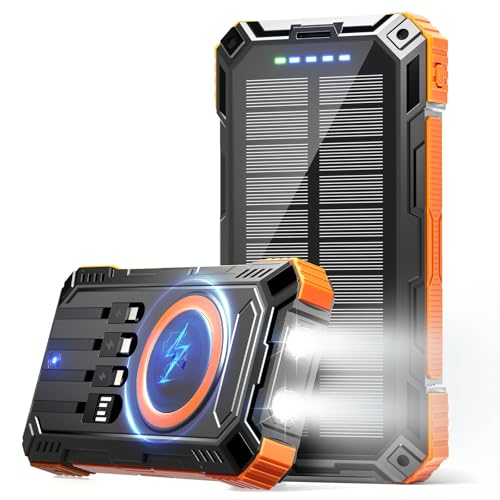
This high-capacity solar power bank emphasizes all-in-one charging with built-in cables (USB-C, Micro-USB, Lightning) plus wireless charging and two USB ports. The 49,800mAh capacity supports extended off-grid use, with a fast 15W USB-C charge capable of delivering a 0-50% boost in about 30 minutes for compatible devices. Its rugged design targets long trips, ensuring you can charge multiple devices—phones, tablets, and small accessories—without hunting for power outlets.
Consider its use-case: ideal for supplemental charging when away from a primary power source, rather than serving as the main RV power backbone. The integrated cables reduce cable clutter, which is helpful in limited RV spaces.
MARBERO Portable Power Station: 88Wh Compact Power Bank

The MARBERO 88Wh power station emphasizes compact portability with eight simultaneous output ports and two AC outlets capable of running small home appliances, TVs, or campers’ devices. It supports multiple charging methods, including AC input and car DC charging, making it versatile for RVs that move between campsites. The built-in Battery Management System (BMS) provides stability and safety during operation and charging, while the unit’s compact size makes it a strong choice for lightweight RVers who want a dependable back-up without added weight.
Limitations include its relatively modest energy capacity, which may not sustain high-wattage appliances for extended periods. It’s best paired with solar panels of compatible output or used as a secondary unit alongside a larger main power bank.
ZeroKor Foldable Solar Panel Kit: 40W Panel With 100W Pack

This solution combines a 100W-capable power pack with a foldable 40W solar panel for on-the-go RV charging. The setup supports two 110V outlets, USB-C, USB-A, and car-port outputs, enabling recharging of devices and small appliances while off-grid. The foldable design aids storage in tight RV spaces, and MPPT-based charging improves solar recharging efficiency. However, the overall system is best suited for low-wattage devices or as a supplementary charging option to a larger main power bank.
The included solar panel broadens opportunities for RV life, enabling continued charging during long road trips, camping in remote areas, or during power outages. Users should balance this with the capacity of the main battery bank to meet their required runtime.
Buying Guide: Key Purchase Considerations For RV Use
- Capacity vs. Load: Determine your typical RV load (refrigerator, lights, TV, small appliances) and select a unit with enough Wh to cover the daily demand plus a buffer for cloudy days.
- Output Options: Look for AC outlets for appliances, plus USB-C/USB-A ports for phones and tablets. If you rely on a fridge or freezer, ensure the unit supports sustained 1000W+ or 1500W peaks as needed.
- Solar Recharging: Panels integrated with the power bank simplify setup; otherwise verify MPPT capability and the total solar input to optimize recharging during camping trips.
- Weight and Portability: Heavier units offer more capacity but can be cumbersome in an RV. Prioritize models with strong handles and balanced weight distribution for easy transport.
- Battery Chemistry and Lifespan: LiFePO4 batteries offer longer cycle life and stability in RV environments. Check the expected cycle life and the manufacturer’s guarantee.
- Recharge Speed: One-hour fast charging features can be beneficial for quick turnarounds between site stays, but confirm real-world performance and battery health safeguards.
- Building a System: Consider a tiered approach—use a primary high-capacity unit for major loads and smaller backups for phones, lights, and fans. This reduces reliance on a single power source and increases reliability during trips.
- Durability and Safety: Look for rugged housings, overcharge/discharge protection, temperature handling, and IP ratings for outdoor use.
For RV enthusiasts, the best approach blends a high-capacity main unit with portable solar options to sustain daily needs. When choosing, align the power bank’s capacity, output capabilities, and recharging options with your typical travel patterns, campsite availability, and weather expectations. By evaluating these perspectives, you can select a solar battery bank that keeps your RV life comfortable and reliable, whether you’re dry camping or parked at a full-service site.