Best Solar Back Up Battery Solutions for Home and Travel
Power outages, outdoor adventures, and off‑grid living all benefit from reliable solar back up batteries. This guide highlights five top options, detailing capacity, charging speed, compatibility, and key safety features. Each product is evaluated for everyday use, emergency preparedness, and remote work scenarios, helping you choose a solution that matches your energy needs and budget.
| Product | Brand | Capacity / Output | Best Use | Notable Feature |
|---|---|---|---|---|
| Kepswin Solar-Charger-Power Bank | Kepswin | Unknown high‑capacity (49800mAh) | Outdoor charging, travel backups | 15W fast charge, USB-C, LED flashlight |
| Anker SOLIX C1000 Gen 2 | Anker | 2000W output, 1024Wh | Home backup, portability | HyperFlash recharge, multiple ports |
| EF ECOFLOW Delta 2 | EF ECOFLOW | ~1024Wh LiFePO4, 1800W AC | Home and camping backup | Fast charging, expandable capacity |
| ECO-WORTHY 48V Rack Battery Kit | ECO-WORTHY | 48V 600Ah (30.72kWh per kit) | Rack-mynning, scalable storage | Bluetooth/WiFi monitoring, UL certifications |
| Jackery HomePower 3000 | Jackery | 3072Wh, 3600W continuous | Whole‑home backup, UPS | UL‑certified UPS, multiple outlets |
Kepswin Solar Charger Power Bank

The Kepswin solar back up solution combines high capacity with multi-device charging capability. It features a built-in high‑quality lithium polymer battery that carries standard safety protections, including temperature, over‑voltage, over‑current, and short‑circuit safeguards. The device supports 15W fast charging via USB-C and USB-A outputs, enabling simultaneous charging for up to three devices. An integrated LED flashlight adds practical emergency utility for power outages or outdoor adventures. Its broad compatibility makes it suitable for smartphones, tablets, cameras, and other USB‑powered devices, making it a versatile backup option for camping trips or everyday carry.
Pros:
– High-capacity battery with robust safety protections.
– 15W fast charging and multiple ports for simultaneous device charging.
– Built‑in flashlight for emergency lighting.
Considerations:
– Exact capacity in mAh is not specified in the listing; verify real‑world run time for your devices.
– Weight and size may influence portability for minimalist travelers.
Anker SOLIX C1000 Gen 2 Portable Power Station

The Anker SOLIX C1000 Gen 2 provides substantial power for home backup, outdoor work, or remote locations. With 2,000W continuous output and a 1,024Wh LiFePO4 battery, it supports charging and operation for multiple devices, tools, or essential electronics. Rapid recharging is a hallmark, with HyperFlash enabling full recharge at up to 1,600W and a companion app to optimize usage. The unit is designed to be compact for its capacity, easing transport between rooms or a small cabin. It supports multiple ports to accommodate laptops, phones, cameras, and more, making it a flexible choice for users who need dependable power on the go.
Pros:
– Very fast recharge and strong overall output.
– Large multi-device charging capability.
– Portable for a high-capacity unit.
Considerations:
– Running high-wattage appliances might require planning due to continuous 2,000W rating.
– App integration adds optional setup steps for some users.
EF ECOFLOW Delta 2 Portable Power Station

The Delta 2 from EF ECOFLOW presents a balanced choice for home backup and mobile off‑grid use. It features a 1024Wh LiFePO4 battery with an 1800W AC output, offering reliable power for appliances, electronics, and lighting. The system emphasizes fast charging, claiming 0–80% in about 50 minutes and 0–100% in around 80 minutes when plugged in. Its modular design supports expansion to larger capacities as needs grow, and the unit pairs with solar panels for ongoing charging in sunny conditions. With multiple output options and a rugged build, Delta 2 suits both immediate outages and longer RV trips or camps.
Pros:
– Fast recharge and strong AC output.
– Expandable to meet growing power needs.
– Built for home backup and outdoor use.
Considerations:
– LiFePO4 chemistry offers safety and longevity but may come at a higher upfront cost than some Li-ion options.
ECO-WORTHY 48V Rack Battery Kit

The ECO-WORTHY kit is a modular 48V battery system designed for server rack integration, with Bluetooth and Wi‑Fi monitoring via the ECO-WORTHY app. It supports parallel expansion (up to 32 units) to scale capacity as demands grow, reaching substantial energy storage for home backup or small microgrids. UL1973 and UL9540A certifications, plus CEC alignment, underscore its focus on safety and regulatory compliance. The integrated CAN/RS485 interface enables compatibility with leading solar inverters for smarter system control.
Pros:
– Scalable, rack‑mounted design for space efficiency.
– Modern communications for remote monitoring.
– Strong safety certifications and regulatory compliance.
Considerations:
– Rack mounting requires appropriate mounting space and proper installation.
– Overall system cost can rise with added units and integration components.
Jackery Explorer 300
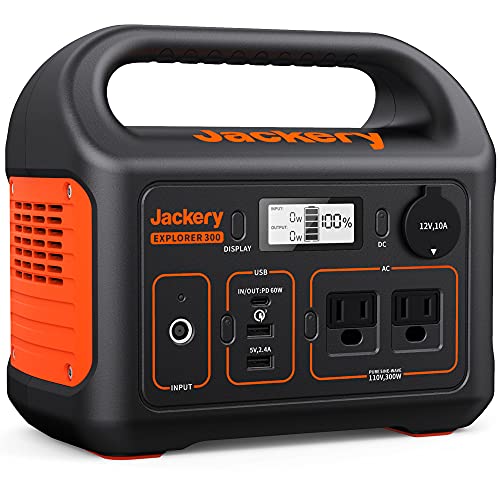
The Jackery Explorer 300 is a compact, portable power station designed for outdoor enthusiasts and light home backup. With a 293Wh Li‑ion battery and two Pure Sine Wave AC outlets, it delivers stable power for essential devices during camping trips or unexpected outages. Its light weight (about 7.1 pounds) makes it easy to carry, and it supports recharging via a USB‑C PD port, wall outlets, car adapters, or compatible solar panels. The device is well-suited for charging drones, cameras, laptops, and other USB or AC‑powered gear while on the move.
Pros:
– Lightweight and portable with reliable sine wave power.
– Flexible charging options and multiple ports.
– Easy to use for short trips and emergency use.
Considerations:
– Lower total capacity compared to larger home backup units.
– May require frequent recharging on longer outages or larger loads.
Durecopow Solar Charger Power Bank

The Durecopow solar charger offers 20,000 mAh of capacity with dual USB Type-C ports for input and output, enabling charging of multiple devices simultaneously. It includes two LED flashlights with a steady, SOS, and strobe mode, plus a built-in compass and carabiner for outdoor use. The device is built to endure challenging outdoor environments with water resistance and shock resistance, making it a practical companion for camping, hiking, or emergency kits. It supports solar charging and viewable indicators to monitor battery status, appealing to users who favor a rugged, go‑anywhere backup option.
Pros:
– Dual USB‑C ports and durable design.
– Integrated flashlight, compass, and carabiner for outdoor use.
– Solar and USB charging flexibility with hundreds of recharge cycles.
Considerations:
– Capacity is good for device charging but may be limited for power-hungry appliances.
– Solar charging speed depends on sunlight, which can vary by location and weather.
Jackery HomePower 3000

The Jackery HomePower 3000 delivers robust home backup capabilities with a 3,072Wh lithium battery and 3,600W continuous output, supporting essential loads during outages and in busy households. An integrated UL‑certified UPS switches within 20 milliseconds to protect devices like security cameras, servers, refrigerators, and medical equipment from power interruptions. The system is designed for reliable, long‑term use, including compatibility with home electrical installations and off‑grid scenarios. This model suits homeowners seeking a resilient, scalable backup solution that can cover a wide range of appliances and electronics during emergencies.
Pros:
– High capacity and reliable UPS performance.
– Multiple outlets for whole‑house style backup.
– Positive safety certifications and professional build quality.
Considerations:
– Higher upfront cost and larger footprint compared to portable units.
– Installation may require monitoring and planning for long outages.
Buying Guide: Key Purchase Considerations
When evaluating solar back up battery systems, consider how you plan to use the device: daily charging, emergency outages, RVing, or off‑grid living. Here are the main factors to weigh:
- Capacity and runtime: Match the energy capacity (Wh or Ah) to your critical devices. For home backup, aim for 1,000–3,000Wh with a strong surge rating. For travel, smaller units around 300–600Wh may suffice.
- Power output and ports: Ensure the continuous wattage fits the devices you intend to run. Check the number and type of ports (AC, USB‑C, USB‑A, DC) to cover laptops, routers, lights, and small appliances.
- Charging speed: Fast recharge capabilities save downtime during outages. HyperCharge or higher input watts reduce recharging time, especially for larger units.
- Battery chemistry and longevity: LiFePO4 offers longer cycle life and stability for long-term use; Li-ion may be lighter and cheaper but with fewer cycles.
- Expandability and modularity: Some systems allow adding more capacity with additional batteries, which helps future‑proof your setup as needs grow.
- Portability vs. home backup: Portable units excel for camping and travel; larger, rack‑mounted systems fit stationary home backup or microgrid scenarios.
- Safety certifications and monitoring: Look for UL, CE, and other safety marks. Built‑in monitoring via apps or Bluetooth/Wi‑Fi helps manage sessions and track health.
- Solar compatibility: If you intend solar charging, verify solar input wattage, compatibility with panels, and any required accessories.
- UPS functionality: For home use, a system with an uninterruptible power supply (UPS) can provide seamless transition during outages, protecting critical devices.
- Price and total cost of ownership: Consider not only the upfront cost but also replacement battery costs, warranty length, and expected cycle life.
Depth of options varies by use case. For frequent campers, a compact, fast‑recharge model with multiple USB ports is ideal. For households facing regular outages, a high‑capacity, UPS‑enabled system with home integration and expandability offers peace of mind. For off‑grid living, scalability and long cycle life become the most important factors, sometimes favoring LiFePO4 chemistry and rack‑mount configurations. Evaluating these perspectives helps tailor a system to your energy habits, climate, and budget.