Best Snow Melting Mats for Control, Detection, and Safe Winter Walkways
Answer: These electric snow melting mats are designed to melt snow efficiently, reduce slipping, and keep walkways clear with thermostatic control and durable materials. The top picks here suit different needs—homeowners seeking easy installation, large-coverage setups, or modular systems for concrete, pavers, and stairs.
Summary table of chosen products
| Product | Brand | Best For | Key Feature |
|---|---|---|---|
| HeatTrak Heated Snow Melting Mats (30” x 48”) | HeatTrak | Your primary entrance with medium coverage | Durable, easy install, energy efficient |
| SLASHCOOL 2-Pack 20″x60″ Mats | SLASHCOOL | High heat speed, simple setup, scalable | |
| Maxztill 10″ x 30″ Heated Mat | Maxztill | Thermostatic control, anti-slip, IP68 waterproof | |
| WarmlyYours 2×10 ft Mat (240V) | WarmlyYours | Embedded installation, CSA certified | |
| NexiPro Snow Melting Mats (10×30, 4 pcs) | NexiPro | Anti-slip, scalable system, reliable heating |
HeatTrak Heated Snow Melting Mats (30” x 48”)

Best for: Home entrances requiring a reliable, medium-coverage solution. Rationale: HeatTrak mats are built from durable, corrosion-resistant material and are designed to be left out through winter. They are easy to install with low maintenance and melt snow efficiently, using less energy than traditional systems.
Why selected: The 30” x 48” format fits standard doorways and porches, reducing shoveling without complex installation. The mat’s surface temperature can stay comfortably above ambient, aiding safer egress in cold snaps.
Caution: Ensure weatherproof placement to avoid foot traffic damage on extremely salted surfaces; verify electrical access is protected from moisture.
SLASHCOOL 2-Pack 20″x60″ Mats

Best for: Stairs and narrow entryways where modular coverage helps. Rationale: The 20″ x 60″ pieces provide flexible layout options and fast heating, making stairs easier to clear than with shoveling alone.
Why selected: The mats’ 6 ft power cord and status indicator simplify setup. They can be used singly or linked (up to 1500 W) for broader coverage, a practical feature for varied exterior layouts.
Caution: Plan power availability and extension needs in advance; larger layouts may require multiple sockets or dedicated circuits.
Maxztill 10″ x 30″ Heated Snow Mat

Best for: Small outdoor steps, porches, and walkways where compact mats fit without crowding space. Rationale: This mat combines high efficiency with robust anti-slip features for safer passage.
Why selected: It delivers up to 3 inches of snow melting per hour and offers thermostatic control to avoid overheating, supporting safe use around families.
Caution: The single-mat setup may require additional mats for larger areas; ensure stability with ground anchors or edging where needed.
WarmlyYours 2×10 ft Mat (240V)
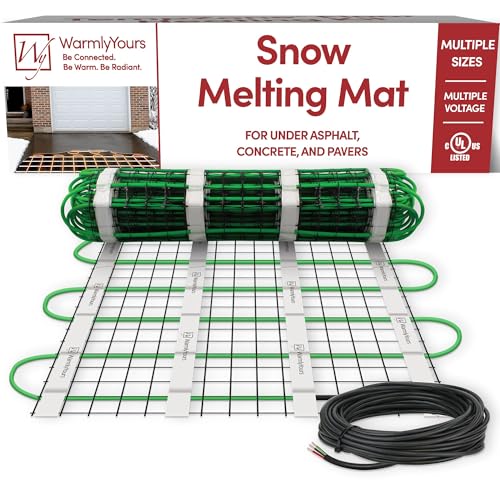
Best for: Large driveways, walkways, and areas that can be embedded under concrete, asphalt, or pavers. Rationale: This mat is designed for embedded installation, enabling invisible, consistent snow removal across large surfaces.
Why selected: CSA certified and built with a twin-conductor heating cable, the system supports reliable, long-term operation under heavy winter use.
Caution: Embedded installation requires planning during initial construction or resurfacing; not ideal for temporary setups or rental properties.
NexiPro Snow Melting Mats (10×30, 4 pcs)

Best for: Modular walkway or deck setups where you want to tailor coverage. Rationale: The 4-piece pack allows combining mats for custom layouts and efficient snow melting along paths and steps.
Why selected: Anti-slip rubber and waterproof materials help prevent slips, while the design supports quick heating to keep surfaces clear during winter weather.
Caution: Ensure compatible power supply and a safe routing plan to avoid tripping over cords across outdoor areas.
Buying Guide: Key Considerations For Snow Melting Mats
- What surface will you cover? Consider doorways, steps, walkways, and driveways. Some mats are best for embedded installs, others for portable use.
- How will you power them? Most mats require a 110-120V circuit; larger setups may need dedicated circuits or multiple outlets. Check cord length and weatherproofing.
- Thermostatic control and safety features: Look for auto shutoff at safe surface temperatures to prevent burns and energy waste. Anti-slip surfaces reduce slip risks on icy surfaces.
- Material durability: Rubber or composite surfaces with corrosion resistance last longer in freeze-thaw cycles and salt exposure.
- Coverage and layout: If covering stairs or irregular paths, consider modular mats or multi-piece packs that can be joined for full coverage.
- Installation considerations: Embedded mats require installation work in concrete or pavement, while loose mats are easier to move but potentially shift in heavy snow.
- Energy efficiency: Mats typically use less energy than mechanical melting systems; confirm wattage and estimated operating costs for your area.
- Safety and compliance: Look for waterproofing ratings (IP68 or higher) and any regional electrical codes or certifications that apply to outdoor heating products.
Frequently Asked Questions
- Do snow melting mats work well on stairs? Yes, many mats are designed to cover stairs with durable anti-slip surfaces and stable heat output, but ensure the mats fit the stair dimensions and won’t obstruct egress.
- Can I install these mats under concrete or pavers? Some models are designed for embedded installation beneath concrete or paving; verify compatibility and professional installation guidelines.
- Will mats melt ice quickly? Mats accelerate melting, with rates varying by mat power, surface area, and ambient temperature. Higher wattage mats melt snow faster on contact.
- Are these mats energy efficient? Compared to traditional methods, most mats use targeted heat to minimize energy use, especially when automated thermostats prevent unnecessary heating.
- How should I maintain outdoor snow mats? Keep surfaces clear of debris, check cords for wear, and ensure electrical connections remain weatherproof. Replace damaged components promptly.
- Can multiple mats be used together? Yes, several mats are designed to be connected or arranged to cover larger surfaces and provide seamless melting across wider areas.