Best Smart Valve Water Control Systems for Automatic Home Irrigation and Plumbing Control
When selecting a smart valve water control system, you want reliable remote shutoff, easy installation, and compatible smart-home integration. This guide highlights five top options, detailing who each product is best for, how they operate, and practical considerations. Ideal buyers include homeowners seeking vacation-friendly remote control, renters needing temporary automation, and tech enthusiasts aiming for voice-assisted watering and water management. The quick comparison table below helps you pick the right fit at a glance.
| Product | Best For | Key Benefit | Limitations |
|---|---|---|---|
| Tokatuker Motorized Smart Valve Actuator | Vacation homes and remote-controlled setups | Works with Tuya Smart / Smart Life; no hub required | Alignment is critical; misalignment can cause damage |
| Blindsmart Smart Valve Controller | Users seeking Alexa/Google voice control | Direct 2.4 GHz WiFi connection; voice control ready | Requires app setup for voice integration |
| FRANKEVER DN20 Smart Valve | Garden and irrigation systems | Water timing via Smart Life; durable materials | Requires 2.4G WiFi network |
| SONOFF Zigbee Sprinkler Timer | Zigbee-enabled smart homes | Zigbee 3.0 with remote app control and histories | Requires Zigbee gateway |
| YoLink Wireless Smart Valve Control Kit | Standalone offline control with leak sensors | D2D offline operation; battery option | Requires YoLink hub for full features |
Tokatuker Motorized Smart Valve Actuator
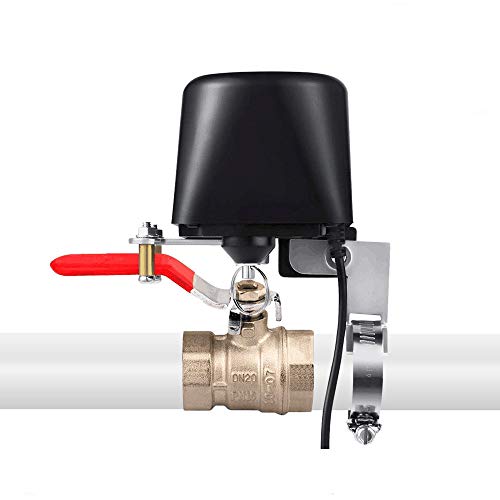
The Tokatuker valve actuator is designed for Tuya Smart and Smart Life apps, enabling remote on/off control via Android or iOS. It supports 2.4 GHz WiFi for reliable operation and can automate valve opening and closing with a timer. This option is best for homeowners who want app-based control without a dedicated hub. A key caveat is the importance of proper alignment: the pivot must align precisely above the valve pivot to avoid mechanical stress or failure.
- Best for: Remote operation without a hub; app-based control
- Voice compatibility: Works with Alexa when integrated via the Tuya/Smart Life ecosystem
- Limitation: Precise mechanical alignment is required to prevent damage
Blindsmart Smart Valve Controller
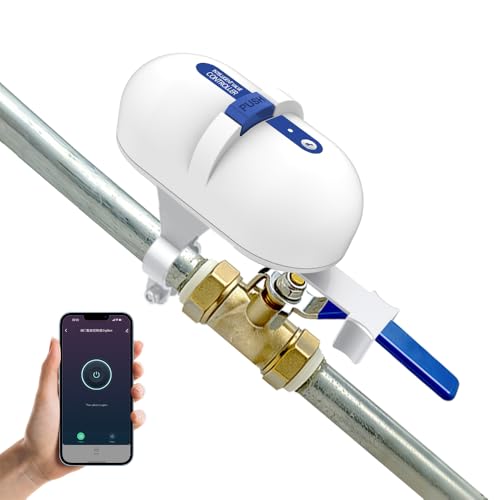
The Blindsmart valve controller connects directly via 2.4 GHz WiFi and supports remote control from the Smart Life or Tuya Smart apps. It is designed for hands-free convenience through voice assistants after integration with Alexa or Google Home. This model is ideal for users who want seamless voice control and remote valve management without a hub. A potential limitation is the requirement to complete app setup to enable full voice capabilities.
- Best for: Direct WiFi control with voice assistant integration
- Voice control: Compatible with Alexa and Google Home after app setup
- Limitation: Requires initial app configuration for voice features
FRANKEVER DN20 Smart Water Valve

The FRANKEVER DN20 model offers 3/4-inch valve operation with 2.4 GHz WiFi and the Smart Life app for remote control. It highlights multi-scene applicability for home water supply, garden irrigation, and pool filling, making it versatile for different watering needs. Built with SS304 stainless steel and engineering plastic, it emphasizes durability and safe water supply. Its main caveat is reliance on a stable WiFi connection for full functionality.
- Best for: Home and garden irrigation across multiple scenes
- Material: Durable SS304 stainless steel and ABS
- Limitation: Requires 2.4 GHz WiFi network
SONOFF Zigbee Sprinkler Timer

The SONOFF Sprinkler Timer uses Zigbee 3.0 for stable, low-latency control and requires a Zigbee gateway. It supports smart scheduling for irrigation and maintains a history log to optimize watering. This option is best for users with a Zigbee-enabled smart home who want reliable, schedule-driven irrigation with remote control. The limitation is the need for a Zigbee gateway to connect to larger smart-home ecosystems.
- Best for: Zigbee-based homes needing robust scheduling
- Features: History logging for watering patterns
- Limitation: Requires Zigbee gateway for full integration
YoLink Wireless Smart Valve Control Kit

The YoLink kit features a brass 3/4-inch motorized valve with a battery-backed option and a 12V adapter for continuous operation. It supports device-to-device control with leak sensors to enable automatic shutoffs during outages or leaks. This setup suits users prioritizing offline reliability and independent control when Wi-Fi is unavailable. A limitation is the need for a YoLink hub to unlock full capabilities and D2D automation.
- Best for: Offline reliability with leak-sensor integration
- Power: 12V adapter plus optional batteries for backup
- Limitation: Hub required for full YoLink ecosystem features
YoLink X3 Version Smart Water Valve Controller

The YoLink X3 combines a high-torque valve operator with a smart controller that works through the YoLink app. It supports ½ to 1¼ inch valves and offers operation during Wi-Fi, internet outages, or power loss via device-to-device control. Hub use is required, and the system emphasizes continuous shutoff status visibility. This choice is best for users who want robust offline operation and status awareness in a YoLink ecosystem.
- Best for: High-torque DIY installations with offline resilience
- Key feature: Local control during outages
- Limitation: YoLink hub is required for full functionality
Aqara Smart Valve Controller T1

The Aqara T1 valve controller offers Matter-over-bridge support and requires an Aqara Zigbee 3.0 hub. It integrates with Apple Home, Google Home, Alexa, and other platforms via compatibility with major ecosystems. Real-time valve status monitoring works with paired water-leak detectors for automatic shutdown in leaks. The device is intended for retrofit installations and is not recommended for outdoor use. A hub and compatible platform are prerequisites.
- Best for: Apple Home and Matter-compatible ecosystems
- Integration: Works with major platforms via Aqara hub and Matter
- Limitation: Requires Aqara hub and compatible platform; not outdoor-ready
Buying Guide: Key Considerations for Smart Valve Systems
Choosing the right smart valve system involves evaluating compatibility, installation, and reliability. Consider the following factors:
- Connectivity: Do you prefer WiFi, Zigbee, or LoRa+offline control? Ensure your home network can support the device type.
- Hub requirements: Some devices require a dedicated hub; others work directly via apps without hubs.
- Platform compatibility: Check if the system supports your preferred voice assistants and smart-home ecosystems (Alexa, Google Home, Apple HomeKit, Matter).
- Valve size and compatibility: Ensure the valve size matches your plumbing (DN15, DN20, ½–1¼ inch ranges vary by product).
- Durability and materials: For outdoor or garden use, look for weather resistance and corrosion-resistant components.
- Offline capabilities: If WiFi fails, some models offer device-to-device or battery-backed operation for critical shutoffs.
- Safety features: Real-time status, leak detection integration, and automatic shutoff reduce risk during leaks or outages.
FAQ
- Do these valves require a hub to work with voice assistants?
- Can I use these valves for outdoor irrigation?
- What happens if WiFi goes down?
- Are these valves compatible with HomeKit or Matter?
- How precise is the valve control for watering schedules?
- What maintenance is required?
Some models work directly via app and WiFi, while others require a hub or gateway for full voice integration or offline features. Check each product’s hub requirements before purchase.
Many are designed for indoor or sheltered piping. Outdoor suitability depends on material durability and enclosure ratings. Verify the product’s installation notes for outdoor use.
Several options offer offline operation or device-to-device control, but many rely on hub-based or cloud connectivity. Review the model’s offline capabilities to match your needs.
Some models support HomeKit, Google, Alexa, or Matter through hubs or bridges. Confirm platform compatibility and any required bridges during setup.
Control precision depends on the motor torque, valve type, and integration with the chosen app. Look for models that provide clear scheduling options and status feedback.
Regularly check alignment, seals, and battery life where applicable. Keep the valve and connectors free from debris to maintain reliable operation.