Best Smart Switch for Ceiling Fan: Top Picks for 2026
Upgrading a ceiling fan with smart control can improve comfort, energy efficiency, and convenience. The following selections cover popular options that integrate with major ecosystems like Alexa, Google Assistant, Apple HomeKit, and SmartThings. Each product supports multiple fan speeds and easy on/off or dimming features. This guide highlights five strong choices and provides a clear buying guide to help you pick the right switch for your wiring, fan type, and smart-home setup.
| Product | Brand | Key Feature |
|---|---|---|
| KS240 Ceiling Fan Control | Kasa Smart | 4 fan speeds, adjustable brightness, HomeKit compatibility |
| D24SF-1RW Decora Smart Fan | Leviton | 4-speed control, My Leviton ecosystem, voice assistants |
| Enbrighten Z-Wave Plus Fan Control | Enbrighten | 4-speed fan control, works with Alexa/Google, Z-Wave hub required |
| GHome Smart Dimmer 4-Speed Control | GHome Smart | 4-speed fan control, 0%-100% dimming, Alexa/Google |
| Meross Smart Ceiling Fan Control & Dimmer | Meross | 4-speed fan, Apple/HomeKit, 2.4G Wi-Fi, single-pole |
Each option supports essential smart-home features such as voice control, scheduling, and app-based management. Before selecting, consider wiring needs (neutral wire, single-pole vs. multi-way), compatibility with your fan (separate fan and light loads), and your preferred smart ecosystem. The sections below summarize five strong contenders with their standout capabilities and installation notes.
KS240: Kasa Smart Ceiling Fan Control

The KS240 from Kasa Smart offers four adjustable fan speeds and a dimmable light control, enabling precise airflow and lighting comfort. It integrates with Apple HomeKit, Amazon Alexa, and Google Assistant, providing voice commands and routines for hands-free operation. This model is designed for single-pole installations with a neutral wire and 2.4 GHz Wi-Fi, making it compatible with many existing ceiling fans. Users can fine-tune room ambiance by combining fan speed with light brightness, helping to create comfortable environments for different activities. The setup focuses on straightforward replacement of a traditional wall switch.
Key features include four distinct fan speeds, adjustable light brightness, and HomeKit compatibility alongside Alexa and Google Assistant. This combination makes it suitable for households using multiple ecosystems or migrating between them. While it supports smart integration, it remains a practical upgrade for standard ceiling fans lacking built-in smart capabilities. Installation typically involves the standard wall box with a neutral conductor and careful wiring to ensure reliable 2.4 GHz connectivity.
Leviton D24SF-1RW: Decora Smart Fan Speed Controller

The Leviton D24SF-1RW 2nd Gen adds neutral-wire-based smart control to existing ceiling fans, delivering quiet four-speed operation (low to max). It emphasizes convenience by enabling scheduling, auto-off timers, and remote control, so you don’t need to reach for a pull chain. This model works within Leviton’s ecosystem and is compatible with Alexa, Google Assistant, Apple Home/Siri, and wired or wireless 3-way configurations. It is designed to replace a traditional switch and can simplify multi-room fan management while maintaining simple, reliable performance.
Pros include broad voice-assistant compatibility and a familiar, familiar Decora form factor. The device is ideal for users who want integrated scheduling and automation without sacrificing fan control granularity. Installation requires a neutral wire and attention to wiring in single-pole or 3-way configurations as applicable. Consider whether you prefer a single-brand ecosystem for future device expansion or open compatibility with multiple assistants.
Enbrighten Z-Wave Plus Fan Control
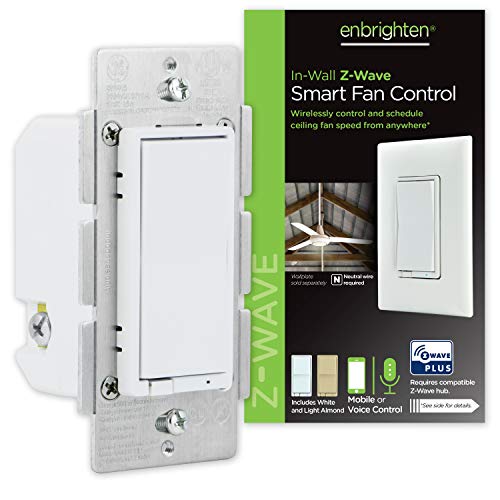
Enbrighten’s Z-Wave Plus Fan Control is tailored for two fans in a single wall unit and requires a Z-Wave hub. It supports turning fans on and off and adjusting speeds (high, medium, low). The dedicated design targets fan control rather than lighting, and its range extension capabilities can be beneficial in larger homes or hobbyist setups with distributed Z-Wave devices. It’s best used where a hub-based smart-home approach is preferred or already in place. The product emphasizes dependable fan-speed control with compatibility across major voice platforms when paired with the appropriate hub and software.
Why choose Enbrighten: if your home already uses Z-Wave hubs or you want a dedicated fan-control device that doesn’t mix with lighting. It can be part of a broader home automation plan, including scene and routine creation tied to occupancy, temperature, or time-based triggers. Keep in mind hub requirements and potential limitations when integrating with multi-fan setups or lighting in the same wall box.
GHome Smart Dimmer: 4-Speed Ceiling Fan Control
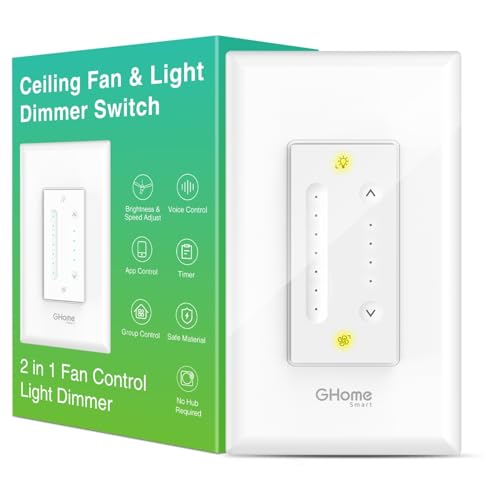
GHome Smart’s dimmer switch with a four-speed ceiling fan control combines fan speed management with 0%-100% dimming for lights. It operates on 2.4 GHz Wi-Fi only and requires a neutral wire, designed for single-pole installations. The unit supports 4A on the fan side and up to 400W on the lighting side, making it suitable for many standard ceiling fan-light combinations. The touch-based dimming interface offers a smooth user experience, enabling seamless transitions between lighting and airflow preferences. It’s a practical option for those who want both lighting control and fan speed in one wall control.
Considerations include ensuring your fan uses separate wires for light and fan and confirming your home network supports reliable 2.4 GHz connectivity. While the device markets compatibility with major assistants, verify your preferred ecosystem and any app-based automations you plan to implement. The unit’s compact design helps with installation in tighter switch boxes.
Meross Smart Ceiling Fan Control & Dimmer

Meross combines smart fan control with dimmable lighting in a single-neural-wall switch, supporting Apple HomeKit, Alexa, Google Assistant, and SmartThings. It provides 4-speed fan control and dimming for lights via a single-pole configuration. The device communicates over 2.4 GHz Wi-Fi and emphasizes compatibility with common smart-home ecosystems while noting compatibility constraints related to wiring and fan type. It is a strong option for households already invested in Apple HomeKit or seeking a tightly integrated app experience across platforms. Setup and operation are designed for straightforward, app-based control and voice commands.
Important considerations include ensuring your ceiling fan has separate fan and light loads and that your wiring includes a neutral line. Meross emphasizes reliable 2.4 GHz connectivity and broad compatibility, but as with all smart switches, verify hubless operation if you rely on specific routines or automations beyond native app control.
Buying Guide
Key considerations when choosing a smart switch for a ceiling fan include wiring requirements, hub and ecosystem compatibility, fan/light load handling, and installation simplicity. Below are several angles to consider for a balanced decision.
- Ecosystem and compatibility: If you already use Apple HomeKit, Alexa, or Google Assistant, select a model that offers robust multi-platform support or native compatibility with your preferred assistant. Some devices rely on hubs (Z-Wave) or ecosystems (Leviton) for broader control, while others provide hub-free, direct Wi-Fi integration.
- Wiring and load capacity: Ensure your wiring includes a neutral line and separate loads for fan and light if you plan to control both. Single-pole installations are common, but verify if your switch box supports multi-way configurations or if remote wiring is present in your fan assembly.
- Fan motor type and compatibility: Some switches are designed for standard AC fans with separate fan/light conductors. Confirm that your fan does not have a built-in remote or DC motor that could conflict with a wall switch upgrade.
- Speed range and dimming: Look for four-speed fan control plus dimming for lights to achieve fine-tuned comfort. If dimming is not needed, a dedicated fan-speed controller may simplify setup and performance.
- App and automation features: Routines, schedules, and scenes can improve daily life—consider whether you want timer-based auto-off, occupancy-triggered changes, or integration with other smart devices (thermostats, sensors, hubs).
- Installation complexities: Some products require careful wiring or canopy access, especially in older homes with limited wiring. Review installation dimensions and any required disassembly of canopy modules before upgrading.
- Reliability and safety: Choose devices with UL certification and robust reviews for long-term reliability. Neutral-wire requirements help ensure stable control and reduce ghosting or flicker in some setups.
- Future-proofing: If you anticipate expanding your smart-home setup, a model with broad ecosystem support or a well-documented API can save time and cost later on.