Best Smart Fire Alarm Systems for Real-Time Alerts and Home Safety
When shopping for smart fire alarm systems, prioritize real-time notifications, easy setup, and reliable interconnectivity for whole-home safety. This guide highlights five top options suited to different homes and needs—from wireless kits ideal for small-to-mid homes to hardwired, app-enabled detectors for larger residences. Below, you’ll find who each product is best for, plus a concise buying table to compare core features at a glance.
| Product | Best For | Key Benefit |
|---|---|---|
| Kidde Smart Smoke and CO Detector (AA Battery) | Renters or apartments needing wireless interconnectivity | Fast smoke/CO Alerts via Ring App |
| Ring Alarm 14-Piece Kit | Small to mid-sized homes seeking expandable, professional monitoring | Comprehensive kit with base station, sensors, and keypad |
| PGST Wireless Alarm System Kit | DIY enthusiasts wanting app control and GSM/4G connectivity | No monthly fees and remote, multi-device alerts |
| Kidde Hardwired Smart Smoke Detector (AA Backup) | Homes with existing hardwired networks needing smart alerts | Whole-home connectivity with mobile alerts |
| First Alert SC5 Battery Smart Smoke & CO Alarm | Simple, battery-powered smart safety for single rooms or apartments | Nest Protect integration and multi-alarm interconnect |
Note: All options below emphasize real-time notifications, mobile access, and interconnectivity. Where relevant, they support optional subscriptions for enhanced monitoring or cloud features.
Kidde Smart Smoke and CO Detector (AA Battery)
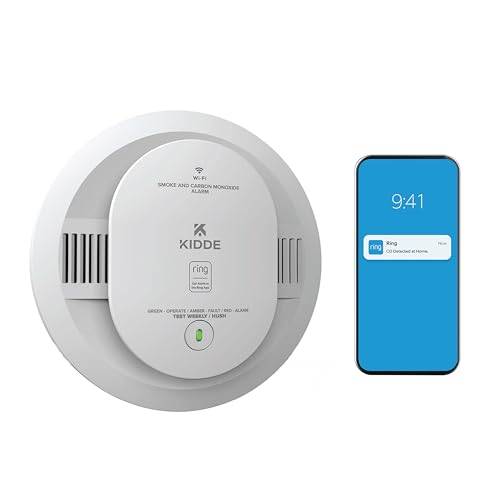
What it is best for: renters or homes needing a wire-free, easily relocatable detector. This AA battery-powered unit provides dual detection for smoke and CO with real-time Ring App notifications whether you’re home or away. It also offers faster smoke detection than some leading competitors and does not require a subscription for essential alerts.
Why it was selected: compact, battery-powered, and simple to install, making it ideal for spaces where hardwiring isn’t feasible. The interconnectivity supports quick response across multiple devices when paired with compatible Ring-enabled products.
Limitations to note: battery replacement is necessary over time, and a subscription option exists for extended monitoring, which may be considered for higher-risk environments.
Ring Alarm 14-Piece Kit

Who it’s best for: homes with 2–4 bedrooms seeking a scalable, wireless security solution with mobile control and professional monitoring.
Why selected: a complete kit that includes a Base Station, keypads, contact sensors, motion detectors, and a range extender. Its intuitive keypad and expandable sensor ecosystem make it a strong all-around choice for hands-off monitoring with clear arming/disarming controls.
Limitations: full feature benefits may require compatible Ring ecosystem devices and optional add-ons. Some advanced features hinge on network connectivity and subscriptions.
PGST Wireless Alarm System Kit
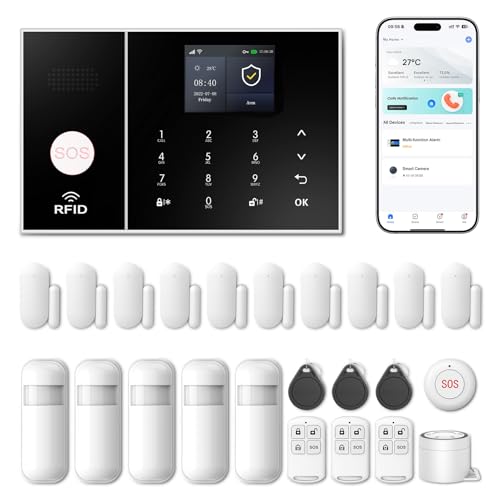
Best for: tech-forward homeowners who want app-based control without monthly fees, plus 4G/Internet connectivity for remote alerts.
Why selected: highly DIY-friendly with Smart Life or Tuya apps, voice control compatibility, and a color display on the main unit. It supports remote control, high expandability, and tamper protection for constant security monitoring.
Limitations: setup may be more technical than plug-and-play kits; ensure compatibility with preferred apps and sensors before purchase.
Kidde Hardwired Smart Smoke Detector with AA Battery Backup
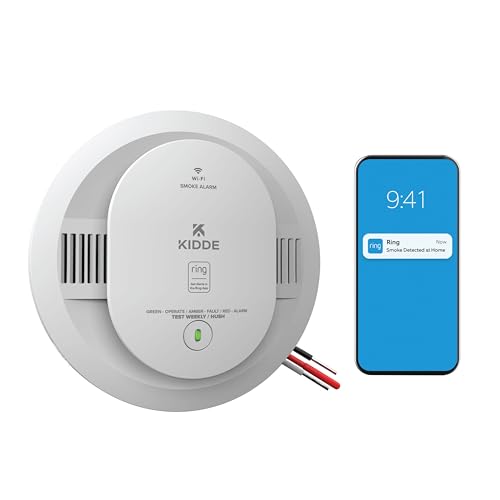
Who this suits: households with existing hardwired power, seeking smart notifications and broad interconnectivity across multiple alarms.
Why chosen: delivers whole-home connectivity when you add one Kidde smart alarm, plus real-time mobile alerts for smoke and low battery. Hardwired reliability paired with smart features is a strong combination for larger homes.
Limitations: requires existing wiring for best performance; battery backup is included but battery life may influence maintenance needs over time.
First Alert SC5 Battery Smart Smoke & CO Alarm

Best for: apartment dwellers or single-room safety upgrades needing easy setup and Nest Protect compatibility where applicable.
Why selected: battery-powered smart detector with CO and smoke sensing, interconnect capability with other compatible alarms, and a straightforward setup path. It’s a practical pick for quick smart upgrades in smaller living spaces.
Limitation: as a standalone unit, it may not provide the same multi-device visibility as wired networks or whole-home ecosystems without additional compatible alarms.
Buying Guide: Key Purchase Considerations
- Detection Type: Ensure the device covers both smoke and CO if needed. Dual-detection models reduce the risk of undetected CO exposure in addition to smoke.
- Power Source: Decide between battery-powered, hardwired, or mixed configurations. Battery options offer flexibility for rentals; hardwired systems provide steady power and easier interconnectivity in larger homes.
- Interconnectivity: Look for devices that interlink so an alarm triggers across the home. This is critical for rapid notifications and evacuation planning.
- App and Alerts: Check for real-time notifications via a mobile app, with options for away-from-home monitoring. Confirm whether a subscription is required for extended monitoring.
- Expandability: If future home upgrades are planned, choose a system that supports additional sensors and accessories without a complete replacement.
- Installation and Compatibility: Some kits are easiest for DIY installation; others work best with professional monitoring. Consider compatibility with existing smart home ecosystems (Alexa, Google Assistant, Ring, etc.).
- Maintenance: Battery life, sensor aging, and firmware updates affect long-term performance. Plan for periodic checks and replacements.
- Safety Coverage: For larger homes, ensure the chosen system supports whole-home notification and scalable alarm networks to avoid dead zones.
FAQ
- Do these smart alarms require a subscription? Some options offer optional subscriptions for enhanced monitoring; essential notifications are typically available without a paid plan.
- Can I mix brands in a single system? Mixing brands is common but may limit inter-device interoperability. Check each device’s compatibility with your chosen ecosystem.
- Is hardwired better than wireless for safety? Hardwired systems provide stable interconnection across the home but may require professional installation. Wireless systems offer flexibility and easier relocation.
- Will these alarms interconnect with other smart home devices? Many models support voice assistants and app-based control, enabling integration with broader systems like Alexa or Google Assistant.
- How do I know when to replace detectors? Follow manufacturer guidelines on sensor lifespan, battery health, and interconnect performance. Regular maintenance is essential for reliable alerts.
- What should I consider for renters? Wireless, battery-powered detectors with easy relocation and app-based alerts are typically best for rental spaces.