Best Smart Wall Unit Air Conditioners for Home Cooling in 2026
Looking for a smart wall unit air conditioner that cools efficiently, connects to your home network, and offers convenient control from anywhere? This guide highlights five top options that fit typical American living spaces. Each unit is suited for small to mid-sized rooms, with built-in Wi‑Fi, remote control, and/or app compatibility. Whether you want quiet operation for bedrooms or flexible installation for living spaces, these selections balance performance and smart features. Below, compare who each product is best for and why it was chosen.
Overview of the selected products:
| Product | Best For | Key Benefit |
|---|---|---|
| Frigidaire 8000 BTU Smart Wall AC | Small rooms up to 350 sq ft | Built-in air ionizer and remote control |
| LG 10,000 BTU Through-the-Wall | Medium rooms up to 440 sq ft | High efficiency, multiple modes, 4-way air deflection |
| Keystone 8,000 BTU Wall Unit | Bedrooms and small living spaces | Dehumidifier with timer and 4-way airflow |
| ROVSUN 10,000 BTU Through-the-Wall | Multi-season spaces up to 450 sq ft | App & voice control, heater function |
| ROVSUN 8,000 BTU Through-the-Wall | Compact rooms up to 350 sq ft | Through-wall with heater option, smart control |
Frigidaire 8000 BTU Smart Wall Air Conditioner

Best for compact spaces where air quality matters. This Frigidaire model cools rooms up to 350 sq ft and includes a built-in air ionizer to reduce airborne particles. It offers three fan speeds and a remote control for convenient operation from the couch. The unit is designed for quiet operation and energy efficiency, suitable for bedrooms or home offices where steady airflow is desired. A potential limitation is that very hot days in larger rooms may require a larger capacity unit.
LG 10,000 BTU Through-the-Wall AC

Best for larger small rooms or multi-room setups with strong cooling needs. This LG unit offers 3 cooling speeds and a turbo mode to reach the desired temperature quickly. Energy efficiency is highlighted by an EER around 10.7, with features like Dry mode for moisture control and a 4-way air deflection system. It’s installed through the wall rather than a window, so plan for through-wall mounting. Choose this if you want robust capability and flexible climate modes in a sizable space.
Keystone 8,000 BTU Wall Mounted AC
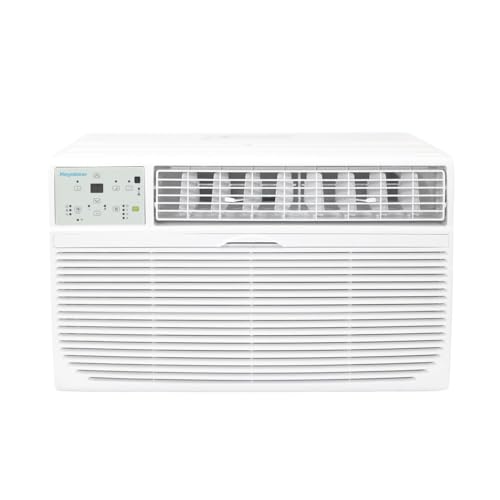
Best for affordable, space-saving cooling in bedrooms or small living rooms. Keystone emphasizes reliability with 8,000 BTU capacity, three cooling modes, three fan speeds, and a built-in dehumidifier removing moisture to maintain comfort. The four-way louvers plus a programmable timer enhance comfort during different times of day. The unit is designed for easy installation with a standard interior trim kit. A potential limitation is that capacity may be borderline in very hot climates or larger rooms.
ROVSUN 10,000 BTU Through-the-Wall With Heater

Best for multi-season spaces needing both cooling and heating. This unit delivers 10,000 BTU of cooling alongside heating, a dehumidifier, and a remote with app/voice control compatibility. It’s suitable for rooms up to about 450 sq ft. The 24-hour timer and energy-saving ECO mode aid daily management. Consider that more features can mean a longer installation and setup process; ensure compatibility with your wall structure and electrical system.
ROVSUN 8,000 BTU Through-the-Wall With Heater
Best for smaller rooms needing both cooling and heating in a single unit. This ROVSUN model provides 8,000 BTU cooling, 4,200 BTU heating, and a built-in timer plus app/voice control. It’s well-suited for apartments or bedrooms where space is at a premium and year-round climate control is desired. A limitation to note is that heating efficiency might be more moderate in very cold climates, so verify seasonal needs before selecting.
Buying Guide
- Through-the-wall vs. window mounting: Through-the-wall units save window space and can offer cleaner aesthetics, but installation may be more permanent. Consider your wall structure and whether a trim kit is included.
- Smart features: Look for Wi‑Fi connectivity, mobile app control, and compatibility with voice assistants (Alexa/Google). Ensure the app supports scheduling, timers, and remote monitoring.
- BTU capacity vs. room size: Match BTU to room square footage for effective cooling without overworking the unit. Overcapacity wastes energy; undercapacity leads to inadequate cooling.
- Energy efficiency: Check EER or SEER ratings where available. Higher efficiency reduces operating costs over time, especially in hot seasons.
- Dehumidification: If humidity is a concern, prefer units with built-in dehumidifiers and adjustable humidity settings to improve comfort.
- Maintenance: Look for washable filters and accessible front panels to simplify cleaning and upkeep.
- Quiet operation: If included, check dBA levels or claims of “ultra-quiet” operation for bedrooms or study spaces.
Frequently Asked Questions
- What size wall unit do I need for my room? Consider the room’s square footage and climate. Use BTU guidelines: roughly 6,000–8,000 BTU for small bedrooms, 8,000–12,000 BTU for larger living spaces, adjusting for sun exposure and occupancy.
- Are smart wall units easy to install? Installation varies by model. Through-the-wall units typically require professional mounting and wiring in most cases, while some kits include step-by-step instructions for DIY installation.
- Can I control these units with Alexa or Google Assistant? Yes, several models support voice control via popular ecosystems when connected to Wi‑Fi and the corresponding app.
- Do these units also heat? Some models include heat or heat/AC combo modes. If year-round climate control is needed, choose a model that explicitly lists heating capabilities.
- Will a Wi‑Fi connected unit still work if the internet goes down? Most functions like manual remote or control panel will still operate, but app-based features may be unavailable during outages.
- What maintenance do wall units require? Regularly clean or replace filters, inspect louvers for smooth movement, and ensure the condensate drainage path remains unobstructed.