Best 200-Watt Solar Panels for Small Spaces
Answering the search intent for compact, high-efficiency solar panels, this guide highlights the smallest and most efficient 200W options for limited spaces. These panels are ideal for RVs, vans, campers, and off-grid setups where space matters. The selections emphasize N-Type cells, lightweight foldables, bifacial designs, and rugged builds. Each product section explains who it’s best for, plus practical tradeoffs. Use this article to compare space-saving 200W panels head-to-head and decide which fits your setup.
| Product | Best For |
|---|---|
| Renogy 200W Portable Solar Panel (B0CNPHD4VY) | Compact RVs and small power stations |
| Renogy 200W N-Type Solar Panel (B0DYD8VT9C) | Van conversions and flexible installs |
| HQST N-Type 16BB 200W (B0GJZZVNHV) | Class B vans needing long-term durability |
| HQST N-Type 16BB 200W Bifacial (B0GL88FCYB) | High output with reflective surfaces |
| HQST Ultra-Light 200W Portable (B0GJSJGDSY) | Lightweight, fast setup for camping |
Note: All featured panels use N-Type 16BB technology where applicable, focusing on efficiency, durability, and space-saving designs. The products below are chosen for personal projects such as RVs, vans, or portable power stations where footprint matters.
Renogy 200W Portable Solar Panel

Best for: Small RVs and off-grid outings where you need a complete, ready-to-use folding panel. This unit packs 16BB N-Type cells and a foldable design that reduces footprint. It includes 1 USB-C PD port and two USB-A ports for device charging, plus MC4 output to connect a power station or battery system. The panel weighs about 13.89 lbs and folds compactly for tight storage.
Why selected: High efficiency (up to 25%) helps maximize energy in constrained spaces. The foldable form and magnetic closure simplify setup, especially in SUVs and small campers. For limited-space environments, it offers solid power without bulky hardware.
Caution: Internal wiring and port layout may require careful cable management to prevent tangling in compact storage scenarios.
Renogy 200W N-Type Solar Panel

Best for: Van builds and tight roof spaces where a smaller, lighter 200W panel is preferred. This 200W N-Type panel is 7.5% smaller and 11.7% lighter than earlier designs while maintaining 25% efficiency with 16BB cells. It supports 12V and 24V battery systems for versatile installs.
Why selected: The compact footprint helps fit Class B van roofs, enabling easier mounting and fewer anchor points. The 25% efficiency means better performance in heat and clouds, which is valuable in mobile setups.
Caution: Although lighter, the panel still requires secure mounting to prevent wind damage on moving vehicles.
HQST N-Type 16BB 200W

Best for: Rooftops of compact RVs and camper vans needing a durable, long-lasting option with high efficiency. This panel uses 16BB cells and offers a robust service life claim of up to 30 years, with 25.4% efficiency potential.
Why selected: The combination of smaller size, lighter weight, and high efficiency makes it suitable for limited-space roofs. EL-tested 16BB cells reduce microcrack risks and improve durability in heat.
Caution: It’s not the lightest option; installation requires adequate mounting hardware to ensure reliability on rough roads.
HQST N-Type 16BB 200W Bifacial
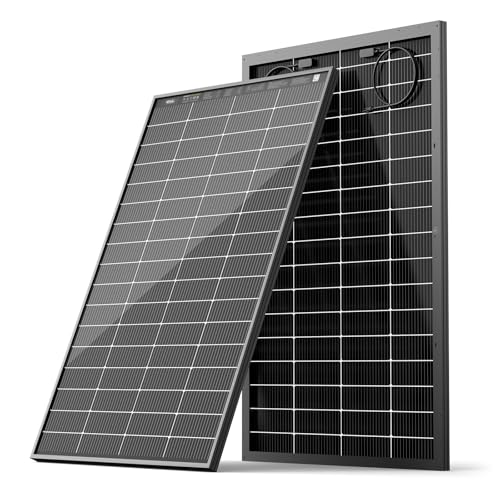
Best for: Rooftops where extra output matters, especially in reflective environments or higher-latitude installations. The bifacial design captures light from the rear, potentially delivering up to 30% more energy under optimal conditions.
Why selected: Bifacial tech adds optional gain without increasing panel size, making it appealing for limited-space setups seeking extra efficiency. It still uses 16BB cells for reliable performance and reduced resistance.
Caution: Real-world gains from bifacial panels depend on mounting height and reflective surfaces; gains are not guaranteed in every installation.
HQST Ultra-Light 200W Portable
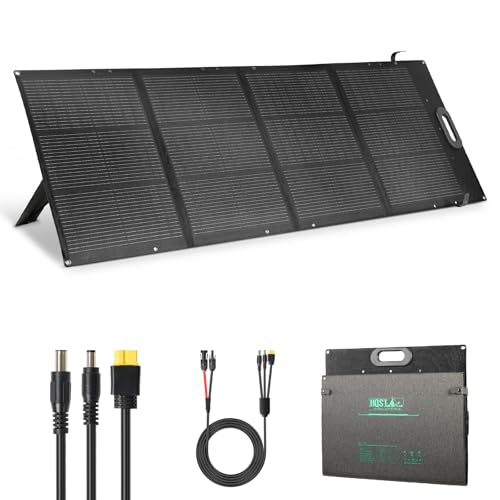
Best for: Outdoor enthusiasts who need a fast, grab-and-go panel that reduces weight for travel trailers, camping, and emergencies. The panel is foldable with kickstands and IP67 waterproofing for rugged use.
Why selected: The 25% efficiency using 16BB N-Type cells provides solid power in a lighter package, making it easier to handle on hikes or while camping. The included adapter cables broaden compatibility with popular power stations.
Caution: While lightweight, performance can vary with shading and angle; ensure proper tilt to maximize sun exposure.
TWELSEAVAN 200W Portable Solar Panel

Best for: Outdoor brands seeking a robust 200W panel with ETFE protection and MC4 outputs for various power stations. It provides 3 DC adapters plus a 8mm MC4 compatibility for flexible setups.
Why selected: The 24% efficiency range is complemented by good weather resistance and broad compatibility with popular portable power stations, making it versatile for caravans and off-grid adventures.
Caution: Some users may prefer panels with higher efficiency for very limited sun hours; ETFE construction adds durability but can be more expensive than standard laminates.
Buying Guide: Key Purchase Considerations
- Space and mounting: Measure roof or storage space and choose a panel with a foldable or compact form factor to fit without blocking vents or antennas.
- Efficiency: 16BB/N-Type cells offer higher efficiency; 25% efficiency is common in these models, helping maximize output in limited sun.
- Weight: For mobile use, lighter panels ease handling during installation and removal.
- Durability: Look for IP ratings, EL-tested cells, and robust frames to withstand road vibrations and weather.
- Compatibility: Check MC4 connectors, adapters, and battery or power station compatibility (12V/24V, LiFePO4, AGM, etc.).
- Shading tolerance: Bifacial or dual-module designs can help in shaded or reflective environments, but gains vary by installation.
- Cables and accessories: Ensure included cables or mounts meet your setup needs; some models provide 3-in-1 adapters for broader compatibility.
- Maintenance: Consider panels with simple cleaning and accessible ports to keep performance steady over time.
FAQ
- What does 16BB vs 9BB mean in solar panels?
16BB and 9BB refer to the busbar count in solar cells. More busbars (BB) generally improve current collection, reduce resistance, and can improve performance and durability in high-heat conditions. - Are bifacial panels worth it for a van?
Bifacial panels can provide extra output by capturing rear-reflected light, but gains depend on mounting height, surface reflectivity, and tilt. In tight van spaces, the extra output may be limited unless mounted for optimal reflection. - Can I mix different 200W panels in one system?
Yes, you can mix panels with similar voltages and wiring configurations, but ensure the overall system voltage and current remain within your charge controller and battery limits. - Is 200W enough for a typical RV setup?
A 200W panel can charge a small power station or battery system and operate essential devices, but total energy needs vary. For heavy loads, add more panels or choose a higher-capacity system. - What should I consider when mounting on a camper van roof?
Weight distribution, wind load, and roof integrity matter. Use proper brackets, sealants, and consider a lightweight, compact design to minimize drag. - Do these panels require specific adapters?
Most panels use standard MC4 connectors and include adapters to connect with common power stations. Verify compatibility with your power bank, van charger, or generator before purchase.