Best Small RV Solar System Kits for Off-Grid Travel and Easy Installation
Answering the buyer’s search intent: these compact RV solar kits are ideal for weekend travelers, full-time RV users, and anyone upgrading an off-grid rig without complex wiring. The top picks below balance ease of use, reliability, and overall value for small to mid-size RVs. Each product is described with who it’s best for, plus a practical caution if applicable. A quick summary table follows to compare key specs at a glance.
| Product | Best For | Output (est.) | Notes |
|---|---|---|---|
| ECO-WORTHY 200W Complete Solar Panel Starter Kit | Beginners seeking all-in-one setup | ~800Wh/day | Includes battery and inverter |
| ECO-WORTHY 200W Panel Kit with Controller | Compact RVs needing easy upgrade | ~800Wh/day | Monocrystalline panels, durable frame |
| Renogy 200W Starter Kit with Adventurer LCD | Lightweight, space-conscious setups | ~800Wh/day | LCD controller, rugged mounting |
| ECO-WORTHY 800W Off-Grid Kit | Off-grid power with higher demand | ~3.2 kWh/day | UPS compatibility, multiple panels |
| Renogy 200W Starter Kit (2x100W) | Flexible panel pairing for RVs | ~1,000Wh/day | Good efficiency, robust design |
ECO-WORTHY 200 Watt 12V Complete Solar Panel Starter Kit
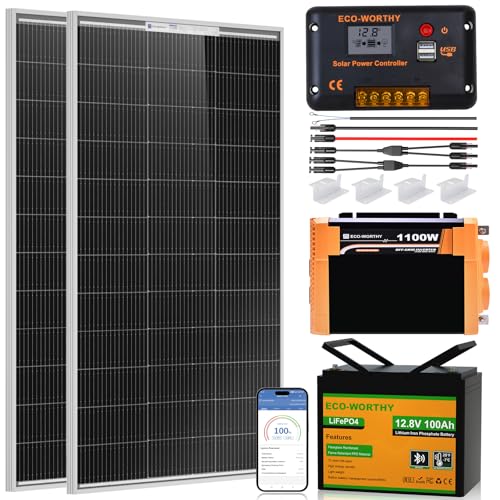
The ECO-WORTHY all-in-one system claims 800Wh daily power with a 1.28kWh storage, making it suitable for RV travelers who want a ready-to-use setup. Included are two 100W panels, a 12.8V 100Ah lithium battery, an 1100W inverter, and a 30A PWM controller. It’s best for buyers who prefer a single purchase with installation support and a novice-friendly four-step setup. Caution: the system’s performance depends on sun exposure and load patterns.
ECO-WORTHY 200 Watts 12V/24V Solar Panel Kit with 30A PWM Controller
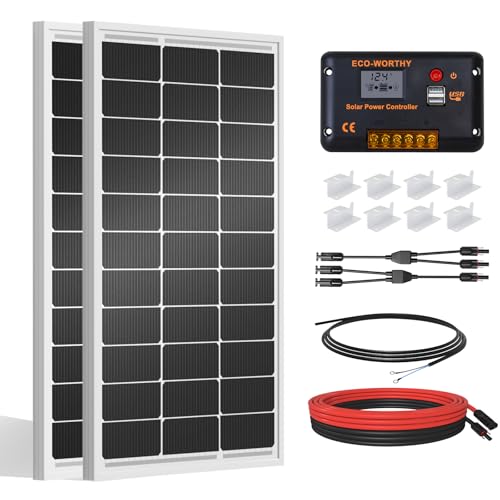
Designed for RVs and campers needing a compact upgrade, this 200W kit emphasizes high efficiency and durability. It delivers up to ~800Wh daily under optimal sun and uses monocrystalline cells with a corrosion-resistant frame. Best for buyers who want a robust panel with simple PWM charging and a broad compatibility range. Limitation: the package focuses on the panel and controller; full system expansion requires additional components for larger loads.
Renogy 200W 12V Monocrystalline RV Solar Panel Kit
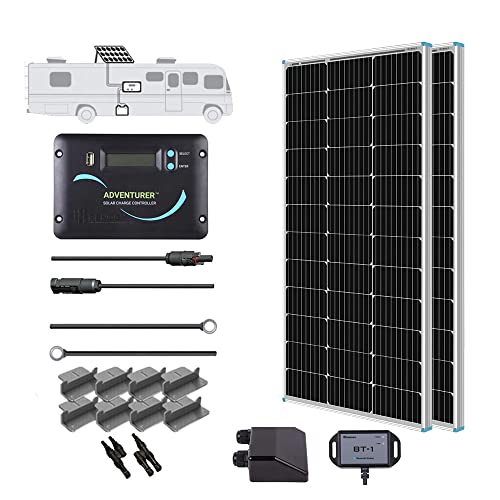
Renogy’s 200W starter kit emphasizes space efficiency with a 4-hour sun assumption delivering ~800Wh daily. The Adventurer 30A PWM controller supports multiple battery types and includes protection features such as overcharge and short-circuit prevention. Best for RV owners wanting a proven brand, flexible controller options, and easy wall mounting. Choose this if you value clean wire routing and a compact footprint; avoid if you need advanced MPPT charging in harsh climates.
ECO-WORTHY 7.168KWH 800W Solar Panel Kit for RV Off-Grid

This larger ECO-WORTHY kit delivers up to 3.2 kWh daily with four 200W bifacial panels and a 3000W inverter/charger. It also offers UPS functionality to switch between solar and mains seamlessly. Best for RVers needing significant power for appliances like refrigerators or air conditioners while staying off-grid. Limitation: higher upfront cost and installation space requirements; more complex to manage 2 energy sources.
Renogy 200W 12V Monocrystalline Starter Kit with 2x100W Panels

This two-panel Renogy kit combines 200W with a Wanderer PWM controller for reliable, modular solar power. It’s designed for RVs and boats that require a compact, scalable system with strong daytime production (estimated ~1000Wh daily under good sun). Best for buyers who want easy expansion; choose a kit if you plan to add more panels later and avoid if you need MPPT charging from the start.
Buying Guide
- System size and energy needs: For small to mid-size RVs, 200W–800W kits meet typical daily usage under clear sun. Bigger loads require higher wattage, multi-panel setups, or UPS-enabled kits.
- Battery type: Lithium batteries offer higher energy density and longer life than lead-acid, but cost more upfront. Ensure the kit includes compatible battery technology and proper charging profiles.
- Charge controller type: PWM controllers are simple and affordable; MPPT controllers optimize energy in varied conditions but add cost. For limited space or modest power, PWM is often sufficient.
- Installation footprint and mounting: Consider panel size, frame durability, and mounting options. RV-facing kits usually favor compact, lightweight panels with corrosion-resistant frames.
- Expansion potential: If you anticipate adding more panels or extra loads, prefer modular kits with clear upgrade paths and compatible controllers.
- Durability under travel conditions: IP ratings, wind and snow load specs, and corrosion resistance matter for roadside or off-road use.
- Installation expertise: Novice-friendly packages with four-step guides reduce DIY risk; more complex setups may warrant professional help for optimal wiring.
FAQ
- What size RV solar kit should I start with?
A: For small to mid-size RVs, a 200–400W kit with a compatible battery is a practical starting point, balancing cost and daily output. - Do I need MPPT or PWM controllers?
A: PWM is fine for simple systems and limited budgets; MPPT provides better efficiency in shaded or variable conditions but costs more. - Can I expand an all-in-one kit later?
A: Yes, choose modular kits that allow adding panels and compatible controllers as power needs grow. - Is lithium or lead-acid better for RV use?
A: Lithium offers longer life and higher energy density with deeper cycles, but at higher upfront cost; choose based on long-term value. - What maintenance is required for RV solar kits?
A: Regularly inspect connections, clean panels to remove debris, and monitor the charge controller and battery health for optimal performance.