Best Small Portable Wind Turbine Kits for Clean Energy on the Go
Small portable wind turbines are a practical way to explore wind power, DIY STEM learning, and off-grid charging options. This guide highlights five accessible options, spanning educational kits and compact turbines designed for outdoor or indoor use. Each product demonstrates how wind energy can be captured, converted, and applied to everyday devices or projects. Read on to compare capabilities, assembly needs, and suitability for classrooms, home experiments, or light outdoor power.
Summary of chosen products
| Product | Brand | Key Use | Notes |
|---|---|---|---|
| Wind Power V4.0 STEM Kit | Thames & Kosmos | 3-foot turbine for electricity generation | |
| Wind Power V5.0 STEM Kit | Thames & Kosmos | 3-foot turbine; indoor/outdoor experiments | |
| Mini Vertical Wind Turbine Model | Keproving | Educational DIY wind power principles | Requires assembly; compact build |
| DIY Small Wind Turbine Generator Kit | nightbreeze | Backyard decoration with wind-powered lighting | Tape lights powered by wind; decorative and functional |
| Wind USB Generator with LED | Jumplushion | USB charging on outdoor trips | Portable and USB-compatible |
The following sections provide detailed product profiles, highlighting what each kit or turbine offers in terms of learning value, setup, and practical use in real-world wind conditions. All options emphasize safe handling, modular design, and the potential to power small devices or demonstrate energy conversion in action.
Thames & Kosmos Wind Power V4.0 STEM Kit
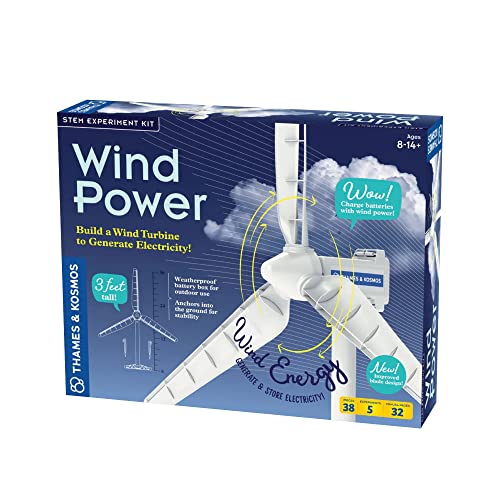
This kit features a real 3-foot tall wind turbine designed for classroom-style experiments and hands-on learning about renewable energy. It emphasizes durable, single-piece blade construction for improved aerodynamics and stability. The turbine can generate electricity to charge a battery and power a small model car, enabling practical demonstrations of wind-to-electricity conversion and real-time testing of wind speed impacts.
Thames & Kosmos Wind Power V5.0 STEM Kit

The fifth-generation wind turbine kit builds on the V4.0 design with upgrades intended to improve performance both indoors and outdoors. It includes a redesigned blade hub and gear ratio to optimize efficiency when used with outdoor wind or indoor fan setups. Learners explore the technology behind wind energy, its historical context, and its modern-day applications, with a focus on energy conversion and system optimization.
Mini Vertical Type Wind Turbine Generator Model

This compact vertical turbine model focuses on teaching the physical principles behind wind power generation. It comes as a DIY kit with accessories for assembly, enabling students or hobbyists to see how turbine blades convert wind energy into electricity. While suitable for small-scale demonstrations, expect performance to depend on wind or an external blower for more consistent results.
DIY Small Wind Turbine Generator Kit and Light Strip

This kit merges wind-driven power with decorative lighting. It powers a 10-meter color tape light strip, providing dynamic nighttime visual effects that respond to wind. The design emphasizes wind-powered lighting without batteries or external power, making it a practical outdoor enhancement for gardens or patios while demonstrating basic energy conversion concepts.
Wind USB Generator With LED Light

This portable turbine targets travelers and outdoor enthusiasts who need a simple USB charging option. It includes a USB output for charging small devices and is designed for convenient mounting on vehicles or bikes. The unit focuses on portability and practical power for gadgets on the go, rather than large-scale energy production.
Product-by-product comparison and context
All five options illustrate different facets of small wind energy, from classroom-scale demonstrations to portable charging devices. Thames & Kosmos kits emphasize structured learning paths with real turbines and measurable energy generation. Keproving and PROYONGOO offerings highlight hands-on engineering and portable concepts suitable for education or hobby projects. The decorative wind-driven lighting kit from nightbreeze shows wind energy in a functional, aesthetic application, while Jumplushion’s USB generator targets travel and outdoor usage with straightforward charging capabilities. Each product varies in assembly requirements, wind-dependence, and end-use practicality.
Buying Guide
Key purchase considerations
- Learning objectives: Choose kits that align with your goals—basic energy concepts, hands-on turbine assembly, or advanced turbine design.
- Wind requirements: Some models perform best with natural outdoor wind, others with a controlled indoor fan. Consider typical wind conditions where you plan to use the turbine.
- Durability and safety: Look for durable plastic or metal components, and check blade design for safe handling and weather resistance if used outdoors.
- Output needs: If the goal is charging small devices, confirm the turbine’s voltage/current specs or USB compatibility. For educational demonstrations, energy conversion visibility and measurement options may be priority.
- Assembly effort: Some kits are plug-and-play, while others require significant assembly. Factor in time, tools, and skill level.
- Indoor vs outdoor use: Outdoor-capable kits should withstand weather exposure, while indoor variants may prioritize compact size and quiet operation.
Performance and versatility
Educational kits like the Thames & Kosmos models provide structured exploration of wind energy with measurable outcomes, such as battery charging or model car power. Decorative and USB-focused options emphasize immediate, tangible results in real-world contexts, often with simpler setup. Vertical-axis designs tend to perform across a range of wind speeds and can be more compact, though efficiency varies with blade design and gearing. Consider whether you want a long-term STEM project, a classroom demonstration, or a portable charging solution for trips or camping.
Safety and maintenance considerations
Inspect blades and housings for cracks or wear after heavy use. Outdoor kits benefit from weather-resistant materials and secure mounting. Regularly check wiring connections and batteries, and store components properly to prevent corrosion or damage. For younger users, ensure adult supervision during assembly and operation to avoid injuries from moving blades.
Value and compatibility
Assess how each option complements existing learning materials or projects. Some kits pair with sensors, multimeters, or data-logging tools for enhanced experiments. For families or classrooms building a wind-energy exhibit, the combination of a 3-foot turbine, a smaller model, and a USB charger or decorative lighting can create a cohesive, hands-on curriculum.
Additional ideas and considerations
Using these turbines to teach energy concepts can extend beyond electricity generation. Students can model wind speed, turbine efficiency, and power curves, then compare results across indoor and outdoor setups. If space allows, create a small wind tunnel or use fans to simulate different wind conditions. Document findings with charts and simple calculations to reinforce math and science skills while keeping the projects engaging and safe.
Overall, the best choice depends on your aims: a rigorous STEM kit for classrooms, a portable option for fieldwork, or a decorative solution that demonstrates wind power in a practical, visible way. Each product listed offers a pathway to understanding how wind transforms into usable energy, with varying degrees of complexity and real-world applicability.