Best Electric Baseboard Heaters for Home Warmth and Easy Installation
Answering the buyer’s search for skirting board heaters, this guide highlights five electric baseboard options that deliver steady warmth, simple installation, and reliable safety features. Best for bedroom retreats, living rooms, or home offices, these models vary by wattage, wiring needs, and portability. The table below compares key specs to help you choose quickly.
| Product | Best For | Wattage | Installation | |
|---|---|---|---|---|
| 750/563 W | ||||
| 350/262 W | ||||
| 1500 W | ||||
| 1500 W | ||||
| 1500 W |
Note: All listed products are designed to operate as electric baseboard heaters, often installed along skirting lines for unobtrusive warmth. When selecting, consider room size, wiring capacity, desired thermostat control, and whether you prefer a fixed installation or occasional relocation.
Oil Radiator Heaters and Skirting Panel Models

Product: Oil Radiator Heater with intelligent heating, LED touch screen, and automatic thermostat control. Best for small to medium rooms where automatic temperature maintenance reduces energy use. Choose this if you want a built-in timer and responsive digital controls. Limitation: not a plug-in baseboard style; installation may require a dedicated space and isn’t designed to run along a baseboard line as seamlessly as true baseboard units.
Cadet F Series 36″ Electric Baseboard Heater
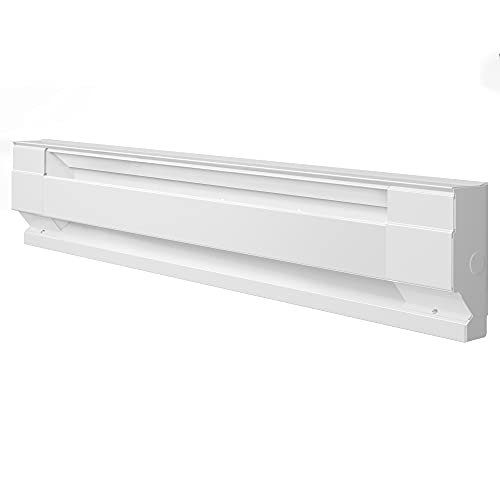
Features: 750/563 W options at 240/208 V. Includes universal wiring and pre-punched knockouts for straightforward installation. Convection helps warm the room evenly. Best for medium rooms where steady heat and a minimalist look fit well. Better for homes needing a reliable baseboard solution that blends with wall color. Caution: ensure your electrical circuit supports the wattage to avoid overloading existing breakers.
Who it’s for
Best for: homes needing a durable, fixed baseboard heater with reliable convection and easy wiring. Why selected: Cadet’s F Series combines straightforward installation with steady heat distribution, making it a solid long-term choice for bedrooms and living spaces.
Cadet F Series 24″ Electric Baseboard Heater
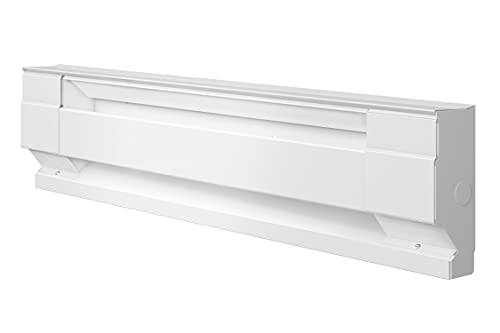
Features: 350/262 W, 240/208 V. White steel cabinet with basic power‑on/off style. Convection design helps move warm air across small rooms. Best for: tight spaces like home offices or hallways where a low-profile heater is ideal. Caution: lower wattage may be less effective in very large rooms; match size to room square footage for efficient heating.
What to know
Choose this if you want a compact, straightforward heater that fits along a skirting line without drawing attention. It’s ideal for upgrading a stale space with enhanced warmth without a dramatic remodel.
Cadet F Series 49″ Portable Electric Baseboard Heater

Features: 1500 W, 120 V. Portable design adds flexibility to heat different zones without reinstalling. Best for: spaces that require temporary heat or seasonal room reconfiguration. Better for: rooms where a fixed baseboard unit is impractical. Caution: portability may mean less consistent heat distribution compared to fixed baseboard units; ensure safe placement away from furniture and feet paths.
Cadet F Series 72″ Electric Baseboard Heater

Features: 1500 W, 120 V. Very long baseboard length supports even heat distribution along large walls. Best for: large living rooms or open-plan areas where a uniform heat zone is preferred. Caution: longer units require precise mounting alignment along the baseboard line and adequate clearance for safe airflow.
Comfort Zone CZ600 Electric Baseboard Heater

Features: 1,500 W with adjustable thermostat, overheat protection, tip-over switch, stay-cool body. Best for: bedrooms or home offices where safety features provide extra peace of mind. Better for: spaces needing reliable temperature control and child-safe design. Caution: ensure proper electrical circuit support for high-wattage operation and consider noise level of adjacent equipment, though baseboard heaters are typically quiet.
Buying Guide: Key Considerations For Electric Baseboard Heaters
- Room size and heat needs: Match wattage to the room’s square footage and insulation. Larger rooms typically require higher wattage or longer baseboard runs.
- Installation type: Decide between fixed wall-mounted baseboards and portable options. Wall-mounted models provide steady, space-saving warmth; portable units offer flexible heating in multiple rooms.
- Control and scheduling: Thermostats with digital displays, programming options, and timers help optimize energy use and comfort.
- Safety features: Look for overheat protection, tip-over switches for portable units, and stay-cool surfaces to prevent burns.
- Electrical requirements: Verify circuit capacity, wire gauge, and compatibility with your home’s wiring. Some units require dedicated circuits or professional installation.
- Noise and airflow: Most baseboard heaters operate quietly; consider units with convection designs for even heat without fans, reducing noise.
- Aesthetic fit: Choose models with slim profiles and neutral finishes to blend with baseboard molding and wall colors.
FAQ
- Do electric baseboard heaters require professional installation?
Fixed baseboards typically require proper mounting and wiring, which may benefit from professional installation. Portable models require less preparation but still need safe placement away from obstructions.
- Can baseboard heaters be used as primary heat?
Yes, in well-insulated spaces or smaller rooms, baseboard heaters can provide primary heating, though larger or poorly insulated areas may require supplemental heat.
- Are baseboard heaters energy efficient?
Modern models with thermostatic control and programmable settings help manage energy use. Efficiency depends on insulation, room size, and proper wattage matching.
- What maintenance is needed?
Baseboard heaters require minimal maintenance. Keep air intakes clear, avoid obstructing vents, and inspect wiring connections if there are signs of wear.
- What safety features should I look for?
Overheat protection, tip-over switches (for portable units), and stay-cool surfaces are important safety features to consider.
- Can I install along a skirting board?
Yes, many baseboard heaters are designed to be mounted flush along walls or skirting lines for unobtrusive warmth. Ensure proper clearance and mounting hardware.