Best Single Pole Shunt Trip Breakers for Quick External Tripping
Answering buyers seeking reliable external-tripping protection, this guide highlights top single-pole shunt trip breakers. Ideal for small circuits, remote activation scenarios, and quick shutoffs, these options are best for electricians, contractors, and safety-conscious homeowners. Each selected product offers a built-in shunt trip for external triggering, with clear suitability notes to help you compare. The list covers common 120V configurations and one 120/240V option for broader use.
| Product | Type | Poles | Voltage | Best For |
|---|---|---|---|---|
| Siemens Q12000S01 | MP-T | Single | 120 | Compact, external trip |
| Siemens Q13000S01 | MP-T | Single | 120 | Higher amperage, external trip |
| Siemens Q11500S01 | MP-T | Single | 120 | Standard 15A with trip |
| Siemens -HI Q130 | QP | Single | 120 | QP family, plug-in |
| GE THQL1120ST1 | Q LINE | Single | 120/240 | Shunt-trip, 20A |
Siemens Q12000S01 120V Shunt Trip Single Pole

Reference features: UL Listed breaker, Shunt trip allows for externally activated tripping, Single pole, 120-Volt, takes up space of 2 poles. This unit is best for spaces where a compact single-pole solution with external control is needed, such as small appliances or control circuits in a Siemens-compatible panel. Good for projects prioritizing straightforward wiring and a dedicated remote shutdown feature.
Best for: electricians or homeowners who need a compact, 120V single-pole breaker with immediate external trip capability. Avoid this if you require a double-pole or 240V configuration, which this model does not provide.
Siemens Q13000S01 120V Shunt Trip Single Pole
Reference features: UL Listed breaker, Shunt trip allows for externally activated tripping, Single pole, 120-Volt, takes up space of 2 poles. This model suits higher-amperage needs within the same single-pole form factor, making it a good choice for circuits that demand more current while preserving external trip control.
Best for: installations requiring 30A capacity in a single-pole package with remote trip capability. Choose this if your circuit calls for more current than the 20A option without moving to a double-pole setup.
Siemens Q22000S01 120/240V Shunt Trip Double Pole

Reference features: UL Listed breaker, 120-Volt shunt trip allows for externally activated tripping, Double pole, 120/240-Volt, takes up the space of 3 poles. This is best for multi-wire branch circuits or areas where a dual-pole protection with remote trip is required.
Best for: installations needing simultaneous two-pole protection with external activation. If you only need single-pole protection, this may be unnecessarily bulky and space-inefficient.
Siemens Q11500S01 120V Shunt Trip Single Pole

Reference features: UL Listed breaker, Shunt trip allows for externally activated tripping, Single pole, 120-Volt, takes up space of 2 poles. This 15A option provides a balanced choice for circuits that demand moderate protection with remote tripping capability.
Best for: projects needing a lower-amperage single-pole with external trip. Better for lighting or small appliance circuits than higher-load feeders.
SIEMENS -HI Q130 30-Amp Single Pole
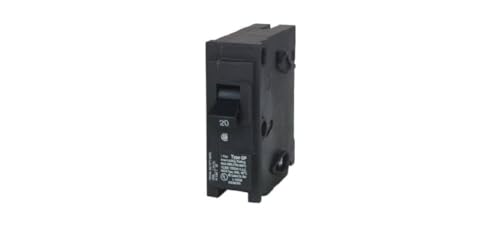
Reference features: Single pole, 30 Amp, 120V type QP Circuit Breaker, 10,000 AIC interrupting rating, Insta-wire feature. While not clearly labeled as a shunt-trip product in the name, this QP family unit is widely compatible in Siemens enclosures, offering reliable protection and convenient installation.
Best for: safer high-current single-pole protection in Siemens environments. Better for standard circuits where shunt-trip is not mandatory, but quick-connect features help reduce wiring effort. Limitations include not listing a dedicated external trip in the provided data.
GE THQL1120ST1 1-Inch Shunt Trip

Reference features: 1 INCH PLUG-IN, 1 POLE, 10 KAIC interrupting rating, 120/240 V, 20 AMP, Circuit Breaker, Q LINE, SHUNT Trip. This GE model provides classic plug-in compatibility with shunt-trip capability for remote shutdown control on a 120/240V system.
Best for: installations needing a 20A, single-pole GE solution with established plug-in compatibility. Choose this if GE/Q Line compatibility and pluggable form factor are priorities. Caution: Ensure enclosure and bus compatibility with GE THQL series.
Buying Guide
What to consider when choosing a single-pole shunt trip breaker
- Voltage and amperage needs: Confirm the circuit voltage (120V vs 120/240V) and required current, as this affects which model to choose (20A vs 30A, etc.).
- Shunt-trip reliability: Look for UL-listed or equivalent listings and ensure the external trip feature matches your triggering method (manual, control panel, or safety system).
- Pole configuration: If you only need single-pole protection, a single-pole unit saves space; double-pole units are for multi-wire circuits or higher protection needs.
- Panel compatibility: Verify enclosure type (Siemens QP vs MP-T vs GE Q LINE). Incompatibilities can complicate installation or require adapters.
- Physical size and form factor: Some models take up the space of two poles; plan wiring routes and bus connections accordingly.
- Remote triggering use case: Determine whether the external trip is triggered by a control system, safety interlock, or manual switch, and pick a breaker that supports that interface.
FAQ
- What is a shunt trip breaker used for?
It provides external triggering for immediate circuit shutdown, commonly used in safety interlocks and control systems.
- Can single-pole shunt trip breakers handle high-load circuits?
They are available in various amperages; choose 20A or 30A models based on your circuit rating and load requirements.
- Are these compatible with all electrical panels?
Compatibility depends on the panel’s brand and model family (Siemens MP-T, QP, GE Q LINE). Check panel labeling and manufacturer recommendations.
- Do shunt trip breakers require special wiring?
They typically need wiring to the shunt-trip terminal to enable external triggering, following the manufacturer’s wiring diagram.
- Is a double-pole shunt trip necessary for a multi-wire branch circuit?
Yes, for simultaneous protection of both hot legs, a double-pole model is appropriate; single-pole variants protect only one conductor.