Best Single Phase EV Chargers for Home Charging: Top Portable and Fixed Options
Finding the right single phase EV charger means balancing portability, compatibility, and convenient features for daily use. This guide highlights five solid choices that support common home charging setups, with easy-to-use interfaces, adjustable current, and reliable performance. Whether you need a portable solution for travels or a robust domestic charger, these selections cover a range of single-phase configurations common in American households.
Summary Of Chosen Products
| Product | Brand | Key Features |
|---|---|---|
| Mobile Home EV Charging Station Type 2 to NEMA 5-15P Plug, Portable EV Charger 16A 110VAC, Single Phase, 5m | JecoEV | Type 2 to NEMA 5-15P, 110 VAC, 16A, portable |
| JecoEV Type 2 Male to Type 2 Female EV Charging Cable, Mode 3 Portable EV Charger, Single Phase 32A 7kW, 5m | JecoEV | Type 2 to Type 2, 7kW, 230–250V, portable |
| JecoEV Portable Type 2 EV Charger, 32A 3-pin CEE Plug + NEMA 5-15 Adapter, 7kW Single Phase, 5metre | JecoEV | Type 2 to CEE + NEMA 5-15 adapter, 5 m, 7kW |
| BETUMODA Level 1&2 EV Charger 2026 Upgraded, 110V–240V, 8-16Amp Adjustable Current & Timer | BETUMODA | 8–16A adjustable, timer, SAE J1772 compatible |
| LEDVANCE Phase EV Commercial Charger, Gen 2, Level 2, 48 Amp, 11.5kW | LEDVANCE | Up to 11.5kW, LCD touchscreen, IP65, Level 2 |
Mobile Home EV Charging Station Type 2 To NEMA 5-15P Plug

Product overview: This portable charger from JecoEV offers a Type 2 IEC 62196-2 connector on one end and a NEMA 5-15P plug on the other, designed for 110 VAC circuits. It provides a single-phase output suitable for homes with standard outlets. The unit supports up to 16A charging, making it a practical on-the-go option for eligible EVs and plug-in hybrids. Its compact length allows easy storage in a vehicle or garage corner.
Features in focus: Type 2 charging standard, NEMA 5-15P power plug, rated voltage of 110 VAC. This setup emphasizes convenience and compatibility for users with 110V home outlets and modest charging needs. Its portability is a key benefit for travelers or renters needing flexible charging solutions.
JecoEV Type 2 Male To Type 2 Female EV Cable

Product overview: This Mode 3 portable EV charger cable provides a Type 2 female-to-type 2 male configuration, suitable for single-phase charging at up to 7kW. It supports 230–250V AC input/output, making it compatible with a variety of EV models that use Type 2 connectors. The length, at 5 meters, offers flexibility for parking positions and accessibility in different charging spots.
Features in focus: Type 2 IEC 62196-2 compliance, 7kW output, single-phase operation, 230–250V AC compatibility. The cable design emphasizes portability and ease of use for drivers who use public charging infrastructure or at-home Type 2 ports.
JecoEV Portable Type 2 EV Charger With CEE And NEMA 5-15

Product overview: This portable charger combines a Type 2 connector with a 32A CEE (blue commando) plug and a NEMA 5-15 adapter, offering a versatile single-phase charging option at up to 7kW. The unit includes scheduling features and current switching, enabling tailored charging sessions. It is designed for 5-meter length for extended reach in different settings.
Features in focus: Type 2 to CEE plug, NEMA 5-15 adapter, 5-meter cable, adjustable current options, scheduling. This model is ideal for users who want flexibility between home outlets and outdoor or workshop environments, while maintaining simplicity in operation.
JecoEV Portable EV Type 2 Charger With Customized Plug

Product overview: This single-phase charger offers a Type 2 connector to a customized plug, supporting 85–264V input and adjustable current levels from 8A to 16A. The 5-meter cable gives ample reach for a typical home setup, and the same current setting is designed to replicate the charging rate on future uses, improving consistency in charging behavior.
Features in focus: Type 2 IEC 62196-2, 85–264V input, adjustable current 8/10/13/16A, 5-meter length. Use cases include both domestic installs and travel where a flexible, repeatable charging profile is desired.
BETUMODA Level 1&2 EV Charger 2026 Upgraded
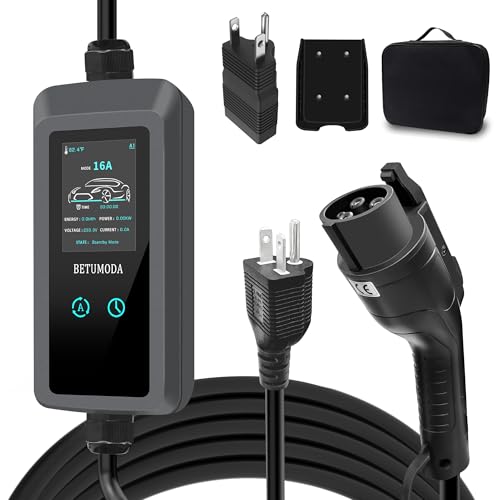
Product overview: BETUMODA’s upgraded Level 1 & 2 charger supports 110–240V input and adjustable current (8A/10A/13A/16A) with an intelligent timer (1–12 hours). It’s SAE J1772 compatible and includes both 5-15 and 6-20 plug options, making it suitable for home use and travel in many vehicles. A note on 5-15 compatibility should be observed to avoid exceeding safe amperage.
Features in focus: Four adjustable currents, timer, SAE J1772 compatibility, dual plug support. This model emphasizes flexibility for households with varying EVs and the need for scheduled charging with a single portable unit.
LEDVANCE Phase EV Commercial Charger Gen 2

Product overview: Leading the group, LEDVANCE’s Phase EV Level 2 charger delivers up to 11.5kW at 48 amps, designed for faster residential charging. It features a 4.3-inch color LCD touchscreen for multi-language control, and a large LED status indicator for real-time charging visibility. The unit is built for outdoor protection with IP65 and NEMA 4 enclosures, suitable for tougher environments.
Features in focus: 11.5kW output, LCD touchscreen, real-time status LED, IP65/NEMA 4 rating. This option is ideal for households seeking a robust Level 2 charger with a clear user interface and durable exterior protection.
Buying Guide: Key Considerations For Single Phase EV Chargers
- Voltage and amperage: Most home outlets provide 120V or 240V in the US. Look for units with adjustable current settings (8–16A) to optimize charging speed without overloading circuits.
- Connector compatibility: Type 1 vs Type 2, SAE J1772 compatibility, and available adapters determine what vehicles can charge. Ensure the charger supports your EV’s inlet.
- Cable length and portability: Longer cables help with parking alignment; portable units are useful for rents or multiple locations. Check whether the unit includes built-in storage clips or bags for organization.
- Timers and scheduling: Timers enable off-peak charging, potentially reducing electricity costs and improving grid demand management.
- Durability and weather resistance: Outdoor-use chargers should have IP ratings and rugged enclosures to withstand weather conditions and UV exposure.
- Safety features: Look for ground fault protection, overcurrent protection, and automatic shutoff when charging is complete or when a fault is detected.
- Future-proofing: For households considering vehicle upgrades, choose chargers with flexible current settings and multiple plug options to accommodate new models.
- Vendor support and warranties: A solid warranty and responsive customer support help address potential unit failures or compatibility questions.
In choosing a single-phase charger, consider your typical charging environment—home, garage, or occasional travel—and align operating voltage, connector type, and current options with your EV’s onboard charger capabilities. For renters or shared spaces, portable models with broad compatibility and easy switching between current levels can provide practical charging without complex electrical work.