Best Single Core PVC Insulated Cables for DIY Electrical Projects
Single core PVC insulated cables are versatile strands designed for a wide range of wiring tasks. This guide highlights five solid options, focusing on copper conductors, PVC insulation, and suitability for common home and workshop projects. The best pick depends on your application: from low-voltage electronics to general wiring and grounding. The following table compares key products to help you decide at a glance.
| Product | Brand |
|---|---|
| 100M Single Core Hard Electrical Cable 0.5/0.75/1/1.5mm2 PVC Insulated House Electric Cord | WANGZC001 |
| TUOFENG 22 AWG Solid Core Hookup Wire | TUOFENG |
| 14/12/10/8/6 AWG Flexible Copper Ground Wire, PVC Insulated | GO BEYOND YOURSEIF |
| Alpha Wire Single Conductor Cables 20 AWG Copper, Tinned | Alpha Wire |
| 22/18/16/10 AWG Flexible Copper Ground Wire Yellow Green, Oxygen-Free Copper | NALMAXO |
Buyer note: these cables cover a spectrum from small-gauge hook-up wires intended for electronics to heavier gauge grounding conductors for electrical projects. Use this guide to identify which cable best matches your task, space, and safety needs.
100M Single Core Hard Electrical Cable

This is a multi-size single-core PVC insulated copper cable suitable for various household electrical tasks. The conductor is pure copper, which supports good conductivity, and the PVC insulation adds durability and safety for indoor use. Best for: DIY wiring projects where a robust, versatile single-core option is needed. Limitation: data on insulation thickness varies across sizes, so verify the exact AWG and cross-section for your project before purchase.
TUOFENG 22 AWG Solid Core Wire
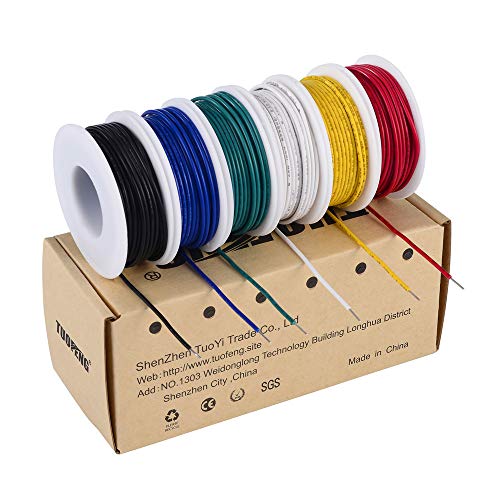
Contains solid tinned copper conductors with PVC insulation and a 22 AWG size. It offers good abrasion resistance and is suitable for indoor and outdoor use in electronics projects. Best for: breadboard wiring, Arduino projects, and compact electronic assemblies. Better for lightweight signal routing than high-current power tasks. Caution: not ideal for high-temperature environments beyond 80°C max, as insulation can degrade with heat exposure.
14/12/10/8/6 AWG Ground Wire (6 AWG Example)

Flexible single-core copper grounding wire with PVC insulation. Available in multiple gauges, with larger sizes like 6 AWG suited for grounding and main electrical runs. Best for: grounding systems in home wiring and industrial projects where low impedance paths are essential. Better for: higher current or long runs where mechanical flexibility is important. Limitation: larger gauges may be stiffer to route in tight spaces.
Alpha Wire 20 AWG Copper, Tinned

Single-conductor 20 AWG copper wire with tin plating, PVC jacket, and a substantial length. This option emphasizes reliable conductivity with corrosion resistance from tinning. Best for: precision electronics, prototyping, and where long-term conductor integrity matters. Better for: small to mid-level current applications. Caution: ensure insulation thickness meets your voltage and safety requirements for your specific build.
NALMAXO Ground Wire 22/18/16/10 AWG

Oxygen-free copper enables enhanced conductivity with low resistance, paired with flame-retardant PVC insulation in a flexible single-core design. Ideal for grounding and outdoor wiring due to its flame-retardant jacket. Best for: outdoor grounding, solar PV, and general wiring where rugged conditions exist. Choose this if you need higher conductivity and flame resistance; avoid if you require ultra-flexible small-diameter wire for tight spaces.
Buying Guide
What size should you choose?
Electrical projects demand matching conductor size to current, voltage, and distance. Use smaller gauges (like 22 AWG) for electronics and signal work. For power delivery and grounding, larger gauges (18–6 AWG) reduce resistance and improve safety. Always consult local electrical codes for minimum conductors and insulation requirements.
How important is insulation material?
PVC insulation offers durability and broad temperature tolerance for indoor and outdoor use. Some environments may benefit from additional insulation classes or jackets (e.g., flame-retardant or UV-rated coatings) to enhance safety and longevity in harsh conditions.
Indoor vs. outdoor applications
Indoor wiring often tolerates standard PVC insulation, while outdoor or exposed installations benefit from thicker insulation and protective jackets. Grounding and outdoor runs should prioritize abrasion resistance and weatherproofing to avoid corrosion and degradation.
Flexibility and routing considerations
Multi-strand designs provide greater flexibility for tight bends, while solid-core wires offer lower resistance and stiffer handling. For intricate routing in panels or enclosures, choose flexible options; for clean, straight runs, solid-core wires can be preferable.
Material quality and compatibility
Look for high-purity copper and proper tinning when used in electronics to resist oxidation. Tin-plated copper and OFC (oxygen-free copper) formulations can improve long-term performance, especially in environments with humidity or varying temperatures.
Safety and compliance notes
Always verify insulation ratings, temperature tolerances, and voltage limits. Do not exceed insulation or jacket specifications, and follow local electrical codes when wiring homes or permanent installations.
Typical buying considerations at a glance
- Conductor size vs. current requirements
- Insulation type and thickness
- Flexibility for routing and bending
- Indoor vs. outdoor suitability
- Corrosion resistance and tinning (for electronics)
FAQ
- What is single core PVC insulated cable best for?
Single core PVC insulated cables are commonly used for internal wiring, low-voltage electronics, and grounding in both residential and industrial settings.
- How do I choose the right gauge for a project?
Base gauge on expected current, distance, and safety considerations. Higher current or longer runs may require larger gauges to minimize resistance and heat.
- Is tin-plated copper better than bare copper?
Tin-plated copper resists corrosion and can improve long-term conductivity in humid or outdoor environments, which is beneficial for electronics and exposed installations.
- Can I use these cables outdoors?
Some PVC-insulated cables are designed for indoor use only; for outdoor use, verify weather resistance and flame-retardant ratings in the product details.
- Should I prefer solid-core or multi-strand for a project?
Solid-core is better for rigid, high-current runs and clean routing. Multi-strand offers greater flexibility for tight spaces and frequent movement.
- Do these cables meet electrical code requirements?
Always confirm with local codes and standards for your jurisdiction and project type, as requirements can vary by location and application.