Best Single 15 Ported Box Sub Enclosures for Car Audio Enthusiasts
Finding the right single 15 ported box can maximize deep bass and overall system clarity. This guide highlights five top-rated single 15-inch ported enclosures, explaining who each is best for and why. Use this to compare air space, build materials, and installation practicality to match your subwoofer and vehicle. Ideal buyers include: weekend DIY installers seeking improved bass, commuter drivers needing compact yet powerful enclosure options, and audio enthusiasts chasing deeper low-end without sacrificing space.
| Product | Air Space | Material | Best For |
|---|---|---|---|
| Q Power 15 Inch Heavy-Duty Single Vented | Noted in specs as 2.7 cu ft for the enclosure | Medium-density fiberboard (MDF) with carpet | Balanced bass, compact trunk fit |
| QPower 15 Inch Extra Large Single Vented | 5.3 cu ft air space | Heavy-duty MDF with carpeting | Larger bass output, for larger trunks |
| Q Power Q Bomb Series 15 Inch Ported | Single vented chamber design | 0.75″ MDF, black bed liner finish | Deep bass emphasis, rugged look |
| American Sound Connection 15″ Vented Sub Box | Vented enclosure design aims for enhanced airflow | High-quality MDF | Sound quality and airflow balance |
| NVX NE151P 15″ Slot Ported Enclosure | 3.5 cu ft internal volume, slot port | 3/4″ MDF | High-efficiency, strong low-end response |
Q Power 15 Inch Heavy-Duty Single Vented Carpet Box

This single-vented enclosure uses a 2.7 cubic feet air space, optimized for solid mid-bass depth and controlled low-end. Constructed from heavy-duty medium-density fiberboard (MDF) and covered with charcoal carpeting, it provides a secure housing for a 15-inch sub. The front is built from 1-inch MDF, with the body at 3/4-inch MDF, offering a sturdy platform for installations where space is a constraint. Best for: compact to mid-sized trunks where stable bass is preferred over extreme SPL. Caution: shipping dimensions should be checked to ensure proper fit in tight installations.
QPower 15 Inch Heavy Duty Single Vented Extra Large Box

This enclosure delivers a substantial 5.3 cubic feet air space, emphasizing expansive bass dynamics and powerful output. Built from heavy-duty MDF and finished with charcoal carpeting, it is designed to house larger 15-inch subs while maintaining durability. Front panel is 1-inch MDF; body is 3/4-inch MDF. Best for: installations needing maximum bass reach in larger vehicles or where subs demand higher air volume. Caution: the larger footprint may limit trunk cargo space in smaller cars.
Q Power Q Bomb Series 15 Inch Ported Box

The Q Bomb Series uses a single vented chamber with high-quality MDF at 0.75 inches thick to maximize bass response while resisting flex. The enclosure features a spring-loaded terminal for straightforward wiring and setup. Best for: users seeking robust bass with a straightforward install and a strong, factory-like finish (black bed liner). Limitation: single-vent design may limit extremely deep bass when paired with certain high-SPL subs in very small enclosures.
American Sound Connection 15″ Vented Sub Box
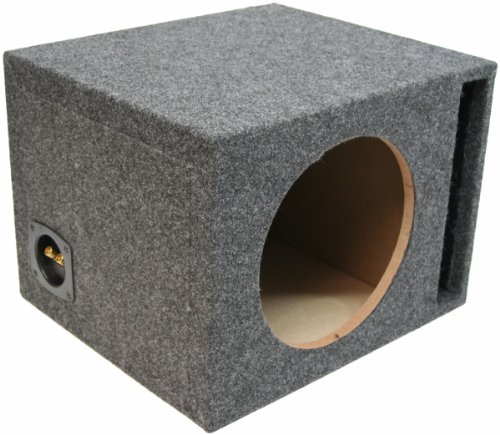
Crafted from high-quality MDF, this enclosed vented design is intended to deliver clean, impactful bass, tuned for a 15-inch sub. It emphasizes airflow through its vented design to reduce port turbulence and improve bass clarity. Best for: listeners who want a balanced, high-quality sound with reliable structural integrity. Caution: exact internal volume isn’t listed; suit your sub’s displacement to avoid overfilling the chamber.
NVX NE151P Single 15″ Slot Ported Enclosure

This NVX enclosure offers a 3.5 cubic feet internal volume with a slot port, tuned around 38 Hz for deep, powerful bass output. Built from 3/4″ MDF with a black carpet finish, it is designed for single 15-inch subs while keeping a compact profile. Best for: car owners who want tight, punchy bass and a port design that minimizes port noise. Caution: slot port tuning may require precise subwoofer compatibility for optimal results.
Buying Guide
- What air space do I need? Larger air space generally yields stronger bass at lower frequencies, but requires more rear trunk or cargo area. Match the enclosure volume to your subwoofer’s recommended displacement and your vehicle size.
- Ported vs unloaded vs slot port For bass-heavy music, ported and slot-port designs deliver deeper extension than sealed boxes. Unloaded boxes require you to install your own sub and may be best for customization.
- Material and build MDF is common for its balance of strength and workability. Look for 3/4″ to 1″ front panels or walls for durability in vehicle environments.
- Single vs dual chamber A single-ported chamber often provides straightforward, strong bass. Dual chambers can offer more control if you drive two subs or want separate load paths.
- Installation considerations Check trunk depth, seat fold methods, and mounting depth of your sub. Consider a model with a robust terminal design for easy wiring and reduced signal loss.
- Sound goals Choose a box that aligns with your listening preference: punchy mid-bass, deep low-end, or a balance of both. Port design and air space play key roles here.
- Compatibility Confirm that the enclosure supports the sub’s diameter, mounting depth, and voice coil size. Some boxes are tailored to a specific sub lineup.
Frequently Asked Questions
- What is the advantage of a ported enclosure? Ported boxes extend bass output and deepen low-frequency response by using a tuned port to improve air movement.
- How do I choose air space with a single 15″ sub? Refer to the sub’s recommended enclosure specs and your vehicle size. If unsure, a mid-range volume (around 2.5–3.5 cu ft) offers a versatile balance.
- Is MDF a good material for car enclosures? Yes. MDF provides rigidity and predictable acoustics when properly braced and finished.
- What installation factors matter most? Depth clearance, mounting surface rigidity, and secure wiring terminals prevent rattling and maximize bass output.
- Can I use any 15″ sub in these enclosures? Not always. Verify mounting size and displacement compatibility with the specific box design.
- Should I choose an unloaded box? If you want to select a specific 15″ sub or customize the configuration, an unloaded box offers flexibility, though it requires proper sub pairing.