Best Shore Power Frequency Converters for 50Hz to 60Hz Power
Answering the need for reliable 50Hz to 60Hz conversion, these shore power frequency converters are selected to deliver clean, stable output for American-standard devices. They’re suited for RV owners, boaters, lab workers, and workshop professionals who travel or operate in 50Hz regions. This guide highlights five strong options, what each is best for, and practical considerations to help you choose.
| Product | Best For | Key Benefit |
|---|---|---|
| PowerXchanger EX Series | Appliances and sensitive electronics in 50Hz regions | True continuous-duty, clean pure sine wave, selectable outputs |
| Groovely Marine Shore Cord | RV and marine shore power setups | Reliable L5-30P to 5-15/20R conversion, heavy-gauge cable |
| OMMFARL RV Converter (55A) | Standard RV electrical systems | Simple 55A DC output for RV needs |
| PM4 100 Amp RV Power Converter | High-demand RVs and multiple loads | Built-in 4-stage smart charger, safety protections |
| PowerMax 55 Amp RV Converter | Reliable DC power for RV/boats | Adjustable output, four-stage charging |
PowerXchanger EX Series Voltage & Frequency Converter
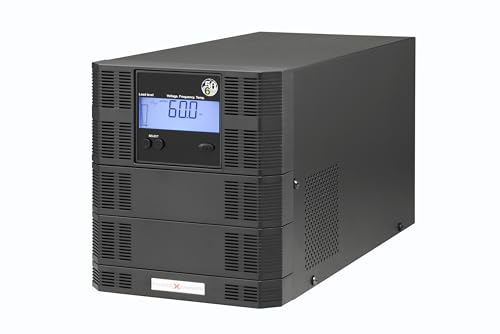
- True Voltage & Frequency Conversion (50Hz → 60Hz) with selectable 100V / 110V / 115V / 120V outputs.
- Pure Sine Wave output suitable for CPAP machines, audio gear, test instruments, and microprocessor devices.
- High-inrush capability and true continuous duty for refrigerators, washers, and power tools.
Best for: Users in 50Hz regions needing accurate 60Hz power for sensitive devices and motors. Why selected: It provides precise frequency conversion with clean output and robust startup performance. Caution: Ensure the chosen output voltage matches your device’s requirements to avoid misoperation.
Groovely 30 Amp to 15 Amp Marine Shore Power Cord

- Input: 30A L5-30P to Output: 5-20R (NEMA 5-20R) with 125V rating.
- Heavy-duty 10 AWG copper conductor for durability in harsh environments.
- ETL-certified safety with twist-lock L5-30P to 5-15/20R configuration.
Best for: RVs and marine setups requiring a secure 30A to 20A/15A adapter. Why selected: It provides a robust, certified connection for shore power in mixed electrical environments. Caution: This is 125V output; verify compatibility with your dock or pedestal.
RV Converter | 55 Amp (OMMFARL)

- 55 Amp DC power output converts 120VAC shore power into 12VDC for RV needs.
- Supports charging and powering low-voltage lights and appliances.
Best for: RV owners seeking straightforward shore power conversion to 12V systems. Why selected: Provides reliable conversion to meet daily RV electrical demands. Caution: Designed for standard RV use; ensure amperage alignment with your electrical setup.
PM4 100 Amp RV Power Converter

- 100 Amp power conversion from 110V-120V AC to 12V-16.5V DC.
- Built-in 4-stage smart battery charger with three charging modes.
- Automatic overload protection and safety features with cooling considerations.
Best for: High-demand RV systems needing robust charging and stable 12V output. Why selected: The built-in smart charging and safety protections help manage diverse loads. Caution: Proper ventilation is essential to avoid overheating during heavy use.
PowerMax 55 Amp RV Converter

- Adjustable output ranging from 13V to 16.5V for various battery chemistries.
- Four-stage smart charger supports lithium, AGM, gel, and lead-acid batteries.
- Designed for RVs, boats, and off-grid systems with stable DC power delivery.
Best for: Users with diverse battery types needing adjustable charging voltage. Why selected: The adjustable voltage and multi-battery compatibility expand compatibility across systems. Caution: Verify battery type compatibility before use to avoid mischarging.
Buying Guide
Key considerations when choosing a shore power frequency converter:
- Power rating and duty cycle: Match wattage demand and whether continuous operation is needed for devices like motors or testing equipment.
- Output waveform: Pure sine wave is preferred for sensitive electronics and motorized devices; modified sine wave may suffice for simple loads but can cause performance issues.
- Frequency and voltage options: Ensure the converter supports the required 50Hz to 60Hz transition and the target voltage (110V-120V, etc.).
- Safety features: Look for overload protection, short-circuit protection, thermal management, and ETL certification where relevant.
- Battery charging integration: If powering RVs or boats with battery systems, consider whether a built-in 3- or 4-stage charger is needed and compatibility with lithium, AGM, and lead-acid batteries.
- Ventilation and installation: Many high-output units require adequate airflow; consider space, mounting, and cable management in your setup.
- Compatibility and scalability: For larger systems, plan for future expansion or additional loads to avoid undersizing.
FAQ
- What is a shore power frequency converter used for? – It converts 50Hz supply to 60Hz and adapts voltage to power American-standard devices from regions that use different frequencies and voltages.
- Is pure sine wave output necessary for all devices? – Not always, but it’s preferred for sensitive electronics, motors, and timing-critical equipment to prevent malfunctions.
- Do these converters protect RV battery charging? – Some models include built-in 3- or 4-stage chargers to manage charging safely; verify model specifics.
- Can I use a 50Hz-to-60Hz converter with all RV equipment? – Most RV devices will work with 12V systems and appropriate chargers; always confirm load compatibility and voltage settings before use.
- What safety certifications are important? – ETL or equivalent safety certification helps ensure compliance with electrical safety standards in portable gear.
- Do these devices support high startup loads? – Models with high inrush capability are designed for compressors, refrigerators, and power tools, but confirm the exact spec for your load.