Best Server Room Air Conditioner Options for Quiet, Efficient Cooling
When running a server room or a home data closet, stable cooling is essential. The right air conditioner balances power with quiet operation, energy efficiency, and smart controls. The following picks represent versatile solutions for rooms ranging from small server nooks to larger spaces, with features like 3-in-1 modes, inverter technology, and drainage-free designs to simplify maintenance. Use this guide to compare capabilities and choose the unit that best fits your cooling needs and noise tolerance.
| Product | Brand | Cooling Capacity | Key Features |
|---|---|---|---|
| Dreo AC515S | Dreo | 12,000 BTU | 3-in-1 cooling, dehumidifier, fan; low-noise 46dB; drainage-free option |
| Wiytamo 10,000 BTU | Wiytamo | 10,000 BTU | 3-in-1 unit; smart app and remote control; self-evaporating design |
| Midea U 8,000 BTU | Midea | 8,000 BTU | U-shaped window design; ultra quiet; ENERGY STAR; smart controls |
| LG 23,500 BTU Dual Inverter | LG | 23,500 BTU | Dual inverter, ultra quiet; ThinQ app; voice assistant compatible |
| Midea Duo 14,000 BTU | Midea | 14,000 BTU | Dual hose design; inverter; compatible with Alexa/Google; portable |
Note: The models listed here are representative of compact to mid-size cooling solutions suitable for server room environments. When selecting a unit, consider space, ducting needs, noise tolerance, maintenance access, and integration with building management systems where applicable.
Dreo AC515S 12,000 BTU Portable AC

The Dreo AC515S delivers 12,000 BTU ASHRAE cooling suitable for mid-sized server rooms or busy office spaces. It supports a 3-in-1 mode combining cooling, dehumidification, and fan operation, allowing precise adjustment to humidity and airflow. A noise isolation system targets the compressor area, reducing operational noise to a quiet 46 dB—helpful when maintaining server room environments that demand minimal ambient disturbance. Controls include app, voice, and remote options for flexible placement and management. A drainage-free option simplifies setup and reduces maintenance tasks in humid locations.
Midea 8,000 BTU Window AC With Heat

This Midea unit adds year-round utility with cooling and auxiliary heating for spaces up to 350 square feet. Its inverter-based operation supports multiple modes including heat, auto, cool, dry, and fan, plus a 24-hour timer. The SmartHome App enables remote control in tandem with voice assistants like Alexa or Google Assistant. Energy efficiency is enhanced by variable-speed inverter technology, offering meaningful savings for server room spaces susceptible to variable daytime loads. A front-access filter keeps maintenance straightforward.
Wiytamo 10,000 BTU Portable AC
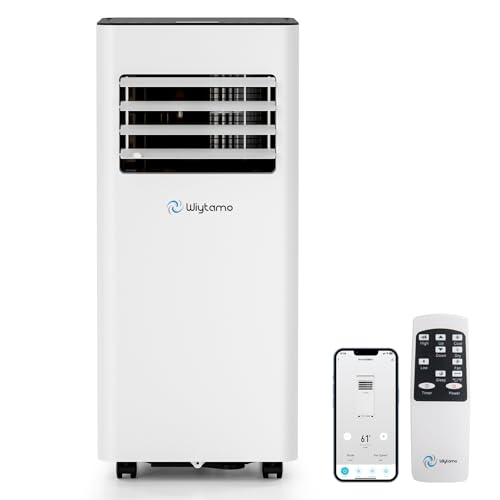
The Wiytamo portable unit provides 10,000 BTU cooling for spaces up to 450 sq ft, with a 3-in-1 setup (cool, fan, dehumidifier). It includes a smart app and remote control for flexible operation. A built-in sensor helps optimize compressor use for energy efficiency, which is beneficial for server rooms that require stable temperatures without spikes. The device balances powerful cooling with user-friendly control for maintenance staff and IT managers alike.
Midea 8,000 BTU U-Shaped Smart Inverter Window AC

The Midea U shaped window design minimizes outside noise intrusion and delivers ultra-quiet operation, with a noise profile as low as 32 dBA in some modes. It offers over 37% energy savings with inverter technology and is ENERGY STAR certified. Smart control via the SmartHome app, plus compatibility with Alexa and Google Assistant, enables convenient, remote system management—valuable for server rooms that demand discreet, low-maintenance cooling solutions.
Midea Duo 14,000 BTU Portable Inverter AC

The Midea Duo combines a 14,000 BTU ASHRAE (12,000 BTU SACC) portable design with a dual-hose architecture to improve cooling efficiency and reduce indoor heat exchange with outdoor air. Inverter technology delivers notable energy savings, while enhanced ducting and a balanced ventilation approach support stronger whole-room cooling. The unit includes remote control and smart home compatibility with Alexa/Google Assistant, making it adaptable for IT spaces that require centralized control without frequent manual adjustments.
Buying Guide
Key purchase considerations
- Cooling capacity vs. space: Match BTU ratings to the server room size. Oversizing can waste energy; undersizing reduces reliability.
- Noise levels: Look for units advertised with low dB or noise isolation features, especially for quiet environments near sensitive equipment.
- Energy efficiency: Inverter technology typically offers better efficiency and steadier temperatures; ENERGY STAR certification is a helpful indicator.
- Installation type: Portable units are flexible but may require venting; window units can be efficient but require an appropriate window setup; drainage-free designs reduce maintenance tasks in humidity-prone spaces.
- Controls and integrations: App, remote, and voice assistant compatibility simplify monitoring; consider compatibility with your building management system if applicable.
- Humidity management: In data-critical spaces, dehumidification can help stabilize relative humidity, reducing equipment stress and corrosion.
Perspective comparisons
- Portable vs. window: Portables offer flexibility and drainage-free operation but may require periodic venting and space for exhausts. Window units integrate well into established openings and often provide strong efficiency with less daytime heat intrusion.
- Single-hose vs. dual-hose: Dual-hose designs typically deliver cooler intake air with less negative pressure, improving efficiency and comfort in larger rooms or spaces with heat load from servers.
- Smart features: App and voice control can reduce manual checks, which is useful for spaces that require frequent temperature tweaks or remote monitoring by IT staff.
All selections emphasize quiet operation, energy efficiency, and straightforward maintenance—factors essential for maintaining consistent server room temperatures without creating distractions or unnecessary downtime.