Best Sensor for Radiator Fan to Improve Engine Cooling and Longevity
Choosing the right radiator fan temperature sensor can help your vehicle maintain optimal engine temperature, prevent overheating, and improve overall reliability. This guide highlights five reliable sensors and related kits designed to trigger cooling fans at precise temperatures. Each option is evaluated on compatibility, installation ease, and performance, with a practical buying guide to help you compare features and select the best fit for your vehicle.
| Product | Brand | Primary Use | Compatibility Note |
|---|---|---|---|
| ApplianPar Engine Radiator Coolant Fan Switch and Temperature Sensor Kit | ApplianPar | Temperature sensor + fan switch | Toyota Camry, RAV4, Solara, Celica, MR2 and more (1990s-2000s) |
| Switch Sensor Radiator Fan Thermal Switch Sensor | Lunwag | Thermal switch | Polaris quads and similar vehicles (ATV/UTV contexts) |
| OTUAYAUTO Radiator Coolant Fan Switch Water Temperature Sensor | OTUAYAUTO | Water temp switch | Honda/Acura models listed (1992-2005+) |
| ZIMISI Electric Cooling Fan Thermostat Switch | ZIMISI | Thermostat switch | Wide compatibility for 10–16 inch fans |
| Middrivr Radiator Coolant Fan Switch | Middrivr | Engine coolant temperature sensor | Honda/Acura lines listed |
ApplianPar Engine Radiator Sensor Kit

The ApplianPar kit combines a coolant temperature sensor with a radiator fan switch designed to replace multiple part numbers across several Toyota models, including Camry, Celica, MR2, RAV4, Solara, and more. It provides a bundled solution for drivers seeking OEM-like performance in a single package. The dual-piece setup helps ensure consistent fan operation aligned with engine temperature, potentially reducing heat soak and improving idle stability in warm climates. Installation requires basic electrical wiring knowledge and careful matching to vehicle year and model.
Switch Sensor Radiator Fan Thermal Switch

The Lunwag thermal switch is a straightforward on/off switch that activates the radiator fan when the coolant temperature reaches a specified threshold. It is intended for ATV/UTV contexts including Polaris models and other power sports equipment, offering a cost-effective approach to tempering cooling demands on engines with variable loads. Pros include simple wiring and quick installation, while considerations include ensuring vehicle-specific compatibility and accurate temperature activation to avoid unnecessary fan cycling.
OTUAYAUTO Radiator Coolant Fan Switch
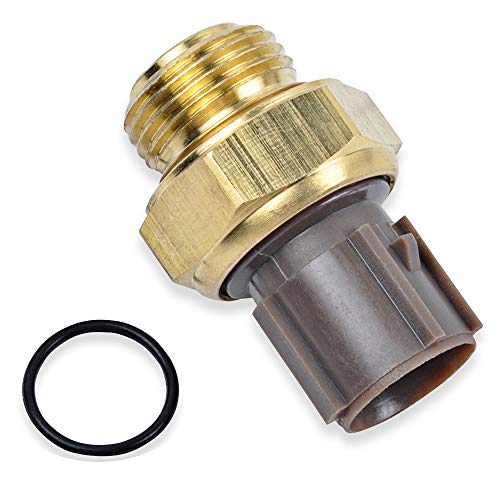
OTUAYAUTO’s radiator fan switch is designed as a direct replacement for several Honda and Acura models from the 1990s and early 2000s. The kit includes the switch, an O-ring seal, and multiple OEM-equivalent part numbers to help verify compatibility. It emphasizes reliability with factory-tested components and clear OEM cross-reference data. Installation suitability is strong for DIY enthusiasts who can verify model-specific fitment and ensure correct torque on the sensor’s threads.
ZIMISI Electric Cooling Fan Thermostat Switch

The ZIMISI switch is designed for 10″, 12″, 14″, and 16″ fans, supporting various engine bays with standard 3/8-inch pipe thread. It uses a thermostat-style operation to energize the fan around 185 degrees and disable at 175 degrees, promoting stable engine temperatures. Its broad compatibility across many classic and modern vehicles makes it a versatile choice for those upgrading or repairing cooling systems where OEM sensors are unavailable or discontinued.
Middrivr Radiator Coolant Fan Switch

The Middrivr sensor focuses on compatible Honda/Acura configurations, offering a tested OEM-number replacement approach (37760-P00-003 and related identifiers). It emphasizes safe engine operation by ensuring the radiator fan engages at appropriate temperatures, with attention to O-ring seals and long-term thermal reliability. The sensor’s installation requires verifying exact OEM match and applying proper torque specifications to prevent leaks and ensure airtight connections.
Buying Guide: Key Purchase Considerations
- Vehicle compatibility: Always verify exact make, model, year, and engine specifications. OEM cross-reference numbers help confirm fitment and avoid mismatches.
- Sensor type: Digital temperature sensors paired with a dedicated fan switch offer precise control, while simple thermal switches provide a budget-friendly on/off approach. Consider desired fan activation temperatures and how they align with your driving conditions.
- Installation complexity: Some kits are plug-and-play, while others require wiring harnesses, sealants, and torque checks. Ensure you have the tools and preference for DIY or professional installation.
- Durability and materials: Look for corrosion-resistant sensor housings, robust O-rings, and reliable seals to reduce leaks in different climate conditions.
- Compatibility versus universality: Universal switches offer broad applicability but may need adapters. Vehicle-specific parts reduce uncertainty but may limit availability.
- Wiring and electrical safety: Verify relay requirements, fuse sizing, and wiring color codes. A clean wiring diagram helps prevent accidental shorts or miswiring.
- Maintenance implications: Some sensors are easier to test, replace, and recalibrate. Consider whether you want a long-term solution that minimizes future maintenance.
- Cost versus value: Compare sensor accuracy, installation effort, and expected service life. A slightly higher upfront cost can yield better reliability and fewer future replacements.
When selecting a sensor, balance compatibility with your vehicle’s cooling system design, the desired activation temperature, and your comfort level with installation. For classic or discontinued models, OEM-referenced replacements may provide the most dependable fit. For off-road or multipurpose vehicles, robust electrical components and protective sealing become especially important to withstand vibrations and demanding environments.