Best Self Regulating Heat Tape for Pipes: Top Options for Winter Protection
Protecting water pipes from freezing is essential in cold climates. Self-regulating heat tape automatically adjusts power to keep water flowing, saving energy and reducing the risk of burst pipes. Below is a curated guide to reliable self-regulating heat tapes and cables that perform well in American homes. The selections emphasize safety certifications, efficiency, compatibility with various pipe materials, and ease of installation.
| Product | Length | Key Benefit | Certifications |
|---|---|---|---|
| HEATIT 30ft Self-Regulating Pipe Heating Cable | 30 ft | Strong freeze protection down to -40°F | ETL listed; UL plug |
| HEATIT 100ft Pipe Heating Cable | 100 ft | Extensive coverage for larger runs | ETL listed; UL plug |
| VEVOR Self-Regulating Pipe Heating Cable | 120 ft | Built-in thermostat with precise temp range | CE approved; IP68 |
| MAXKOSKO 6 Ft. Heating Cable | 6 ft | Compact length for short runs; energy-saving | ETL listed |
| 9FT Heating Cable For Pipes (YKXJM) | 9 ft | Balanced performance for small to mid-length pipes | UL listed |
Note: The table highlights representative features. Always verify product specifications and compatibility with your pipe material and local electrical codes before installation.
HEATIT 30ft Self-Regulating Pipe Heating Cable

The HEATIT 30ft Self-Regulating Pipe Heating Cable provides effective freeze protection for water pipes and maintains water flow in temperatures as low as -40°F (-40°C). This 3 W/ft cable is energy-efficient and includes a 2 ft power cord, with options ranging from 3 ft to 160 ft. It is fully ETL certified from end to end, with the plug also UL certified, underscoring a strong safety profile for North American installations. Compatible with metal and plastic pipes, it supports copper, PVC, and stainless steel piping, making it a versatile choice for many homes.
HEATIT 100ft Pipe Heating Cable
This 100-foot self-regulating heat tape offers extensive coverage for longer pipe runs, reducing the need for multiple shorter cables. It maintains water flow down to -40°F and includes a 2 ft power cord. The cable is fully ETL certified, with UL certification for the plug, ensuring compliance with safety standards. Its self-regulating technology adjusts heat output along the entire length, which helps prevent overheating and optimizes energy use across different pipe configurations.
VEVOR Self-Regulating Pipe Heating Cable

VEVOR’s 120-foot heat tape includes a built-in thermostat with a precise activation range, protecting PVC, plastic, metal, and other pipe materials from freezing. It is CE-approved and features an IP68 waterproof rating, adding resilience in damp or outdoor installations. The self-regulating design prevents overheating and helps conserve energy, especially on longer runs or areas with variable ambient temperatures.
MAXKOSKO 6 Ft. Heating Cable

MAXKOSKO’s 6-foot heating cable is designed for compact or shorter pipe runs. It uses self-regulating technology to adjust heat output, with a 3 ft power cord that helps position the thermostat relative to the outlet. The product claims a warming profile to prevent freezing, making it suitable for small sections of exterior or interior pipe runs across metal or plastic piping. It aims to balance energy efficiency with dependable protection for shorter installations.
9FT Heating Cable For Pipes (YKXJM)
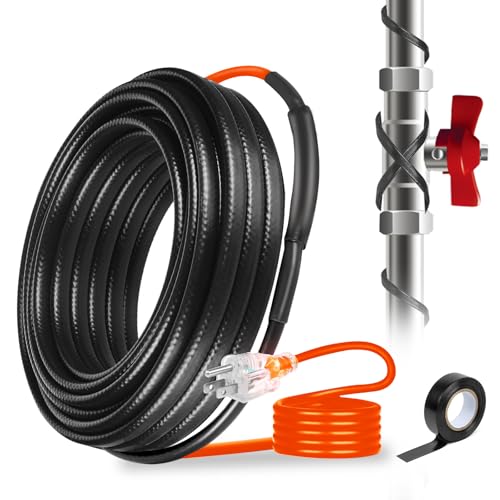
The 9-foot YKXJM heating cable is ETL listed and designed to keep water flowing at temperatures down to -40°F. It supports metal and plastic pipes and provides energy-efficient heating suitable for smaller runs or curve-adjacent piping in basements, crawlspaces, or garages. The insulation and outer jacket materials are built to endure low temperatures and environmental exposure, ensuring a reliable freeze protection option for mid-length installations.
Buying Guide: Key Considerations For Choosing Self-Regulating Heat Tape
- Pipe material compatibility: Ensure the heat tape is safe for copper, PVC, PVC-coated, stainless steel, or PEX pipes. Most modern self-regulating tapes work with multiple materials, but always verify.
- Temperature range and protection level: Look for a heater with a rated protection temperature at or below the anticipated coldest conditions in your area. A -40°F/-40°C rating is common for robust cold-weather protection.
- Power and length: Longer runs require more power, but self-regulating cables adjust heat output to avoid overheating. Choose a length that minimizes the number of extensions and keeps the thermostat and outlet distances reasonable.
- Safety certifications: ETL and UL certifications indicate compliance with safety standards. For outdoor or damp locations, IP ratings (IP65, IP68) matter for durability.
- Thermostat features: Built-in thermostats improve efficiency by turning on at a specified temperature and turning off when the pipe warms. Some models specify ±1° accuracy for precise control.
- Installation flexibility: Whether you prefer straight, spiral, or overlapping installation patterns can influence which product is easiest to apply to irregular pipe runs.
- Warranty and liability coverage: Longer warranties or higher insured liability can indicate confidence in product durability and safety, particularly for outdoor applications.
- Electrical safety considerations: Ensure the installation complies with local electrical codes and that outlets and cords are rated for outdoor use if installation is external.
In choosing a self-regulating heat tape, consider the length needed, pipe material, climate conditions, and whether an extended run or a shorter, flexible option best fits your setup. The products listed above provide a range of lengths, certifications, and thermostat features to address common freezing scenarios for American homes.