Best Safety Shower Mixing Valve Picks for Reliable Temperature Control
Answering the need for safe, consistent shower temperatures, these thermostatic and mixing valves are designed to prevent scalding and stabilize hot and cold water. They are best for homeowners installing new showers, builders seeking reliable plumbing hardware, and renovators replacing old valves. The top five selections below balance safety, ease of installation, and temperature stability. A quick summary table follows to compare key points at a glance.
| Product | Best For | Key Benefit | Notable Limitation |
|---|---|---|---|
| Fyeer 3-Way Thermostatic Mixing Valve | Residential bathrooms needing precise temp control | Thermostatic control with a safety stop at 38°C | Inlet temperatures specified; ensure compatible pipe threads |
| Moen M CORE Mixing Shower Valve | Homes with multiple shower devices | Integrated transfer valves for 2–3 showering devices | Compatibility with trim kits required |
| Danbark Thermostatic Mixing Valve | Solar or high-temp water systems | Thermo-sensitive cartridge maintains stable outlet temp | Requires correct installation for temperature stops |
| ZOVLO Thermostatic Mixing Valve | General home installations needing anti-scald control | Centigrade scale and automatic temperature balancing | 1/2″ NPT standard; verify inlet temps |
| Pfister 00731XA 2-Handle Rough-In Valve | Two-handle shower setups | Simple 2-handle rough-in with union nuts | 2-hole installation; check compatibility with trim |
Fyeer 3-Way Thermostatic Mixing Valve
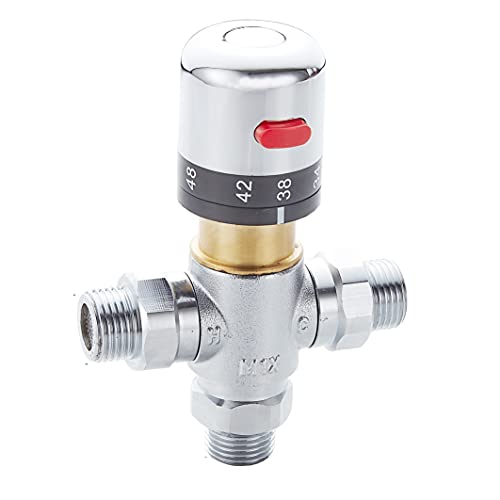
This thermostatic mixing valve connects hot and cold water inlets to a mixer water outlet with DN15 G1/2″ male threads. It uses brass construction with a plastic knob for temperature adjustment. Cold inlet temperature range is 4-29°C and hot inlet 55-85°C, with a safety stop at 38°C. Best for users needing reliable, preset temperatures and a clear temperature range. Use this if you want a dedicated safety stop and straightforward knob control. Avoid if your plumbing setup uses non-standard thread configurations or requires integration with specific shower trims.
Who this is best for: Homes needing a simple, reliable temperature limiter for regular showers. Ideal for renovating a bath where a dedicated thermostatic control is preferred over manual mixing.
What to watch: Ensure compatibility with your gold-standard hose and supply lines; verify the thread type (DN15 G1/2″ male) before purchasing.
Moen M CORE Mixing Shower Valve

The Moen M CORE system features an integrated transfer valve that can control two or three showering devices, designed for flexible layouts. It includes an integrated mounting bracket to speed installation, and its design emphasizes pressure-balancing for stable flow. This is a strong pick for bathrooms that plan to support multiple shower devices with a consistent temperature. Consider this if you want streamlined mounting and future-proofing for additional shower heads. It may be less ideal if your installation requires a non-MOEN trim or non-standard compliance with older valve bodies.
Who this is best for: Homes upgrading to a multi-shower setup or new construction aiming for quick, clean installation with reliable pressure balance.
Limitations: Compatibility with specific trims is important; confirm that your chosen trim kit works with M CORE valves.
Danbark Thermostatic Mixing Valve

The Danbark valve uses a thermo-sensitive cartridge to rapidly respond to inlet changes, maintaining a stable outlet temperature. It’s particularly suitable for solar and high-temperature systems, where fluctuations are common. A built-in 100°F safety lock provides anti-scald protection. Choose this if you want strong automatic compensation for temperature swings and a safety stop. Limitations include ensuring proper red safety button operation and correct installation to achieve the stated temperature stability.
Who this is best for: Solar-heated or high-temperature systems needing steady output and quick adaptation to inlet variation.
Tip: Press the safety button to raise temperature if needed, but be mindful of the anti-scald limit to avoid scalding risk.
ZOVLO Thermostatic Mixing Valve

The ZOVLO valve balances hot and cold flows automatically to maintain a steady outlet temperature, reducing sudden changes that can cause scalding. It features Centigrade scale markings for precise adjustment and uses universal 1/2″ NPT threading for straightforward installation. Best for homes seeking accurate temperature control with easy-to-read indicators. A potential limitation is the need to confirm inlet temperatures align with your water heater outputs.
Who this is best for: Households wanting clear temperature control indicators and reliable anti-scald performance in standard plumbing systems.
Pfister 00731XA 2-Handle Rough-In Valve
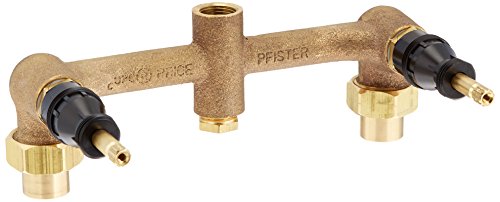
The Pfister 00731XA provides a two-handle rough-in valve suitable for traditional 2-hole shower installations. It includes required union nuts and is designed for straightforward rough-in setups. It’s best for homeowners who prefer a classic two-handle operation and have compatible Pfister trim kits. A caveat is that installation compatibility should be verified with the chosen trim and existing plumbing layout.
Who this is best for: Traditional two-handle shower configurations where a simple rough-in approach is desired.
Buying Guide
What should you consider when selecting a safety shower mixing valve?
- Temperature control type: Thermostatic vs. manual mixing. Thermostatic valves automatically regulate temperature to prevent sudden changes.
- Safety features: Look for anti-scald protections, safety stops, and clear temperature ranges.
- Inlet and outlet compatibility: Confirm thread size (1/2″ NPT is common) and whether connections fit your supply lines.
- Shower configuration: If you plan multiple showers or devices, consider valves with transfer or multi-output capabilities.
- Ease of installation: Some valves include mounting brackets or are designed for standard rough-ins; verify compatibility with existing walls and trim kits.
- Material quality: Brass bodies are common for durability; ensure corrosion resistance and finish compatibility with the room’s humidity.
- Maintenance and accessibility: Some models have accessible cartridges or built-in stops; assess how easy it is to service.
Practical installation considerations
- Verify pipe thread compatibility before purchase to avoid mismatches.
- For solar or high-temperature systems, prioritize valves designed to compensate for inlet fluctuations.
- When replacing old valves, check wall opening dimensions and verify the new valve will fit within the existing rough-in area.
Comparative quick tips
- Best for multi-head setups: Moen M CORE for integrated transfer options and flexible layouts.
- Best for precise, safe temperature with a fixed stop: Fyeer and ZOVLO offer clear temperature boundaries and anti-scald focus.
- Best for classic two-handle control: Pfister 00731XA provides straightforward two-hole installation.
- Best for solar/high-temp systems: Danbark adapts to fluctuating inlet conditions for stable output.
FAQs
- What is a thermostatic shower valve? It automatically maintains a chosen outlet temperature by balancing hot and cold water.
- Why is anti-scald protection important? It prevents sudden temperature spikes that can cause burns, especially for children and the elderly.
- Can I install these myself? Many are designed for standard rough-ins, but some require professional installation to ensure safety fittings and proper venting.
- Do these valves work with all shower trims? Not always; check compatibility with your chosen trim kit and manufacturer guidelines.
- What is a 1/2″ NPT connection? It is a common pipe thread size; verify that your supply lines match this specification.
- Are thermostatic valves compatible with high-flow showerheads? Generally yes, but verify flow rate compatibility with the valve’s design for best performance.