Best RV Water Pump 110V on-Demand for Fresh Water Systems
When selecting a 110V RV water pump, drivers of mobile living spaces seek reliability, quiet operation, and smooth water flow. The following 5 pumps are well-suited for RVs, boats, and small cabins, offering on-demand pressure, self-priming features, and solid safety protections. Use this guide to compare performance, installation needs, and durability across common 110V diaphragm pump models.
| Product | Brand | Flow | Pressure | Notable Feature |
|---|---|---|---|---|
| ECO-WORTHY 33-Series | ECO-WORTHY | 4.0 GPM | 50 PSI | Smart pressure switch, self-priming |
| SEAFLO 33-Series | SEAFLO | 3.3 GPM | 45 PSI | NSF/UL listed, long warranty |
| CrestWave 7GPM Combo | CRESTWAVE | 7.0 GPM | 70 PSI | Accumulator tank for quiet, steady flow |
| ECO-WORTHY 110V Fresh Transfer | ECO-WORTHY | 5.5 GPM | 70 PSI | On-demand with enhanced safety |
| Kitvance 6GPM Pump | Kitvance | 6.0 GPM | 70 PSI | Low-noise NSK bearings, auto stop/start |
The following reviews focus on pumps that are suitable for RVs, camping, and small water systems. Each product section provides a concise feature summary, installation notes, and performance considerations to help you choose the best match for your setup.
ECO-WORTHY 33-Series 110V Diaphragm Pump
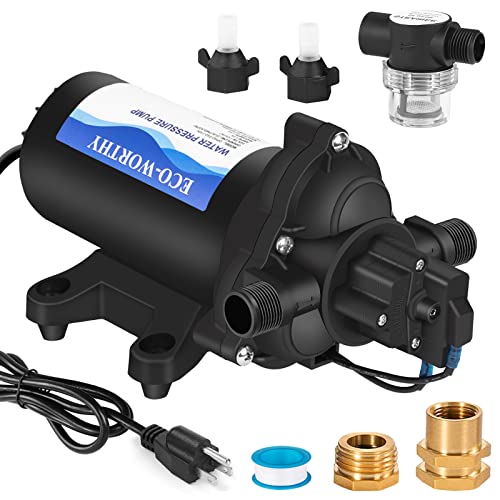
This 110V AC diaphragm pump delivers 4.0 GPM with a 50 PSI shut-off, suitable for RV fresh water and portable irrigation. It uses a smart pressure switch to start and stop on demand, reducing wasted energy and water. The unit is self-priming and can lift water up to about 9.8 feet, easing installation in many RV configurations.
Key safety features include thermal overload protection that automatically disconnects the motor if temperatures rise, protecting the pump during extended use. It’s designed to operate without a marine battery, relying on AC power, which is convenient for shore power setups or vehicle hookup. Expect relatively quiet operation when paired with proper mounting and hardware.
Considerations: verify your water source height relative to the pump’s lift requirement, and ensure compatibility with your existing fittings. The 45–70 PSI adjustable range helps tailor pressure for showers, sinks, and external faucets. If you need higher flow or a quieter system, you may explore other models or add an accumulator for dampened pressure spikes.
SEAFLO 33-Series 110V Water Pump

The SEAFLO 33-Series provides 3.3 GPM at 45 PSI, with NSF/UL/CSA certifications and a robust 4-year warranty. It is designed for RVs, boats, and light industrial uses, offering self-priming capability and a spare components kit that helps with DIY installs.
Included components add convenience: a 50-mesh inlet strainer, fittings, wall plug, and mounting hardware, making a plug-and-play setup feasible for many RV pivots. The unit is especially appropriate where potable water compliance matters, thanks to its certifications for RV plumbing systems.
Performance notes: the pump’s 6 ft shake-free priming capability helps in installations with modest elevation differences. If you anticipate longer runs or larger fixtures, you may prefer higher-flow options or adding a separate storage tank to stabilize the demand. Consider also noise and vibration management when mounting alongside living areas.
CRESTWAVE 7GPM Aquifer Pump With Accumulator

This CrestWave system combines a 7 GPM pump with a 1 L accumulator tank, delivering up to 70 PSI and reducing cycling noise. The assembly is designed to smooth water flow and protect the pump from surge pressures, making it attractive for longer RV trips, yachts, or home backup water systems.
Mounting versatility is a benefit, with compatible 1/2″ strainer and barbed fittings enabling simple hookups. The 10 ft self-priming lift supports installations with modest vertical height, while the 157 ft maximum head accommodates more demanding routes in some motorhomes and small yachts.
Considerations: if your water system has high demand during showers or multiple fixtures, this duo setup can improve longevity and comfort. However, ensure the accumulator’s capacity aligns with your typical water usage and that your power supply can handle the peak current needs. Noise reduction features are a plus for overnight use.
ECO-WORTHY 110V Transfer Diaphragm Pump

This pump emphasizes high-pressure transfer with 5.5 GPM and a 70 PSI limit. It features a self-priming design up to 9.8 feet and a maximum lift of around 131 feet, making it adaptable for RVs with elevated water tanks or complex routing. A 70 PSI switch helps balance performance and safety.
The unit emphasizes safety with a thermal overload protection system to prevent motor damage during dry-run or overuse conditions. It’s designed for quiet operation in routine RV use, especially when mounted on vibration-damping feet or a solid bracket.
Practical notes: this model suits tasks like filling exterior hoses or supplying potable water to various fixtures with consistent pressure. If your system requires more sensitive pressure control, pairing with an accumulator or PWM-style controller can help regulate fluctuations.
Kitvance 6GPM 70 PSI 110V Pump

The Kitvance model offers 6.0 GPM at 70 PSI with auto-stop/start control and NSK bearings for quieter operation. It highlights a robust one-piece 4-chamber diaphragm design intended to deliver reliable performance with lower noise. Self-priming allows flexible mounting and vertical clearance up to 10 feet and horizontal priming up to 155 feet.
Installation notes: the unit benefits from using a fuse within the 25–30 amp range and ensuring adequate ventilation for the motor. The presence of a built-in pressure switch reduces manual operation needs, making it suitable for RVs where hands-free operation is preferred for basic water use.
Considerations: while higher flow is advantageous, check compatibility with your RV’s piping and any heat generation in hotter climates. In some setups, a combination with an accumulator can further stabilize pressure and extend pump life during peak usage periods.
Buying Guide: Key Purchase Considerations for 110V RV Water Pumps
When choosing a 110V RV water pump, prioritize compatibility with your water system’s height, tank positioning, and intended fixtures. Focus on these factors to achieve reliable on-demand performance and long-term durability.
- Flow rate and pressure: 2–7 GPM is common for RVs; choose based on the number of fixtures and daily tasks. Higher PSI is beneficial for showers and long hose runs, but may increase wear if not needed.
- Self-priming lift: ensure the pump can lift water from your tank or reservoir height. Longer vertical distances require higher lift specifications to prevent cavitation or loss of prime.
- Pressure switch and auto-on/off: an integrated pressure switch enables demand-based operation. Look for presets around 45–70 PSI and the ability to adjust to your needs.
- Noise and vibration: mounting hardware, anti-vibration feet, and, if possible, an accumulator tank can reduce operational noise and cycling.
- Energy use and safety: check amperage and thermal overload protection. Consider systems with built-in protections to extend motor life in hot climates or during prolonged use.
- Certifications and materials: NSF/UL/CSA ratings matter for potable water applications. Diaphragm and valve materials (Santoprene, EPDM) influence chemical compatibility and longevity.
- Installation requirements: verify inlet/outlet fittings (1/2″ NPT, barbed adapters), inlet strainers, and wiring needs. DIY-friendly kits simplify mounting and maintenance.
- Maintenance and spare parts: select models with widely available replacement diaphragms, seals, and spare parts. A longer warranty can indicate confidence in durability.
For RV enthusiasts, combining a reliable 110V pump with an accumulator or a soft-start controller can yield smoother operation, quieter performance, and longer pump life. Always assess your typical water demand across showers, sinks, and exterior hoses to match the pump’s capabilities to real-world use.