Best RV 50 Amp Transfer Switches for 120/240v Power
When traveling with an RV, reliable power management is essential. A 50 amp transfer switch automatically shifts between shore power, generator, or an onboard inverter, keeping appliances safe and secures a continuous power flow. This guide reviews five top-rated models, highlighting how they prioritize sources, protect circuits, and simplify installation for American RVers. Explore options from trusted brands to determine the best fit for your setup and travel style.
Summary of selected products:
| Product | Brand | Voltage & Current | Key Feature |
|---|---|---|---|
| Nirakoka RV Automatic Transfer Switch | Nirakoka | 240VAC, 50A | Automatic switching with 70A neutral; broad shore/generator/inverter support |
| KUTTOLE RV 50 Amp Transfer Switch | KUTTOLE | 240VAC, 50A | Automatic transition with dual protection and green generator indicator |
| WFCO T57 50 Amp Transfer Switch | WFCO | 50A | OEM-grade reliability; quiet operation; DC coil to minimize arcing |
| briidea Automatic Transfer Switch 50 Amp | briidea | 120/240 VAC, 50A | Delay circuit and continuous monitoring with IP65 rugged enclosure |
| Progressive Dynamics PD52V 5200 Series | Progressive Dynamics | 240VAC, 50A | Time-delay circuit; rugged wiring terminals; smart generator sensing |
Nirakoka RV Automatic Transfer Switch

The Nirakoka model is designed to automatically switch primary AC power among shore, generator, and inverter sources. It is pre-wired for straightforward installation and supports a wide range of applications beyond RVs, including speedboats and high-power equipment. A green LED signals active generator power, making status quick to assess. The unit emphasizes automatic transitions; when the generator stops, the system can switch to inverter, and it can restart the generator if inverter power drops. This flexibility supports continuous operation during travel interruptions.
KUTTOLE RV 50 Amp Transfer Switch

The KUTTOLE automatic transfer switch prioritizes generator power while monitoring utility voltage. If the generator stops, the system switches to utility power, and it can auto-start the generator during a power outage. It includes dual protection to prevent cross-feeding from two 120/240V sources. Rated for 240VAC at 50A with a 70A neutral, this unit is positioned for RV and speedboat use, ensuring seamless transitions and protection during travel and downtime.
WFCO T57 50 Amp Transfer Switch

The WFCO T57 is widely adopted by RV manufacturers for its reliability. It enables seamless switching between shore and generator power and emphasizes safety and dependability. A DC coil design reduces arcing and chatter, contributing to quiet operation and stable power transfers. Built to handle 50A power requirements, this option is a solid choice for RV owners seeking OEM-style performance with straightforward installation and long-term durability.
briidea RV Transfer Switch 50 Amp

The briidea automatic transfer switch includes a delay circuit to stabilize generator voltage before transfer, reducing wear on equipment. It also continuously monitors utility power and starts the generator automatically during outages, eliminating extra wiring. The unit features a durable enclosure designed for outdoor or rugged use (IP65 rating mentioned), and it employs dual protection to prevent simultaneous power-source connections into the AC distribution board, minimizing short-circuit risks during transitions.
Progressive Dynamics PD52V 5200 Series
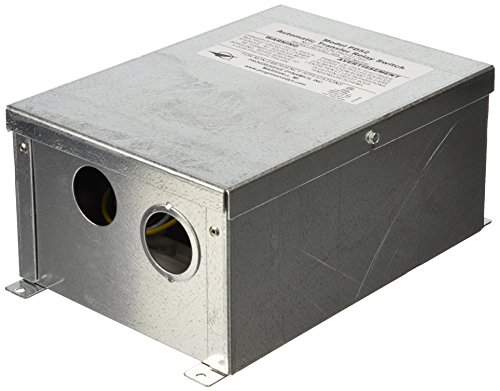
The Progressive Dynamics PD52V 5200 Series is a rugged, heavy-duty transfer switch designed for 240V, 50A RV applications. It includes screw-type wiring terminals for durable connections and a time-delay circuit to ensure generator voltage stabilizes before transfer. It senses generator power and prevents both power sources from entering the distribution panel at once, reducing the risk of arcing and electrical faults. An easy-to-remove protective cover and included wiring schematic simplify installation for DIY enthusiasts and professionals alike.
Buying Guide
- Power source priority: Determine whether you want generator-first, shore power-first, or inverter-first logic, depending on your typical camping or travel scenarios.
- Delay timing: A delay (often 20-45 seconds) helps stabilize voltages during transfer, preventing equipment damage and voltage dips.
- Protection features: Look for mechanical interlocks and control-circuit protection to prevent simultaneous connections that could cause shorts.
- Durability and enclosure: Outdoor-rated or IP65-level enclosures extend life in rough environments and RV bays.
- Compatibility: Confirm 120/240V operation and 50A capacity, plus a suitable neutral handling (70A neutral in some models) for your rig.
- Installation: Pre-wired units reduce wiring work; check for quick-connect terminals and included schematics for easier DIY setup.
- Noise and arcing: DC coil designs and arcing mitigation features minimize audible chatter and electrical noise during switching.
- Brand and OEM alignment: For OEM-like reliability, consider models from WFCO or Progressive Dynamics, which are common in factory-installed RV systems.