Best RV Solar Panel Kit Off-Grid for Reliable Road Power
Looking for an off-grid RV solar panel kit that delivers dependable power on the road? This guide highlights five top kits designed for off-grid RV use, emphasizing ease of installation, compatibility, and real-world performance. Each option targets specific buyers, from first-timers to seasoned campers needing higher power reserves. Below is a quick buyer’s summary to compare essentials before you buy.
| Product | Total Rated Power | ||
|---|---|---|---|
| ECO-WORTHY 200W Starter Kit | 200W | 30A PWM Controller; 12.8V 100Ah Lithium Battery | Beginner RVers seeking an all-in-one, novice-friendly install |
| ECO-WORTHY 800W Complete Kit | 800W | 3000W Inverter; Dual 12.8V 280Ah Batteries; MPPT not specified | Mid-range power for larger RVs with higher daily use |
| ECO-WORTHY 400W 1.6KWH Complete Kit | 400W panels (4x100W) | 40A MPPT Controller; 2x 12V 100Ah Lithium Batteries | Power-hungry setups needing robust inverter support |
| Renogy 200W RV Kit | 200W | Adventurer 30A PWM Controller | Compact, reliable option for RVs with straightforward installation |
| 1.92KWH Complete Off-Grid Kit (AUECOOR) | ~1920W/ day capability (depending on sun) | 100Ah LiFePO4 with BMS; 2000W Inverter | Power users needing sizable energy storage and inverter capacity |
ECO-WORTHY 200W Solar Panel Starter Kit
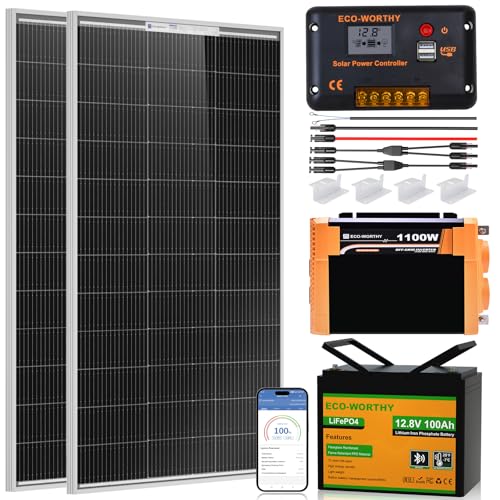
This all-in-one RV off-grid kit includes two 100W panels, a 12.8V 100Ah lithium battery, a 30A PWM charge controller, and necessary cables. It provides a compact, novice-friendly install suitable for small-to-moderate energy needs on weekend trips. Best for first-time RV owners who want a ready-to-run system with straightforward setup and basic storage.
Who it’s best for: RV newcomers who want a simple, plug-and-play solution with predictable daily output. Why selected: It covers the essentials in one package, reducing DIY complexity. Caution: PWM controllers are less efficient in some long-term setups compared to MPPT options.
ECO-WORTHY 800W Complete Off-Grid Kit

This high-capacity off-grid system combines four 200W panels with a 12V 3000W inverter charger and two 12.8V 280Ah lithium batteries. It also includes a Bluetooth-enabled control module and 60A MPPT controller as part of the system, delivering strong daily energy and flexible two-source charging. Best for larger RVs or families with consistent electrical use. Better for: longer trips with higher energy draw, such as air conditioning and appliances. Limitation: higher upfront cost and installation footprint.
400 Watt Flexible Solar Panel Kit (2x200W) for Off-Grid RV

This kit features two 200W flexible panels designed for uneven surfaces, including RVs and boats. It includes a 30A MPPT, solar cable, and Y-branch, with high-efficiency monocrystalline cells and an ETFE protective layer. It’s best for off-grid rigs requiring lightweight, versatile installation on curved or irregular surfaces. Caution: flexible panels can be more prone to edge wear if not mounted properly and may require careful routing of cables.
ECO-WORTHY 1.6KWH Complete Solar Panel Kit for RV

This comprehensive kit includes four 200W panels, a 3000W inverter charger, two Li-ion batteries, and a Bluetooth-enabled MPPT controller. It’s designed for off-grid RV enthusiasts who want substantial daily energy, reliable storage, and remote monitoring. Best for full-time RVers or long trips with high AC usage. Choose this if you need strong storage plus robust peak power; avoid if you have a tight budget or limited mounting space.
Renogy 200W RV Solar Kit
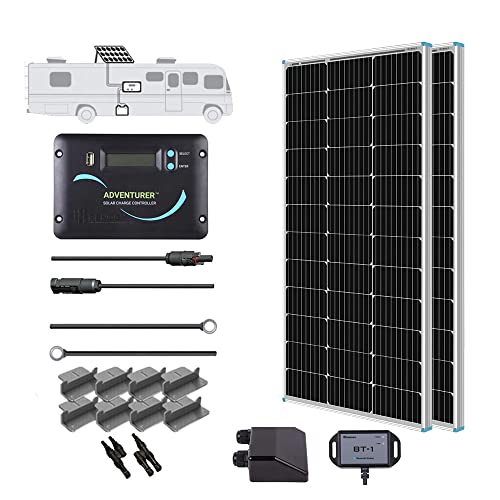
Renogy’s 200W kit includes an Adventurer 30A PWM charge controller and mounting brackets, designed for RVs, boats, and trailers. It emphasizes a compact footprint, corrosion-resistant framing, and compatibility with flush-mount installations. Best for buyers who want a proven brand with straightforward installation and reliable protection features. Limitation: PWM control may offer less long-term efficiency in variable sun conditions compared to MPPT controllers.
Buying Guide
What to look for when choosing an off-grid RV solar kit:
- Power needs: Assess daily energy use and peak loads. Higher daily consumption requires bigger arrays and storage.
- Controller type: MPPT controllers maximize efficiency in variable sun but add cost. PWM controllers are simpler and cheaper but less efficient in some conditions.
- Storage: Li-ion or LiFePO4 batteries offer longer life and better depth of discharge than lead-acid. Consider your camping duration and climate.
- Mounting and space: Rigid panels need roof or rack space; flexible panels suit curved surfaces but require proper mounting to avoid damage.
- Inverter capacity: Ensure the inverter can handle your typical AC loads. A surge-capable model covers startup spikes of appliances like refrigerators or air conditioners.
Frequently Asked Questions
- How many watts do I need for an RV off-grid setup?
– A typical moderate RV uses 600–1200W of solar array depending on AC usage and climate. Higher daily energy needs may justify 800–1600W or more with storage. - Is a lithium battery worth it for RV solar?
– Yes, LiFePO4 or lithium-based packs offer longer life, lighter weight, and better usable capacity than many lead-acid options. - Do I need MPPT for RV solar?
– MPPT controllers boost efficiency, especially in variable sun and higher voltage runs. They’re generally worth it for larger systems. - Can I mix brands of panels and controllers?
– Mixing is possible but should be approached with attention to voltage, current, and charging compatibility to avoid protection or performance issues.