Best RV Solar Charging System for Off-Grid Power on the Go
When shopping for an RV solar charging system, look for kits that fit your boat, camper, or trailer’s space and power needs. This guide highlights five reliable options, each best for specific off-grid scenarios—ranging from compact setups to more robust RV power solutions. The top picks suit different budgets, installation styles, and storage goals, helping you plan a solar system that supports daily RV living, travel, and weekend adventures.
| Product | Best For | Approx. System Power |
|---|---|---|
| ECO-WORTHY 200W Panel Kit | Mid-size RVs needing a straightforward panel-and-controller setup | 200W panel + 30A PWM controller |
| Renogy Adventurer 200W Kit | Compact RVs with a need for clean mounting and durability | 200W panel + Adventurer-Li 30A PWM controller |
| ECO-WORTHY 200W Complete Starter Kit | All-in-one ready-to-go systems for RV trips | 2x100W panels + 100Ah lithium battery + 1100W inverter + 30A PWM |
| Renogy 200W Starter Kit (New Upgrades) | Expandable, versatile RV power with easy mounting | 200W panels + 30A PWM controller |
| Topsolar 100W Kit | Budget-friendly starter for small rigs or backup power | 100W panel + 30A charge controller |
ECO-WORTHY 200W Panel Kit With PWM Controller
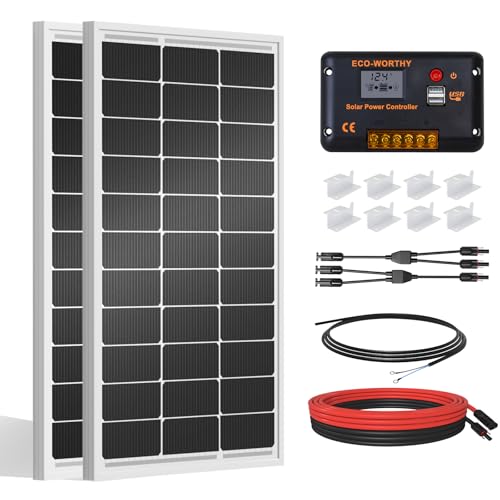
Best for RV owners who want a complete, reliable 200W solar option without added components. The kit uses high-efficiency monocrystalline cells and a 30A PWM controller to deliver up to 800Wh/day under ideal sun. The aluminum frame resists corrosion and supports wind and snow conditions. Best for mid-sized RVs or campers with steady sun exposure. Caution: performance depends on four sunlight hours and proper panel orientation.
Renogy Adventurer 200W Kit With 30A PWM Controller
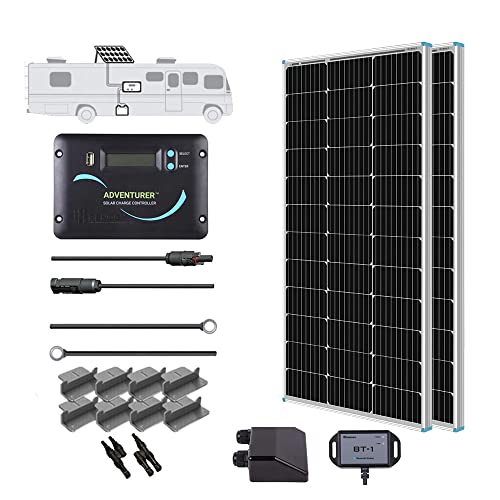
Best for RVs needing a compact footprint with a clean wall-mount look. The 200W Renogy kit delivers about 1000Wh daily in optimal conditions and features a corrosion-resistant frame designed for outdoor use. It includes the Adventurer-Li 30A PWM controller for straightforward battery protection. Choose this if you want an aesthetically neat install with proven Renogy components. Caution: performance varies with sunlight hours and mounting angle.
ECO-WORTHY 200W Complete Starter Kit
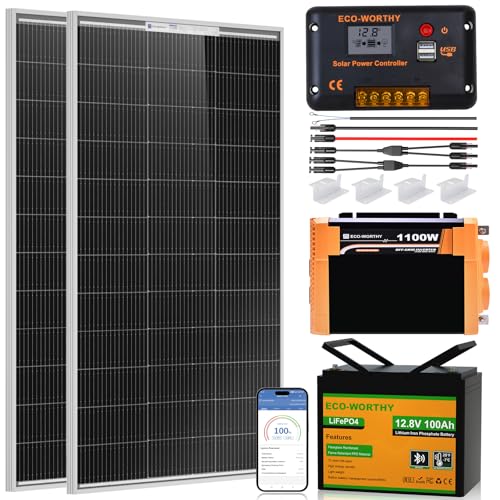
Best for RV travelers seeking an all-in-one package. This kit includes two 100W panels, a 100Ah lithium battery, an 1100W inverter, and a 30A PWM controller, delivering an 800Wh daily output with a fully integrated system. It’s a novice-friendly option with a four-step installation flow. Limitation: relies on included components; expanding beyond the kit requires careful planning of additional panels and storage capacity.
Renogy 200W Starter Kit (New Upgrades)

Best for expandable RV systems. The Renogy kit offers complete mounting hardware and pre-drilled back-frame holes for fast installation. With 25% cell efficiency and efficient diodes, it performs well in low-light situations and pairs with a Wanderer PWM controller for safe charging of various battery types. Choose this if you plan to scale with additional panels. Caution: requires a separate battery and inverter for full power use.
Topsolar 100W Off-Grid Kit
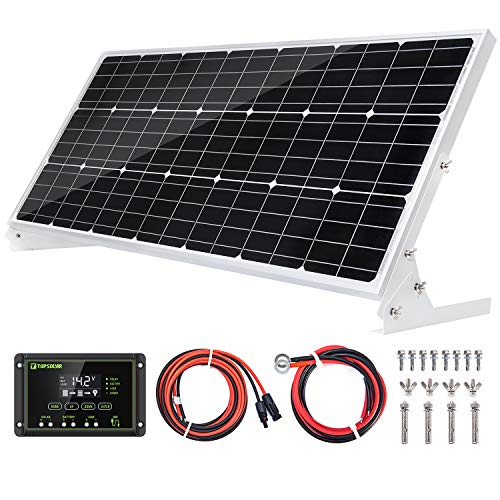
Best for budget-conscious buyers or as a backup system. The kit includes a 100W panel, a 30A charge controller, mounting brackets, and cables, designed for 12V systems across RVs, boats, cabins, and more. It is simple to install and offers a solid entry point into RV solar. Limitation: lower power output means less daily generation in cloudy conditions or during shorter days.
Buying Guide: Key Considerations For Your RV Solar System
- Power requirements: Calculate daily watt-hours you need and compare with panel output and battery storage capacity.
- System type: Decide between panel-only with PWM controllers, or complete kits with batteries and inverters.
- Expandability: If you plan to grow power capacity, choose modular kits that support adding more panels.
- Durability: Look for corrosion-resistant frames, weatherproof junction boxes, and robust mounting options.
- Installation: Consider mounting space on your RV and whether you prefer flush-m mount or roof racks.
- Battery chemistry: Lithium offers higher energy density and cycle life; lead-acid options are often lower cost upfront.
- Controller type: PWM is affordable and simple; MPPT improves efficiency, especially in partial shade or cooler days.
Frequently Asked Questions
- What size RV solar kit do I need? Answer: Estimate daily energy use (in Wh) and divide by expected sun hours to approximate required panel wattage and battery capacity.
- Should I choose PWM or MPPT controllers? Answer: MPPT controllers are more efficient, especially in variable or limited sunlight; PWM is adequate for smaller, budget setups.
- Can I add more panels later? Answer: Yes, select kits designed for expansion and compatible with additional panels and batteries.
- Is lithium battery storage worth it for RVs? Answer: Lithium offers longer life and lighter weight, with higher usable capacity, but at higher upfront cost.
- What maintenance is needed for RV solar kits? Answer: Periodically inspect connections, clean panels, and verify fuses and wiring integrity.
- Do solar kits include all required hardware? Answer: Many starter kits include cables and brackets, but verify mounting hardware and inverter needs are included.