Best RV Solar Air Conditioner Options for Off-Grid Camping
Answering the need for quiet, efficient cooling while off the grid, these RV solar air conditioners are designed to run on battery power, solar, or vehicle power. They suit different spaces and budgets—from compact tent setups to larger RV cabins. Below you’ll find five strong choices, each with clear use cases, to help you pick the right unit for your off-grid adventures.
Summary of selected products
| Product | |||
|---|---|---|---|
| iRooVee 12V RV Air Conditioner | 11,000 BTU cooling / 3,500 BTU heating | Battery powered from vehicle 12V | |
| BougeRV PC35 Portable | 3,500 BTU | 12V battery/solar capable via app control | |
| Somokg 12V RV Air Conditioner (Cool Only) | 11,000 BTU cooling | 12V battery/solar compatible | |
| Countrymod 12V DC RV Air Conditioner | 10,000 BTU cooling | APP remote control; inverter friendly | |
| Cybertake S2 Pro Portable Camping AC | 5,100 BTU cooling / 6,100 BTU heating | Multiple power options (DC 48V, 12V/24V, 100–240V) |
iRooVee 12V RV Air Conditioner

Best for: Off-grid RVers who want both cooling and heating in one rooftop unit. With 11,000 BTU cooling and 3,500 BTU heating from a high-efficiency compressor, this unit handles sunbaked days and chilly mornings. It runs on your vehicle’s 12V battery and is designed for quiet operation, making it suitable for small to mid-size RVs where battery capacity is a priority.
Why chosen: It combines strong all-season performance with battery-powered operation. The 45dB quiet level reduces noise in campgrounds, and the integrated heating extends usability year-round. A potential limitation is 8–12 hours of cooling on typical deep-cycle setups, depending on battery size and ambient conditions.
BougeRV PC35 Portable Air Conditioner
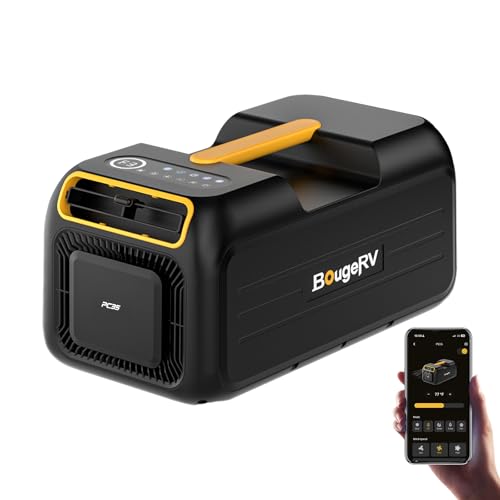
Best for: Small spaces like tents or compact RV sections where you need fast cooling with mobile control. The 3,500 BTU cooling capacity targets areas up to about 64 square feet, and the app control lets you adjust temperatures from a distance within the camping area. Choose this if you want easy relocation and app-based operation.
Caution: Best suited for smaller spaces. In very hot days, cooling may be less impactful in larger RV compartments, so pairing with a fan can help circulate air more evenly.
Somokg 12V RV Air Conditioner (Cool Only)
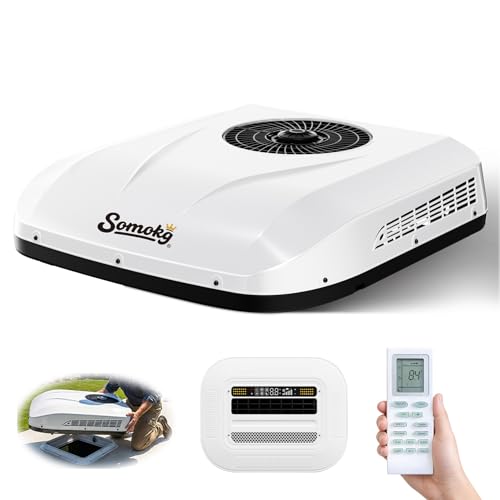
Best for: Off-grid campers who prioritize rapid cooling with minimal power draw. It delivers 11,000 BTU cooling using a high-frequency compressor and supports up to 12 hours of operation on a sizable battery pack. The unit emphasizes soft-start to reduce startup surges, which helps extend battery life.
Limitation: Data indicates cooling duration depends heavily on battery capacity; ensure your system can supply a steady 12V draw for extended periods.
Countrymod 12V DC RV Air Conditioner

Best for: RVs using inverters or solar setups that require precise cooling with energy efficiency. The unit uses an inverter-style design and ranges from 300–900W depending on compressor speed, delivering cooling on demand with low energy use. It promises up to 10 hours of cooling on battery support and emphasizes ultra-low noise.
Caution: Real-world performance may vary with inverter efficiency and solar input, so plan for energy overhead when off-grid.
Cybertake S2 Pro Portable Camping AC
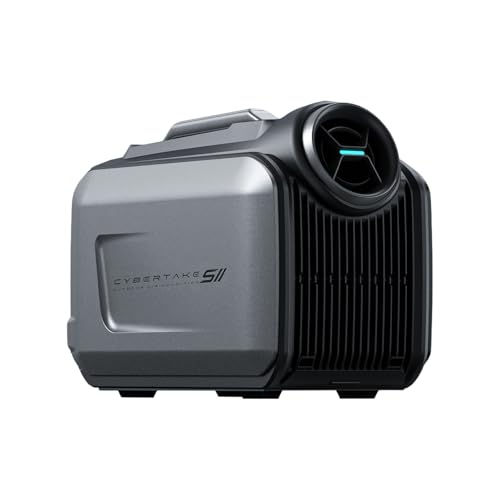
Best for: Campers who want flexible power options and both cooling and heating in one unit. The S2 Pro offers 5100 BTU cooling and 6100 BTU heating, with multiple power inputs (AC, 12V, 24V, or 48V DC) and a timer for scheduling. It suits tents, RVs, or tiny cabins where you can deploy portable power.
Limitation: Heavy reliance on battery or power source; ensure your power system matches the required inputs for reliable operation.
Buying Guide
What to consider when choosing an RV solar air conditioner
- Space and BTU needs: Measure your space and match BTU to room size. Higher BTU is needed for larger RV interiors, while smaller spaces can be comfortable with lower BTU units.
- Power source and efficiency: Look for units designed for off-grid use with soft-start features, inverter-friendly operation, or integrated solar/battery compatibility. Energy efficiency directly affects battery life and run-time.
- Noise level: Quiet operation helps in comfortable camping environments. Check decibel ratings to ensure suitability for quiet campgrounds and sleeping areas.
- Versatility of power options: Units with multiple power inputs (12V, 24V, AC, solar) provide flexibility for different trips and solar configurations.
- Heating capability: If you camp in shoulder seasons, a unit with heating extends usability. Consider whether heating capacity is essential for your trips.
- Portability and installation: Rooftop units save space but require mounting; portable or tent-compatible models offer flexibility but may have lower BTU ratings.
- Battery and solar compatibility: Confirm how many amp-hours your battery bank offers and whether the unit’s startup surge is compatible with your solar setup.
Frequently Asked Questions
- Can these RV air conditioners run entirely on solar power? Yes, many are designed for off-grid use and can run on battery power or solar with sufficient capacity and an inverter.
- What size battery do I need for 8–12 hours of cooling? Battery needs vary by BTU, climate, and unit efficiency. A higher-capacity battery bank (multiple 100–200 Ah cells at 12V or an equivalent) is often required for extended operation.
- Do these units require special electrical wiring? Some rooftop units require standard AC connections plus 12V or inverter support. Portable models typically use standard power adapters or battery power with compatible inverters.
- Is heating included in all models? Not all units include heating; some are cooling-only. Check BTU heating ratings if you need year-round comfort.
- Are there noise considerations? Most models advertise low decibel levels, but actual noise depends on installation, mounting, and fan settings. Quiet operation is a key feature for campgrounds.
- How do I determine which model is best for my RV size? Consider space, ceiling height, and the location of vents. Bigger spaces benefit from higher BTU units, while smaller RVs can use compact, energy-efficient options.