Best RV Fans and Vents for Comfortable Camping
Direct answer: top RV fans and vents provide better airflow, reliability, and weather protection for campers, travelers, and seasonal RV owners. This guide highlights five standout options that balance airflow, installation ease, and features like remote control, rain protection, and temperature sensing. Ideal buyers include full-time travelers needing remote operation, weekend campers seeking quiet operation, and RV owners prioritizing weather resistance. The following choices help you swap in a durable, efficient vent without reinventing your roof opening.
| Product | Brand | Key Feature | Best For |
|---|---|---|---|
| OUTPRIZE Upgraded Remote Control RV Roof Vent Fan | OUTPRIZE | 10-speed, rain sensor, remote control, reversible | Tech-savvy RVers who want convenient control from inside the cab |
| Kohree 14″ RV Vent Fan 10 Speed Reversible | Kohree | Temp sensor, 50dB quiet operation, remote option | those needing quiet performance with automatic temperature response |
| RVMATE 14×14 RV Roof Vent Fan | RVMATE | Remote control, reversible air flow, leak-resistant | Anyone who wants easy remote control and durable seal |
| Kohree Deluxe All-In-One RV Vent | Kohree | Vent, fan, and vent cover combo with built-in rain protection | All-in-one solution with rain protection |
| OUTPRIZE RV Roof Vent Fan With Rain Shield | OUTPRIZE | Manual control, rain shield, 3-speed | Budget-friendly option with reliable rain protection |
OUTPRIZE Upgraded Remote Control Roof Vent
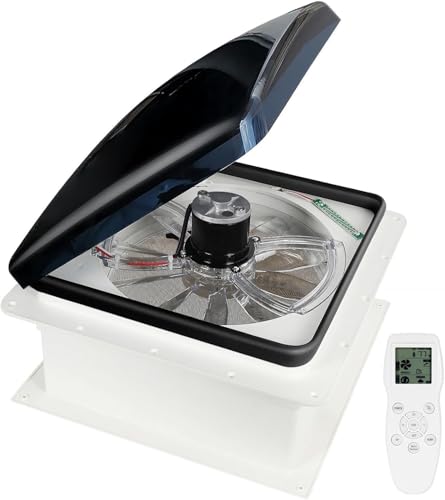
This 14×14″ vent fits standard roof openings on many RVs and can accommodate slightly larger openings with garnish trimming if needed. It offers a remote control for convenient operation, a rain sensor, and an auto-off when the lid closes. Best for tech-friendly buyers who value hands-free control, even when parked or driving. A caution: the fit may be tight on very thick roofs; verify thickness before installation.
PlusRoc 6-Inch RV Vent Fan Replacement

This 6-inch replacement fan is designed for Elixir, Heng’s, and Jensen 12V systems and uses a D-Shaft motor. It’s ideal for upgrading older vents or those with failed blades, offering reliable airflow with straightforward installation. Best for owners replacing a specific vent model; note that compatibility varies by brand and model, so confirm fit before purchase.
Kohree 14″ RV Vent Fan 10 Speed Reversible

Kohree’s 14″ vent delivers high airflow with 934 CFM and includes a temperature sensor that automatically activates the exhaust when interior temps rise. It fits standard 14×14″ openings and comes with mounting hardware and a removable screen. Best for buyers who want automatic temperature-based ventilation and quiet operation (up to 50 dB). Limitation: sensor behavior depends on ambient settings and may require manual override in some climates.
RVMATE 14×14 RV Roof Vent Fan

RVMATE offers a remote-controlled, reversible 14×14 vent with a leak-resistant one-piece frame. It’s designed to fit standard openings and thick roofs up to about 2-1/4″. Best for buyers who want convenient remote operation and a weather-tight seal. Caution: ensure the rough opening and putty tape are correctly aligned to prevent leaks around the frame.
OUTPRIZE RV Roof Vent Fan With Rain Shield

This manual 14×14″ vent includes a built-in rain shield for rain protection during travel or showers. It offers three-speed operation and a reversible design for flexible ventilation. Best for buyers who want a straightforward, cost-effective option with rain protection. Limitation: no remote control means a direct reach to the vent is required for adjustments.
Buying Guide
What size should you choose? Most RVs use a 14×14″ roof opening. Confirm your opening and thickness (often 1.9″ to 7″ thick) to ensure a proper seal and avoid trimming and extra weatherproof work. Do you want remote control or manual operation? Remote control adds convenience, especially if the vent is high, while manual units can be simpler and cheaper. Are rain protections important? A built-in rain shield or weather cover reduces moisture ingress when driving in rain. How important is temperature sensing? A built-in sensor can auto-activate exhaust as temperatures rise, saving energy and improving comfort. Is installation compatibility a concern? Check model compatibility with existing brands (Heng’s, Elixir, Jensen, etc.) or the standard opening and mounting holes on your RV roof. Consider noise and energy draw: higher CFM units move more air but may be louder and use more power. Finally, look for leak resistance in the frame and gasket design to protect interior from water damage.
Key considerations in one glance:
– Vent size: 14×14″ is standard for many RVs, but verify your opening and garnish requirements.
– Airflow and noise: higher CFM improves cooling but can raise noise; choose a balance that fits your comfort.
– Control method: remote control vs manual depends on accessibility and preference.
– Weather protection: rain shields or built-in covers keep interiors dry during rain or travel.
– Durability: UV-resistant housing and leak-tight seals matter for long-term use.
FAQ
- Q: Do I need a rain shield on my RV vent? A: A rain shield protects against moisture and debris, especially when traveling in wet conditions or through rain.
- Q: Is remote control necessary for a roof vent? A: Remote control adds convenience, particularly when the vent is difficult to reach from inside the RV.
- Q: Will a higher CFM vent cool my RV faster? A: Yes, higher CFM moves more air and cools interior spaces quicker, but may increase noise and power use.
- Q: Can I replace my vent with a different brand? A: Replacements should match the opening size (commonly 14×14″) and mounting screw patterns; verify compatibility before purchasing.
- Q: Do temperature sensors improve comfort? A: Temperature sensors automate exhaust at set thresholds, helping maintain a comfortable interior with less manual adjustment.