Best RV Battery Charger Converters for 12V Systems
Choosing a reliable RV battery charger converter is essential for keeping your 12V system powered on the road. This guide reviews five top-rated models designed for RVs, boats, and off-grid setups, highlighting their 4-stage charging, adjustable voltage, and lithium compatibility. Each option powers 12V DC loads while protecting batteries from overcharging and damage. Use the buying guide at the end to compare features, safety protections, and installation considerations.
| Product | Amperage | Voltage Range | |
|---|---|---|---|
| PowerMax PM4 55A Converter | 55A | 13V–16.5V | Li-ion, lead-acid, AGM |
| WAVLINK 55A RV Power Converter | 55A | 13V–16.5V | Lead-acid, lithium (multi-mode) |
| RecPro RV Converter 55A | 55A | 13V–16.5V | Lead-acid, lithium (smart charging) |
| PowerMax PM4 60A Converter | 60A | 13V–16.5V | Lead-acid, lithium |
| PowerMax PM4 100A Converter | 100A | 13V–16.5V | Lead-acid, lithium |
PowerMax 55A RV Converter (PM4 55A)

The PowerMax PM4 55A converter converts 120V AC to 12V DC with a built-in 4-stage smart charger. It supports adjustable output from 13V to 16.5V, making it compatible with lithium, AGM, gel, and lead-acid batteries. The 4-stage charging includes bulk, absorption, float, and equalization, designed to optimize charging, extend battery life, and prevent overcharging. Useful for RVs, boats, solar systems, and off-grid setups, this unit prioritizes clean DC power delivery and reliability in various environments.
WAVLINK 55A RV Power Converter

The WAVLINK 55A RV Power Converter converts 120V AC into a stable 12V DC supply. It offers three smart charging modes and a 13V–16.5V adjustable range, designed for both lead-acid and lithium batteries. The multi-stage charging optimizes performance and helps extend battery life, making it suitable for RVs, boats, and mobile setups. Batteries are not included, but the unit is built to handle peak power needs while maintaining safe operation.
RecPro RV Converter 55A

RecPro’s 55A RV converter provides shore power conversion from 120VAC to 12VDC with 4-stage smart charging, supporting charging of RV batteries while powering lights and appliances. It’s available in several amperage options and is designed to fully charge and maintain various battery types. This model emphasizes safe and efficient charging for RV, automotive, and marine applications, aligning with standard RV electrical systems.
PowerMax 60A RV Converter
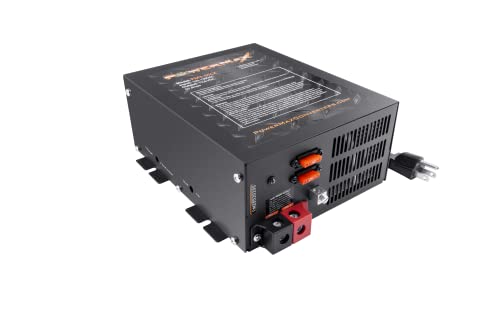
The PowerMax PM4 60A converter delivers 60A of continuous 12V DC power with adjustable output (13V–16.5V) and a 4-stage charging system. It supports lithium and lead-acid batteries and includes features for quiet operation and safe, reliable performance. This unit is appropriate for RVs, campers, and marine use, providing a robust solution for higher power demands and longer trips.
PowerMax PM4 100A Power Converter
The PM4 100A PowerMax converter provides high-capacity power with 100A of continuous 12V DC output. It includes a built-in 4-stage smart charger and protective features such as reverse polarity, overload, and thermal protection. Suitable for larger RVs, boats, and off-grid systems, it ensures dependable power for heavy-duty appliances, lighting, and entertainment systems while maintaining battery health and safety.
Buying Guide: Key Purchase Considerations
When evaluating an RV battery charger converter, consider these factors to choose a model that fits your system and usage patterns:
- Amperage needs: Higher amperage charges faster and support more devices. Match the converter’s output to your battery bank size and anticipated load.
- Voltage range: A wider 13V–16.5V range supports different battery chemistries, including lithium, AGM, gel, and lead-acid. Ensure compatibility with your battery type.
- Smart charging stages: A 4-stage system (bulk, absorption, float, equalization) helps optimize charging, extend battery life, and prevent overcharging.
- Battery compatibility: Look for models explicitly listed as lithium-compatible and able to handle mixed chemistries if you use multiple battery types.
- Safety features: Protection against reverse polarity, overload, and overheating protects both the converter and connected devices.
- Installation and wiring: Consider space, mounting options, and the availability of standard wiring harnesses. Some units allow parallel or series wiring for higher outputs.
- Noise and cooling: Quiet operation and effective cooling (fans or natural convection) are important for enclosed spaces like RVs and boats.
- Durability and certifications: ETL or other safety certifications indicate compliance with safety standards and reliability in harsh environments.
How to matching setup and usage
To optimize performance, connect the converter to a battery bank sized for your power needs, ensure proper fusing and wiring gauges, and place the unit in a ventilated area. Regular inspection of connections and battery health helps prevent performance drops and extends system life. For lithium-based systems, verify that the charger supports LiFePO4 or other lithium chemistries with appropriate charging curves.
Installation tips
Plan a dedicated DC out and AC input path. Use appropriate circuit protection and a robust grounding scheme. If you plan to upgrade from a smaller unit, confirm that your wiring, fusing, and battery bank can handle the added amperage without causing voltage drop or heat buildup.