Best RV Battery Bus Bar Solutions for Safe, Efficient Power Distribution
Direct answer: when equipping an RV with reliable 12V to higher-voltage power needs, a robust bus bar is essential for clean, organized, and safe wiring. The following five products are well-suited for RV enthusiasts seeking durable terminals, clear labeling, and flexible connections. These options range from compact 250A blocks for smaller rigs to heavy-duty 400A blocks designed for high-wattage systems. Each choice targets different usage scenarios, from basic off-grid camping to full inverter-equipped RVs.
| Product | Recommended For | Key Specs |
|---|---|---|
| RVMARINEPAT 12V Bus Bar 250A | Compact RV setups with 12V systems requiring solid 250A capacity | 6 x 5/16″ (M8) studs, handles up to 48V DC, round corner base |
| MOFEEZ Power Distribution Block Bus Bar | Budget-friendly, versatile 4-post bus bar for 12V to 48V | 4 x 5/16″ studs, 6 x #8 screws, max 250A, nylon cover/base |
| Joinfworld Power Distribution Block 12V 250A | Versatile marine/auto RV use with wide terminal range | 4 x 5/16″ studs, 3 x #8 screws, 12V 250A, thicker copper plate |
| RVBOATPAT 400A Bus Bar | Higher-wattage RVs, boats, or solar-heavy systems | 6 x 5/16″ studs, 2 x 3/8″ studs, up to 48V DC/300V AC, tinned copper |
| RVMARINEPAT 400A 12V/24V/48V Bus Bar | High-power inverter setups and larger marine/RV systems | 6 x 5/16″ studs, 0.35″ thick nickel-plated copper, 6 lugs included |
RVMARINEPAT 12V Bus Bar 250A Power Distribution Block

This 12V bus bar provides six 5/16″ (M8) terminal studs and supports up to 48V DC with a 250A maximum. The round corner base design adds stability and a cleaner install, while the open cover accommodates 180° lug layouts for flexible wiring. Best for mid-sized RVs or boats that require straightforward positive and negative distribution on a single panel. Caution: ensure lug sizes and wire gauges suit the 250A rating to prevent overheating.
MOFEEZ Power Distribution Block Bus Bar

MOFEEZ offers a compact 4-post system with 4 x 5/16″ studs and 6 x #8 screws. Rated for up to 250A and 48V DC, it uses nickel-plated brass for low resistance and corrosion protection. The nylon cover helps prevent accidental contact, while the flame-retardant base adds safety. Best for budget-conscious RVers needing solid performance with easy wiring access. Caution: check compatibility of screw terminals with your existing cables before upgrading.
Joinfworld Power Distribution Block 12V 250A

Joinfworld’s unit features 4 x 5/16″ (M8) studs and 3 x #8 screws, with a red/black pair for clear polarity distinction. A thicker copper bus plate enhances connection range and conductivity, making it suitable for RVs with larger gauge cables. The nylon bottom and secure M8 studs reduce the risk of stripping. Best for users who need a dependable all-in-one block with expanded terminal compatibility. Caution: ensure your wire gauges match the terminal sizes to avoid over-tightening.
RVBOATPAT 400A Bus Bar

Designed for high-current needs, this 12V bus bar offers 6 x 5/16″ studs along with two 3/8″ studs for large wires. It targets heavy-duty marine, automotive, and solar setups while remaining within a 48V DC / 300V AC range. The tinned copper plate improves conductivity and resistance to corrosion. Best for users running multiple high-current feeders. Caution: ensure the physical dimensions fit your mounting space, as larger blocks require more room.
RVMARINEPAT 400A 12V/24V/48V Bus Bar
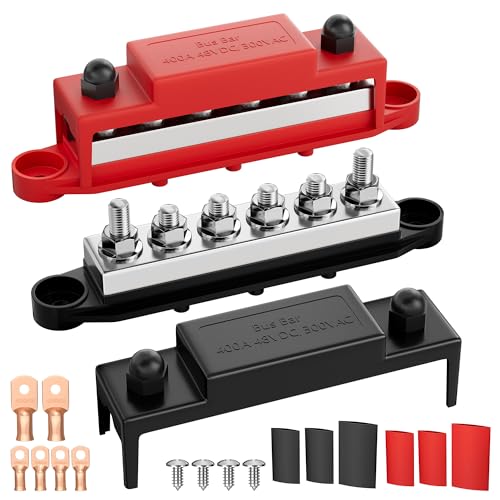
This heavy-duty unit supports up to 400A continuous current across 12V–48V DC systems, making it a strong hub for high-power setups. It features a thick 0.35 inch nickel-plated copper plate for optimal conductivity and corrosion resistance. The kit includes six lugs to simplify wiring and reduce extra purchases. Best for large RV systems with inverter and solar arrays. Caution: larger footprint means more mounting space and secure attachment is essential.
Buying Guide
What size power needs should you consider? Match a bus bar’s amperage rating to the highest anticipated load, including inverter draw, solar charging, and engine alternators. If you expect future expansion, choose a higher-capacity block to minimize upgrades.
Which terminal sizes matter? Most RV buses use 5/16″ (M8) studs or larger. Confirm lug compatibility with your cables and lugs. If planning frequent changes, consider blocks with a thicker copper plate for durability and lower resistance.
What about safety features? Look for nylon or plastic covers, round base designs for stability, and flame-retardant materials. A clearly labeled red/black pair helps avoid polarity mistakes, while secure mounting prevents movement and short circuits.
How should you wire the block? Use the included lugs or compatible heavy-gauge copper lugs. Keep positive and negative lines separate when possible, and route wires to minimize bending stress and heat buildup. An open-cover design can ease installation and future modifications.
Installation environment matters. Marine-rated units resist corrosion and vibration better, but on an RV you’ll still want a sealed, dry mounting location. Choose a bus bar with corrosion-resistant plating and sturdy mounting hardware for longevity in varied climates.
FAQ
- What is a bus bar used for in RVs? A bus bar consolidates multiple power leads into a single distribution point, helping organize wiring and reduce voltage drops in 12V, 24V, or 48V systems.
- What amperage rating do I need? Pick a rating at or above your system’s maximum expected load, including inrush from inverters and charging from solar panels.
- Are these marine-rated bus bars suitable for RVs? Many are designed for marine and automotive use, offering corrosion resistance and robust mounting suited for RV environments.
- Can I install a bus bar myself? Yes, with basic electrical knowledge and proper safety precautions. Ensure power is disconnected during installation and wires are correctly sized.
- How do I choose between 250A and 400A models? Choose 250A for standard RVs with modest inverter usage; select 400A if you have high-power loads, large solar arrays, or multiple high-current feeders.
- What maintenance is required? Periodically inspect for corrosion or loose connections, clean terminals, and re-tighten lugs per manufacturer guidance to maintain performance.