Best RV Batteries for Solar: Top Options for Off-Grid Power on the Road
Powering an RV with solar requires reliable, durable batteries that can handle cycling, temperature swings, and space constraints. The following five batteries are among the best-rated options for RV solar setups, spanning LiFePO4 and AGM chemistries to match different budgets and performance goals. Each selection emphasizes safety, longevity, and easy integration with solar charge controllers and BMS protections. Use this guide to compare capacities, weight, and operating ranges to choose a model that fits your RV lifestyle.
| Product | Brand | Technology | Capacity | Key Benefit |
|---|---|---|---|---|
| GRNOE 12V 100Ah LiFePO4 | GRNOE | LiFePO4 | 100Ah | Low-temperature cut-off and long life |
| WEIZE Deep Cycle AGM 12V 100Ah | WEIZE | AGM | 100Ah | Maintenance-free and low self-discharge |
| Renogy Deep Cycle AGM 12V 100Ah | Renogy | AGM | 100Ah | Proven safety and expandable configurations |
| ECO-WORTHY 3584Wh 12V 280Ah LiFePO4 | ECO-WORTHY | LiFePO4 | 280Ah (3584Wh) | Bluetooth monitoring and high current BMS |
| Rvpozwer 12V 300Ah LiFePO4 | Rvpozwer | LiFePO4 | 300Ah | High cycle life with expandable parallel setup |
Whether you’re chasing longer run times, easier maintenance, or better cold-weather performance, these options cover most RV solar arrangements—from compact, lightweight setups to larger off-grid systems. The following sections provide a focused look at each model, including how it integrates with typical solar controllers and the kind of usage it best supports on the road.
GRNOE 12V 100Ah LiFePO4: Strong Cold-Weather Performance

GRNOE’s 12V 100Ah LiFePO4 battery emphasizes longevity and safety. A built-in BMS protects against overheating, overcurrent, overcharge, and short circuits, while a smart low-temperature cutoff provides reliable discharge down to -4°F, making it a practical choice for cold RV climates. Its energy density is higher than traditional SLA/AGM batteries, and the design aims for a service life exceeding a decade with significantly reduced weight (about 22.5 pounds). For most RV solar systems, pair this with a charger rated at around 14.6V to ensure complete charging and full utilization of the pack’s chemistry.
WEIZE Deep Cycle AGM 12V 100Ah: Maintenance-Free Reliability
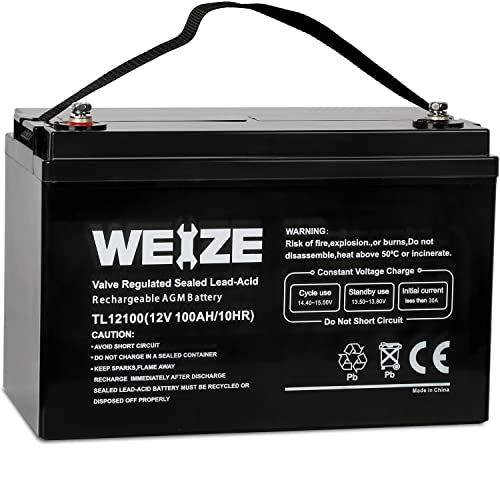
WEIZE’s AGM battery delivers maintenance-free operation with a low self-discharge rate, making it a practical choice for RV solar setups that sit unused for periods between trips. The 100Ah rating aligns well with mid-sized solar arrays, and its sealed design reduces the risk of acid leaks. While AGM chemistry is less dense than LiFePO4, the advantage here is cost and straightforward installation. It is suitable for fanless, quiet RV interiors and less demanding cold-weather use, though it can perform well with proper charging strategies in temperate climates.
Renogy Deep Cycle AGM 12V 100Ah: Trusted Safety and Expandability

Renogy’s AGM 12V 100Ah battery is a staple in RV solar projects, known for solid safety, stability, and compatibility with series or parallel configurations. Its minimal troubleshooting needs contrast with alternative chemistries, and the sealed design helps prevent leaks and maintenance hassles. It’s a reliable baseline option for users who value compatibility with a wide range of Renogy solar controllers and accessories, especially in multi-battery RV setups where expandability matters.
ECO-WORTHY 3584Wh 12V 280Ah LiFePO4: High-Capacity Off-Grid Power

ECO-WORTHY ups the capacity with a 280Ah LiFePO4 pack, delivering a substantial 3584Wh of energy. Real-time monitoring via Bluetooth lets RV owners track voltage, current, and remaining capacity, which is especially valuable when solar conditions fluctuate. The 200A BMS provides comprehensive protection, including low-temperature cutoffs to safeguard charging and discharging in cold conditions. This battery is suited for sizeable RV setups, full-timer campers, or off-grid enthusiasts who need a robust, single-pack solution with remote visibility.
Rvpozwer 12V 300Ah LiFePO4: Maximum Cycles And Expansion

Rvpozwer moves into higher capacity with a 300Ah LiFePO4 pack, designed for RVs that demand longer autonomy and more rigorous cycling. A built-in 200A BMS guards against overcharge, deep discharge, and short circuits, while the battery’s scalable architecture supports parallel connections to reach even higher capacities. The product emphasizes a long lifespan—thousands of cycles with appropriate depth of discharge—making it a strong candidate for larger solar arrays or full-time RV living where weight and space are balanced against extended runtime.
Buying Guide: Key Purchase Considerations
Here are essential factors to weigh when selecting an RV battery for solar power, along with how different chemistries address them:
- Battery chemistry and cycle life: LiFePO4 offers longer cycle life, higher energy density, and better temperature tolerance than traditional lead-acid or AGM, at a higher upfront cost. AGM is more budget-friendly and maintenance-free, with good reliability for moderate solar systems.
- Depth of discharge (DoD) and usable capacity: LiFePO4 typically supports deeper DoD with less degradation, enabling more usable energy per cycle. AGM may require keeping DoD shallower to maximize life.
- Battery Management System (BMS): A robust BMS protects against overcharge, over-discharge, short circuits, and temperature extremes. Look for a BMS that supports appropriate charging voltages for your solar controller and generator alternates.
- Temperature performance: Low-temperature protection helps prevent charging at unsafe temperatures and preserves battery life in cold climates. Some LiFePO4 packs include explicit low-temp cutoffs.
- Weight and space: LiFePO4 packs are often lighter for the same capacity, an important consideration in RV design. AGM packs tend to be heavier but can offer lower initial costs.
- System scale and expansion: If you plan to grow your solar array, choose batteries that are easy to wire in series or in parallel and that integrate with your current controller and inverter setup.
- Monitoring and maintenance: Bluetooth or app-based monitoring helps you track health and performance. Maintenance-free designs reduce upkeep in mobile lifestyles.
- Warranty and service: Longer warranties reflect confidence in longevity, especially important for off-grid reliance during extended trips.
When evaluating these options, match the battery’s capacity and voltage to your RV’s electrical load, inverter size, and solar array. For weekend warriors with smaller solar setups, a 100Ah LiFePO4 or AGM unit can cover refrigerators, lighting, and essential devices for several days. For full-time RVers or larger mobile homes, a higher-capacity LiFePO4 pack or a multi-battery AGM system might be more appropriate to maintain autonomy during less sunny periods.