Best RV 12 Volt Power Supply Options for Reliable on-the-Go Power
Finding the right 12V power supply for an RV can be challenging due to varying output needs, efficiency, and safety features. This guide consolidates five solid bets for American RVers seeking dependable 12V DC power from a 110V AC source. Each option targets a distinct use case—from high-amp essential loads to quiet, compact setups. This article helps buyers choose based on amperage needs, charging features, and safety protections. The quick summary table below highlights core specs to compare at a glance.
| Product | Brand | Max Output | Best For | |
|---|---|---|---|---|
| Yaheeda New Version Converter | Yaheeda | Peak 50A / Peak 600W | High-demand 12V devices; motor and LED loads | Peak power may exceed device needs |
| PM4 100 Amp RV Power Converter | sdanbom | 100A (13.6–14.4V typical) | Multiple devices; built-in smart charger | Overhead cooling required in tight spaces |
| PowerMax PM3-100LK | PowerMax | 100A | RV and 12V systems needing reliable power | Voltage range tightly specified; ensure compatibility |
| WAVLINK 55 Amp RV Power Converter | WAVLINK | 55A | Balanced, quiet operation with multi-stage charging | Lower max output for larger RVs |
| SUMANEP AC to DC 1500W Converter | SUMANEP | 125A peak / 1500W peak | High-load motor and LED uses; versatile for amps | Start currents may exceed continuous rating |
Yaheeda New Version Converter

The Yaheeda converter is an AC-to-DC switch transformer with adjustable output up to 12V DC and a peak capability of 50A (600W). It supports input ranges of 110V or 220V and is designed for devices such as pumps, LED strips, and LCD displays. Best for RVers who need a robust, high-peak option for resistive and motor loads, with built-in protection against overload, over-voltage, and short circuits. A built-in EMI filter and a durable aluminum shell reduce heat and improve reliability.
Who it’s best for: RV owners running multiple 12V devices that may briefly demand high startup currents, such as pumps or LEDs with motors. This unit emphasizes safety with automatic cutoffs. Choose this if you require a high peak current and rugged, safety-forward design. Caution: For motor loads, peak power should be planned as more than the motor’s nominal power to cover startup surges.
PM4 100 Amp RV Power Converter

The PM4 100 Amp RV Power Converter integrates a built-in four-stage smart battery charger with 100 amps of DC output. It supports 110V–120V AC input and provides 12V DC charging with three modes: Fast, Standard, and Trickle. This model is ideal for RVs with a broad array of electronics, including audio systems, lighting, and auxiliary devices. Safety features include overload and short-circuit protection, with a cooling fan to manage heat during heavy use.
Best for: RV setups that require substantial continuous power plus a smart charger to manage battery health. Better for users who value automatic charging strategies and a quiet cooling cycle. Limitation: Ensure adequate ventilation to avoid overheating in enclosed compartments.
PowerMax PM3-100LK

The PowerMax PM3-100LK is a 100A 12V DC power converter designed for RV and boat applications. It emphasizes quiet operation with a cooling system, and it provides a wide operating voltage range around 13.6–14.4V to accommodate different battery chemistries. It includes safety protections and is positioned as a reliable choice for powering onboard electronics and lighting.
Who it’s for: RVers seeking dependable, steady DC power with a straightforward installation and clear safety protections. Choose this if you want a calm, stable power supply with a focus on durability. Limitation: Voltage is tuned for typical battery charging ranges and may require adjustments for unusual systems.
WAVLINK 55 Amp RV Power Converter

The WAVLINK GS800RV-55 offers 55 amps of output with a three-stage charging system and a 13–16.5V adjustable operating range. It’s designed for RVs and other 12V systems, prioritizing quiet operation and multi-stage charging to balance speed and battery longevity. The unit is marketed as an economical, user-friendly replacement for RV power needs.
Best for: RVers who want a balanced solution with clean charging profiles and quieter performance. Choose this if you need a mid-range option that handles daily devices well. Caution: The maximum output is lower than larger converters, so assess whether your load demands exceed 55A during peak use.
SUMANEP AC to DC 1500W Converter
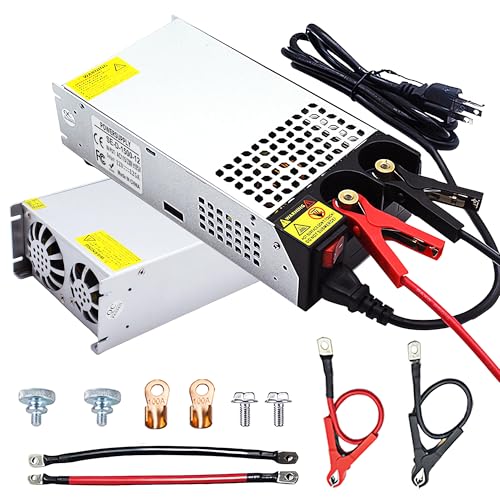
The SUMANEP unit provides up to 125A peak current and up to 1500W peak power, with an aluminum shell and multiple heat-dissipation features. It uses a smart cooling system and anti-skid bottom pads to enhance stability. This model is intended for users who need significant startup current and broad compatibility for RV, LED, CCTV, and vehicle systems.
Best for: High-demand RV loads and motorized devices that require substantial peak power. Avoid this if your daily use stays well under 40–50A, as the high capacity might be unnecessary. Note: The documentation advises staying under 80% of full load to protect lifespan.
Buying Guide: Key Purchase Considerations
- Peak vs. continuous power: RV loads often have startup surges. Look for a unit with a peak rating higher than your continuous load.
- Voltage range and compatibility: Ensure the converter’s output aligns with your battery bank (commonly 12V 13.6–14.4V charging range).
- Charging modes: Four- or three-stage charging supports battery longevity, especially for lead-acid or lithium systems.
- Safety features: Overload, overvoltage, short-circuit, and over-temperature protections prevent damage to RV electronics.
- Cooling and ventilation: Converters generate heat; proper ventilation minimizes heat-related issues in compartments.
- Physical constraints: Size, mounting, and weight affect installation in tight RV spaces.
- Price-to-performance: Compare max output, safety features, and noise levels to determine value for your rig.
FAQ
- What does “peak current” mean for an RV converter?
– It is the maximum transient current the unit can deliver without tripping safety protections, useful for startup surges of motors or pumps. - Should I overspec the converter for my RV?
– Yes, choose a unit with a higher peak rating than your predicted startup demand to avoid voltage dips. - Is a quiet converter important for a cabin RV?
– Yes, quieter operation improves comfort, especially in living areas or bedrooms. - Can these converters power sensitive electronics?
– Most include surge protections and regulated outputs; verify compatibility with your devices before use. - Do I need professional installation?
– If you’re comfortable with AC-DC wiring, grounding, and ventilation, a DIY install is possible; otherwise seek a professional.