Best RV 12 Volt Converter Options for Stable On‑The‑Go Power
The right 12V DC power converter is essential for keeping RV batteries healthy and electronics running smoothly while you travel. This guide highlights top 12V converters that convert AC to clean, reliable 12V power for RVs, boats, and off‑grid setups. Each product features multi‑stage charging, adjustable voltage, and compatibility with multiple battery chemistries. Read on to compare capacities, charging modes, and safety certifications to find the best fit for your rig.
| Product | Brand | Output | Key Feature |
|---|---|---|---|
| PowerMax PM4 55A | PowerMax | 13–16.5V | 4‑stage smart charging, lithium compatible |
| WAVLINK 55A RV Converter | WAVLINK | 13–16.5V | 3 smart charging modes, lithium/lead‑acid support |
| PowerMax PM3-55 | PowerMax | 13.6–14.4V | Quiet operation, UL safety certified |
| VEVOR RV Converter 45A | VEVOR | 13–16.5V | Dedicated charging modes, Li‑ion support |
| Yaheeda 50A DC Converter | Yaheeda | 12V output up to 50A | Adjustable voltage, overload protection |
PowerMax PM4 55A RV Converter

The PowerMax PM4 55A converter is designed to power RVs, boats, and off‑grid systems by converting 120V AC to DC with a built‑in 4‑stage smart charger. Its adjustable output from 13V to 16.5V supports lithium, AGM, gel, and lead‑acid batteries, enabling safe charging across battery chemistries. The built‑in charging stages—bulk, absorption, float, and equalization—optimize efficiency and extend battery life, reducing the risk of overcharging. This unit emphasizes reliability in variable environments, making it suitable for daily RV use or seasonal camping. Noise and heat are managed to maintain a stable power supply.
Key points: 55A output, adjustable voltage, smart charging, multiple battery types, compact enough for shared spaces in campers. It is a practical choice for travelers who want a single converter capable of maintaining their house batteries, engine start batteries, and auxiliary systems without frequent replacement.
WAVLINK 55 Amp RV Power Converter

WAVLINK’s 55A model provides a robust 12V charging solution with 3 smart charging modes and a wide operating range of 13V to 16.5V. It is designed for 120V AC input and supports various battery types, including lead‑acid and lithium options. The three charging modes tailor the voltage curve for maximum efficiency and battery longevity. This converter is suitable for mid‑size RVs and camping setups where reliable, quiet operation and straightforward installation are valued. It emphasizes stable power delivery and flexibility across different electrical systems.
Highlights include tailored charging modes, a strong 55A capacity, and a focus on minimizing battery wear, which helps in prolonged battery life and fewer replacements on the road. The unit’s versatility makes it a good mid‑range option for campers who need dependable performance without the highest power draw.
PowerMax PM3-55 RV Power Converter
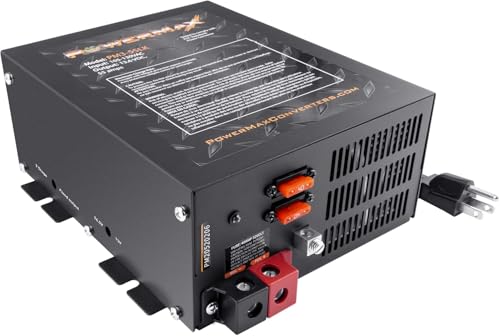
This PowerMax PM3‑55 model emphasizes quiet, reliable operation with a temperature control system to keep the fan noise low and the unit within optimal temperatures. It features a narrow voltage window around 13.6 to 14.4V, making it a stable option for RVs and other 12V systems. UL and CUL certifications provide a safety benchmark for electrical devices used in mobile environments. The unit’s design centers on steady performance, ensuring electronics and appliances receive consistent power on long trips or stationary campsites.
Key considerations include its suitability for smaller or mid‑size RVs, the benefit of a quiet cooling profile, and certification assurances that support peace of mind during travel. If you operate in campsites with varying voltage supplies, this converter can offer dependable charging without drawing excessive current or overheating.
VEVOR RV Converter 45A

VEVOR’s 45A RV power converter offers dedicated charging modes with an adjustable voltage range from 13.0V to 16.5V, making it compatible with lead‑acid and lithium batteries. The unit converts 120V AC to 12V DC and is intended for RVs, boats, and off‑grid installations where reliable, clean DC power is essential. The product highlights include a multi‑mode charging philosophy and compatibility with common battery chemistries, allowing users to optimize charging curves for specific battery banks. It’s a practical option for those seeking a balance of power and efficiency without going to the highest amperage tier.
For campers, this converter supports sustained use of lights, electronics, and small appliances while parked or traveling. It can be an economical choice for users with modest battery banks or those who want a straightforward, easy‑to‑install charging solution that delivers steady performance in varied environments.
Yaheeda New Version Converter 50A

Yaheeda’s new version 50A converter provides adjustable voltage with a peak current capability up to 50A and peak power up to 600W, suitable for devices and systems under 40A continuous draw. The unit supports multiple input voltages and includes a safety emphasis with overload, over‑voltage, and short‑circuit protections. The built‑in EMI filter and aluminum shell enhance reliability in mobile environments, making it a sensible option for RVs that require flexible charging with solid protection against electrical faults. It’s particularly suitable for users who value adjustable control and robust protection in a compact form factor.
When selecting this model, consider your battery bank size, anticipated peak loads, and whether you need higher peak surge capability for motors or pumps. Yaheeda provides a versatile option for owners who want a balance between adjustable voltage settings and strong built‑in protections.
Buying Guide: Key Purchase Considerations
Choosing the right RV 12V converter involves weighing several factors to match your electrical setup and travel patterns. Consider the following perspectives to make an informed decision:
- Power output: Match amperage to your battery bank size and anticipated load. Higher amperage supports larger or more devices but may consume more power when charging. For modest rigs, 45–55A units cover most needs; larger RVs with bigger battery banks may benefit from 75A or higher options.
- Voltage range and adjustability: A selectable output (13–16.5V) supports both lithium and lead‑acid chemistries. If you plan to use lithium batteries, ensure the unit supports LiFePO4 or Li‑ion charging curves and termination voltages appropriate for your pack.
- Charging stages: Multi‑stage charging (bulk, absorption, float, and possibly equalization) optimizes battery health and longevity. Look for a model that implements these stages reliably and with safeguards against overcharging or overheating.
- Noise and heat management: Quiet operation and effective thermal management prevent nuisance sounds and thermal shutoffs during long camping sessions. This is especially important in tight RV compartments.
- Safety certifications: UL, CUL, ETL or CETL listings indicate adherence to safety standards. In mobile environments, certified units offer better protection against faults and electrical hazards.
- Compatibility and installation: Check the converter’s input/output interfaces, mounting options, and whether it can be wired in parallel or series for higher power if your setup requires.
- Battery chemistry support: If you use a mixed battery setup (lead‑acid and lithium in different banks), ensure the charger modes accommodate each type without compromising safety or performance.
- Brand and service: Reputable brands with documented support can simplify warranty claims and troubleshooting, especially when traveling far from home.
Summary considerations: For most RV users, a 45–55A converter with a 13–16.5V adjustable output and a proven three‑ or four‑stage charging profile offers a practical balance of performance, safety, and value. If you rely on large battery banks or heavy 12V loads, a higher‑amperage model with robust safety certifications provides headroom for peak use and future expansion.
Note: Always follow installation instructions, ensure proper ventilation, and verify compatibility with your battery bank before connecting new power conversion equipment. Regular maintenance and inspection help protect your electronics and extend the life of your RV power system.