Best Roof Wind Turbine Air Ventilators for Efficient Attic and Roof Ventilation
Answering the need for energy-efficient, wind-powered attic ventilation, these roof wind turbine air ventilators help exhaust hot air and moisture without electricity. They’re best for homeowners tackling hot summers, builders seeking durable roof vents for new builds, and facility managers maintaining storage spaces or containers. Below is a quick buyer’s summary of five top options, followed by detailed product insights and a practical buying guide.
| Product | Best For | Key Benefit |
|---|---|---|
| Tandefio 2 Pack 4 Inch Turbine Vent | Homes and small Attics | Durable 201 stainless steel, compact 4-inch sizing |
| 8in Roof Vent Cap Attic Fan | Older homes and lofts | Large diameter, rainproof and noiseless operation |
| Tandefio 12 Inch Wind Turbine | Shipping containers and industrial spaces | 12-inch design with integrated airflow optimization |
| DioOnes Stainless Steel Turbine Roof Ventilator | High-durability, weather-ready attics | Premium 304 stainless steel for corrosion resistance |
| RDUIGT Stainless Steel Turbine Roof Vent | New builds and rugged conditions | Low start-up wind speed, quiet operation |
Tandefio 2 Pack 4 Inch Turbine Vent

This pair of non-powered roof ventilators uses a 201 stainless steel structure for durability and corrosion resistance. With a tube diameter of about 4.33 inches (11 cm) and a turbine diameter of about 7.48 inches (19 cm), they offer adequate airflow for residential spaces and small commercial settings. Best for retrofit projects where you want extra attic ventilation without electrical requirements.
Best for: Homeowners performing rooftop upgrades or adding vents to attics. Choose this pair if you want ready-to-install, budget-friendly wind turbines with durable materials. Caution: As non-powered vents, performance depends on wind conditions and roof orientation.
8in Roof Vent Cap Attic Fan

Constructed from thickened 304 stainless steel, this non-powered vent cap provides rainproof and corrosion-resistant performance with high hardness and anti-deformation properties. It uses natural convection to move air, converting parallel wind into vertical airflow to enhance attic ventilation without electricity. Suitable for occasional-use ducts, chimneys, or larger attic spaces that benefit from passive airflow.
Best for: Attics and lofts where quiet, maintenance-free operation is desired, and where wind-driven air movement is sufficient. Better for: larger roof spaces needing greater airflow. Caution: May be less effective in very low-wind environments or tight spaces with limited wind access.
Tandefio 12 Inch Wind Turbine For Shipping Containers

Designed for 12-inch roof vents, this wind turbine is built with 201 stainless steel and features a tube diameter around 11.89 inches (30.2 cm) and a turbine diameter of about 16.54 inches (42 cm). It’s tailored to shipping containers or factory spaces, offering robust airflow to manage heat and moisture. Best for: storage containers and industrial facilities needing substantial passive ventilation. Caution: Larger size may require compatible mounting and space considerations on the roof.
DioOnes Stainless Steel Turbine Roof Ventilator

This 11-inch wind-powered turbine vent is built from premium 304 stainless steel for reliable corrosion resistance in varied climates. It uses a wind-driven turbine to exhaust hot air and moisture from attics without electricity, and it features a rainproof design with silent operation. Best for: climates with moderate to strong winds where a quiet, maintenance-free attic vent is desired. Caution: Non-powered reliance means efficacy varies with wind speed and roof exposure.
RDUIGT Stainless Steel Turbine Roof Vent

With a 4.33-inch bottom vent diameter (110 mm) and a compact profile, this stainless steel turbine vent is designed for dependable, wind-driven exhaust. It uses galvanized steel bearings and encrypted blade structure to maintain quiet operation and rain resistance in variable wind conditions. Best for: tight roof spaces and maintenance-free ventilation where low start-up wind speed is important. Caution: Performance may depend on roof orientation and prevailing wind direction.
Stainless Steel Non Power Roof Ventilator (4in)

This 4-inch non-powered turbine vent is crafted from 304 stainless steel for durability and easy maintenance. It emphasizes silent operation and rainproof design with an encrypted blade configuration to minimize water intrusion. Best for: compact attic spaces or small rooftops where low-profile, maintenance-free ventilation is preferred. Caution: Smaller size means lower airflow compared to larger models when wind is limited.
12-Inch Wind Turbines For 20′ Shipping Containers
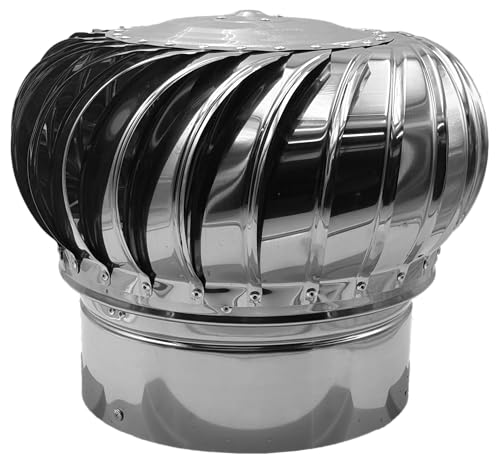
Engineered for a precise fit with the AdaptAIR adapter, this 12-inch turbine is designed to minimize moisture and heat in shipping containers. It uses 24 curved blades—more than the typical 21—to improve airflow. Built with thickened 201 stainless steel for long-term durability. Best for: container ventilation projects requiring enhanced airflow and compatibility with adapters. Caution: Sold as a single unit in many listings; ensure pairing with the correct adapter for best results.
Buying Guide: Key Considerations For Roof Wind Turbine Air Ventilators
- Wind availability: Non-powered turbines rely on ambient wind. In low-wind areas, consider larger diameters or hybrid solutions that combine passive venting with small powered options.
- Material and corrosion resistance: Stainless steel (304 or 201) resists rust and is suitable for coastal or humid environments. Higher-grade steel often offers longer service life with less maintenance.
- Size and airflow: Larger turbine diameters provide more airflow but require more roof space and proper mounting. Match diameter to attic or container volume to avoid under-ventilation or over-ventilation.
- Weather resistance: Look for rainproof covers and sealed bearings to reduce water infiltration and minimize noise during windy conditions.
- Installation compatibility: Some products are designed for specific roofs or containers. Confirm mounting hardware, compatibility with roof pitch, and required adapters or clamps before purchase.
- Maintenance: Non-powered vents are generally low-maintenance, but periodic cleaning and inspection of the blades, bearings, and seals help maintain performance.
Frequently Asked Questions
- Do wind turbines require electricity to work?
– No. Wind-powered roof turbines use natural airflow to extract hot air and moisture without electricity. - What size wind turbine should I choose?
– Large diameters move more air but require more rooftop space and proper mounting. Choose based on attic or container volume and prevailing wind. - Are stainless steel vents better than galvanized ones?
– Stainless steel offers superior corrosion resistance in many environments, contributing to longer life with minimal maintenance. - Will wind vents be effective in all climates?
– They work best where regular wind is available. In very calm climates, consider a hybrid approach or powered alternatives for consistent ventilation. - Can these vents be used on shipping containers?
– Yes. Several models are designed or suitable for container ventilation, especially those with precise sizing and compatible adapters. - What maintenance is required?
– Periodic inspection for rust and wear, cleaning the blades if needed, and ensuring seals remain intact for rain protection.