Best Roof Solar Panel Kit Running on-Grid or Off-Grid Power for Ready-to-Go Energy
The buyer intent is clear: find a reliable roof solar panel kit that fits various RV, camper, off-grid, and home backup needs. This guide highlights five strong options and explains who each kit is best for, along with practical buying considerations. The included comparison table helps buyers quickly assess outputs, compatibility, and use cases. Use this as a quick-reference before selecting a solar panel kit for your roof installation or portable off-grid setup.
| Product | Brand | Best For | |
|---|---|---|---|
| 200W Mono Panel Kit | ECO-WORTHY | Compact RVs, campers, small off-grid cabins | 800Wh/day under good sun |
| 10KW Off-Grid System | ECO-WORTHY | Home or shed backup with high daily load | Large daily energy for AC, fridge, etc. |
| 100W Starter Kit | Renogy | First-time RV or tiny off-grid setups | ~500Wh/day typical |
| 200W N-Type Pair | Callsun | Van build and marine-friendly roofs | 25%+ efficiency with bifacial tech |
| 200W Renogy 2x100W Kit | Renogy | RV, caravan, boat with easy expansion | Integrated 30A PWM controller |
Introduction end. The following sections detail each product with practical, buyer-focused information to help you choose the best roof solar panel kit for your needs.
ECO-WORTHY 200W Roof Kit With 30A PWM Controller
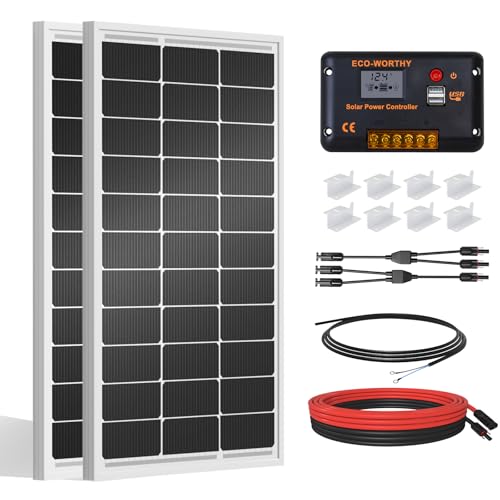
Best for: RVs, campers, small off-grid applications needing straightforward mounting and reliable daily output. This kit uses high-efficiency monocrystalline cells to maximize daytime energy, with a corrosion-resistant frame and IP65-rated junction box for durability. It targets up to 800Wh per day under four hours of full sun, making it a strong option for moderate daily loads such as lights, fans, and small appliances. The 30A PWM controller keeps charging simple and dependable, suitable for users who prefer a budget-friendly, easy-to-install system.
Key strengths: Monocrystalline cells deliver higher efficiency; robust frame resists wind and snow loads; suitable for RVs and small cabins. Caution: PWM controllers are less efficient under rapidly changing sun conditions compared with MPPT—expect slightly lower overall charging efficiency on cloudy days.
ECO-WORTHY 10KW Off-Grid Solar System Kit

Best for: Home, cabin, shed, or farm energy backups requiring higher daily energy and parallel inverter capability. This kit claims a daily output around 9.36KWh under ideal sun, with the ability to parallel up to six inverters for larger power needs. It includes a 10KW inverter with 120V/240V AC output and a CAN/RS485-ready battery monitoring system. This kit suits users who want substantial off-grid power for appliances, cooling, and other high-demand devices.
Why chosen: High total system power, real-time monitoring, and multiple safety certifications suggest reliable performance across larger off-grid setups. Caution: System complexity increases with higher-capacity configurations, which may require careful installation planning and wire management.
Renogy 100W Starter Kit

Best for: Beginners upgrading RV or tiny off-grid setups to a reliable but compact solar system. The kit features a 100W monocrystalline panel with a 30A LCD PWM charger controller, basic mounting hardware, and connectors designed for RVs and campers. It’s a strong stepping-stone kit for users who want straightforward installation and predictable performance.
Why chosen: Decent efficiency (roughly 22.5%), tested panels, and a service plan that emphasizes long-term support. Caution: Starter-level capacity may limit usage for higher daily energy needs or peak loads like air conditioning in hot weather.
Callsun N-Type 200W Dual Panel Kit

Best for: Van builds, marine roofs, and off-grid roofs where efficiency and shading tolerance matter. This kit pairs two 200W N-type panels to deliver strong output with high-efficiency cells and a bifacial option that can harvest additional energy from rear reflections. The design emphasizes anti-shade technology and a parallel connection strategy to maximize uptime even in partially shaded conditions.
Why chosen: Higher efficiency (up to 25%), reduced hotspot risk, and improved shading resilience. Caution: Bifacial performance depends on back conditions and mounting; results can vary with orientation and rear sun exposure.
Renogy 200W RV Solar Kit with Adventurer 30A PWM
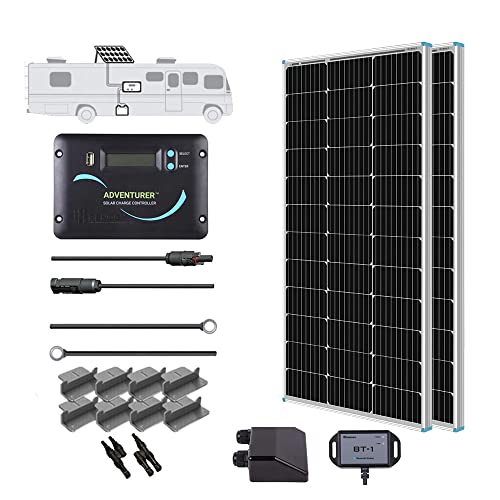
Best for: RVs, boats, caravans needing a balanced, mid-size system with easy expansion. This 200W kit uses a 22% efficient cell design and a corrosion-resistant frame, built to handle outdoor use and demanding weather. The Adventurer-Li PWM controller provides protection against overcharge, overload, short circuits, and reverse polarity, making it a straightforward, durable setup for mobile power needs.
Why chosen: Strong balance of performance and rugged build with a practical controller for RV installations. Caution: PWM controller is competent but less efficient than MPPT in fluctuating conditions; plan for sufficient sunshine for best results.
Buying Guide: Key Considerations For Roof Solar Kits
- Energy needs: Estimate daily watt-hours to choose the appropriate kit size. Start with common RV loads and fridge or small appliances for guidance.
- System type: Off-grid vs. grid-tied concerns determine inverter size and battery needs. Consider parallel capabilities if you anticipate expansion.
- Cell technology: N-type and mono-crystalline cells offer higher efficiency and longer life. Higher efficiency matters more in tight spaces or shaded conditions.
- Controller type: PWM vs. MPPT. MPPT offers higher efficiency and better performance in variable weather but can cost more. For larger or expanding systems, MPPT is often worth it.
- Durability: Look for corrosion-resistant frames, IP ratings, and high wind/snow load tolerances to match your environment.
- Installation footprint: Measure roof space and consider mounting brackets, tilt, and orientation for optimal sun exposure.
- Monitoring: Real-time battery monitoring helps optimize performance. Bluetooth/Wi-Fi capable systems enable remote checks.
- Safety and certifications: UL, CSA, IEC ratings indicate robust safety standards—important for home and vehicle installations.
Frequently Asked Questions
- What size solar kit should I choose for a small RV?
– A 100W–200W kit is usually sufficient for basic lighting and small devices, with upgrades possible as power needs grow. - Is an MPPT controller better than PWM?
– Yes for higher efficiency in variable sunlight, especially in larger or expanding systems; PWM is simpler and cheaper. - Can I expand a kit later?
– Many kits support parallel expansion or additional panels; verify compatibility with the inverter and controller. - How does shading affect performance?
– Shading significantly reduces output; look for anti-shade design features or bifacial options to mitigate losses. - What maintenance is required?
– Clean panels periodically, check wiring for wear, and ensure mounting hardware remains secure after weather events. - Are these kits suitable for home backup?
– Larger off-grid kits can support home backup when paired with suitable inverters and battery storage; consult a professional for installation.