Best Roof Heat Trace Cables for Winter Protection
Answering the common winter prep need, roof heat trace cables prevent ice dams, damaged gutters, and frozen downspouts. This guide highlights five reliable options suitable for homeowners, property managers, and contractors who want durable, consistent performance in cold climates. The top picks vary by length, wattage, and certification to fit metal or plastic gutters, metal roofs, and various installation scenarios. Choose based on roof size, typical snow load, and whether you prefer self-regulating or fixed-output cables. The table below compares practical specs to help you decide quickly.
| Product | Length | Wattage | Best For |
|---|---|---|---|
| Frost King RC160 | 160 ft | 800 W | DIYers, larger gutters |
| HEATIT 5W/ft (Downspouts) | 250 ft | 1250 W | Industrial settings, heavy protection |
| HEATIT 5W/ft (120V, 100 ft) | 100 ft | 500 W | Smaller installs, quick setup |
| GutterMelt 50 ft | 50 ft | 450 W | Residential gutters, quick fix |
| SZFY 50 ft | 50 ft | 5 W/ft | Budget-friendly, versatile uses |
Frost King Electric Roof Cable Kit RC160

Length: 160 ft; Output: 800 W at 120 V. This pre-assembled kit is designed for straightforward installation with included instructions. Best for homeowners with mid-to-large gutter runs who want a ready-to-install solution without custom wiring. The kit is ideal for DIYers seeking predictable, fixed-output heating along the roof edge. A potential limitation is lack of self-regulation, meaning continuous attention to power usage in milder winter days may be necessary. Use when a simple, all-in-one solution for a standard roof edge is preferred.
HEATIT Industrial Self-Regulating Roof Cable (5W/ft) 250 ft

This 5W/ft self-regulating heat trace is UL/ETL certified and designed for roofs, gutters, downspouts, and water pipes. It adjusts heat output with ambient temperature, reducing power use during milder conditions while maintaining protection against ice dams in severe cold. The durable jacket provides resistance to moisture and abrasion, suitable for wet, outdoor environments. Best for large properties requiring dependable, automatic modulation, and for installations where heightened safety certification matters. Limitation: longer runs may require careful planning of power taps and controller options.
HEATIT Self-Regulating Heat Cable, 120V, 100 ft
This 5W/ft self-regulating cable protects roofs, gutters, and downspouts from freezing. It’s suitable for smaller projects or where a compact length is preferred. The self-regulating feature minimizes overheating and helps conserve energy during continuous operation. Choose this if you have a modest roof gutter run and want UL/ETL-certified safety with straightforward installation. Limitation: shorter length may require additional segments for larger homes.
GutterMelt Roof Heat Cable, 50 ft

50 ft length with 450 W (approx. 3.75 A at 120 VAC) makes this a practical option for smaller homes or focused sections of gutters and downspouts. It emphasizes reliable freeze protection and versatility across residential, commercial, and industrial applications. Best for those who want a durable, plug-in heat trace with straightforward installation for a limited span. Caution: Limited length means you may need multiple runs for larger roofs, potentially increasing wiring complexity.
SZFY 50 ft Heat Tape for Water Pipes

With a 50 ft length and 5 W/ft rating, SZFY emphasizes high heating efficiency and resilience in cold weather down to -40°F. It uses a thick copper wire core and multi-layer rubber construction for longevity, making it a flexible choice for varied installations. Best for budget-conscious buyers seeking a robust, long-lasting option that can adapt to different setups, including farms or temporary de-icing needs. Limitation: Some users may require longer runs, as the 50 ft length covers a modest area.
SZFY 160 ft Heat Tape for Water Pipes
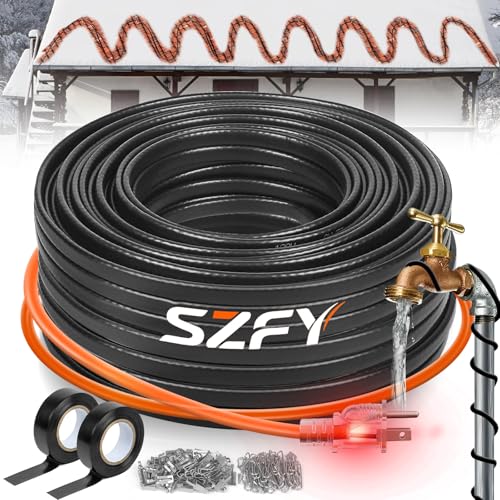
This longer SZFY option extends coverage to 160 ft while maintaining the same high-efficiency 5W/ft performance. It uses a robust copper wire core for efficient heat transfer and a durable outer jacket suitable for outdoor exposure. Best for larger roofs or extended gutter lines that require consistent heat along the entire span. Limitation: Higher installation complexity and power considerations for very long runs.
TOPDURE 200 ft Roof Heat Cable

This 200 ft, 5W/ft cable emphasizes ETL and CSA safety certifications, including a UL-certified plug. It’s designed for metal or plastic gutters and downspouts with a clear focus on ice dam prevention and continuous water flow. Best for homeowners who require strong safety certifications across residential installations or larger properties with extended gutter runs. Limitation: Heavier gauge and longer length may require centralized power distribution planning and more complex wiring.
Buying Guide
- What length do I need? Measure roof edge length and gutter runs to choose between short, medium, or long cables. Longer runs require multiple power taps and careful routing to avoid hot spots.
- Self-regulating vs fixed-output: Self-regulating cables adjust heat with ambient temperature, saving energy during milder days. Fixed-output cables provide consistent heat but may consume more power.
- Certifications: UL/ETL or CSA listings improve safety. Ensure plugs and cables meet local electrical codes for outdoor use.
- Installation considerations: Outdoor-rated jackets, moisture resistance, and strain relief are important for long-term reliability. Plan for drips, snow loads, and wind exposure.
- Best practices: Use clips or spacers; keep cables away from walking paths; do not overlap cables; use GFCI outlets for outdoor installations.
FAQ
- What is roof heat trace cable used for?
It prevents ice dams, protects gutters and downspouts, and keeps water flowing during freezing conditions.
- Do I need self-regulating cable for all roofs?
Self-regulating cables are versatile and energy-efficient for varied temperatures, making them suitable for most residential setups.
- How long should a roof de-icing cable last?
Durability depends on environment and build quality; many cables are designed for extended outdoor use with protective jackets.
- Is it safe to plug outdoor heat cables into a standard outlet?
Yes, if the cable includes a UL-listed plug and is rated for outdoor use with proper weather protection and GFCI where required.
- What maintenance is required after installation?
Inspect annually for wear, ensure fasteners remain secure, and replace damaged segments to maintain consistent performance.