Best RO Water Purifier Suppliers for Clean, TDS-Free Home Water
The top choice for buyers seeking reliable RO water purification is to compare compact countertop and under-sink systems that balance filtration efficiency, ease of installation, and mineral preservation. This guide highlights five well‑scored options suitable for households that want dependable, mineral-balanced drinking water without complex plumbing. It also targets buyers who value portability, energy use, and eco‑friendly water conservation.
Buyer profiles at a glance:
– Under-sink purifiers: Best for homeowners who want a hidden system with high filtration and long service life.
– Countertop purifiers: Ideal for renters or those who prefer plug-and-play setups.
– Portable/backup purifiers: Suitable for outdoors, RVs, or emergency water needs.
– UV-assisted models: Good for households prioritizing additional disinfection.
– High-flow or tankless systems: Great for busy kitchens needing quick access to purified water.
| Product | Type | Best For | Notable Feature |
|---|---|---|---|
| iSpring RCC7AK | Under-sink RO | Families seeking balanced remineralized water | Alkaline 6-stage with pH+ remineralization |
| Bluevua RO100ROPOT | Countertop RO | Renters or mini-kitchens | No installation; 6-stage with UV and remineralization |
| Aigerri UV Countertop | Countertop RO | Eco-conscious users; no installation | High efficiency with 5-stage filtration |
| SimPure Y7P-BW | Countertop RO with UV | Small spaces needing UV safety | UV + 4-stage RO; no installation |
| Waterdrop G2 | Under-sink Tankless RO | Modern kitchens; high flow | Tankless; 1:1 drain ratio; 400 GPD |
iSpring RCC7AK 6-Stage Alkaline RO System

Best for: Homeowners who want mineral-rich, balanced tasting purified water. The RCC7AK combines a 6-stage RO process with a patent-pending alkaline remineralization stage to restore minerals and stabilize pH. It’s designed for under-sink installation with a top-mounted faucet that simplifies setup. The transparent first-stage housing helps you monitor contaminant buildup and plan filter changes. A potential limitation is the emphasis on remineralization rather than aggressive taste masking for very high-TDS water.
- Pros: Alkaline remineralization adds minerals and improves pH; easy above-sink installation; visible pre-filter stage aids maintenance.
- Cons: Installation remains under-sink; replacement filter timing depends on water quality and usage.
Bluevua RO100ROPOT Countertop RO System
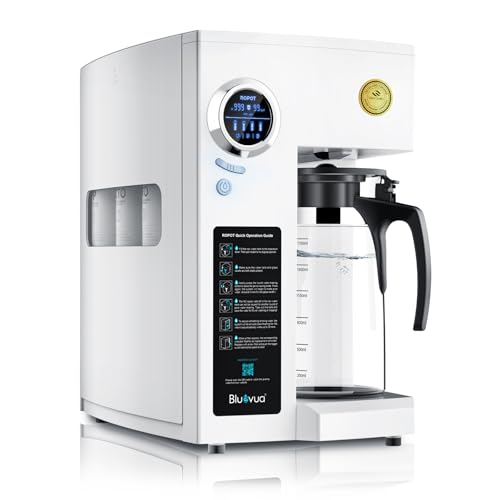
Best for: People who want portable, plug-and-play RO filtration with remineralization. This countertop system requires no plumbing and includes a glass carafe to minimize plastic contact. The 6-stage filtration features a 0.0001μm RO membrane, UV light, and remineralization to balance taste. It’s certified by WQA and SGS, which supports reliability for casual home use. A potential limitation is countertop footprint and the need for a power outlet near the drinking area.
- Pros: No installation; portable and compact; glass carafe reduces plastic contact.
- Cons: Countertop unit takes surface space; occasional filter changes needed for optimal performance.
Aigerri UV Countertop RO System

Best for: eco-friendly households seeking high-efficiency water use and a compact RO purifier. This unit offers a generous 5L reservoir and a 5:1 pure-to-wastewater ratio, aiming to conserve water while providing continuous supply. It ships ready to use, with a minimal setup footprint. The primary caveat is the need for routine maintenance and filter replacements as with most countertop RO systems.
- Pros: Excellent water efficiency; 5-stage filtration with convenient ready-to-use setup.
- Cons: Requires periodic filter changes; may be less compatible with very hard water without remineralization tweaks.
SimPure Y7P-BW UV Countertop RO

Best for: Home users who want a plug-and-play solution with UV disinfection. The Y7P-BW combines a 4-stage RO filtration with UV purification for extra microbial safety, while eliminating installation hassles. It’s especially suitable for apartments or shared living spaces where quick setup matters. A limitation is its countertop design, which may require more frequent refills if the water demand is high.
- Pros: UV adds an extra protection layer; no installation required; compact footprint.
- Cons: Countertop models may require more frequent filter maintenance for heavy usage.
Waterdrop G2 Tankless RO System

Best for: Modern kitchens needing high flow and a space-saving setup. The G2 is a tankless under-sink RO system with a 1:1 low-drain ratio and up to 400 GPD, which helps maintain steady water supply with minimal waste. It’s certified for lead-free materials and designed for straightforward installation. Choosing this model suits households that want fast filtered water without a traditional storage tank. A caveat is that tankless designs can require precise installation and maintenance to prevent leaks.
- Pros: High flow; tankless design saves space and reduces waste; NSF/ANSI 372 certified.
- Cons: Requires careful installation; some users may prefer a storage tank for peak demand times.
Buying Guide
What should you consider before choosing an RO purifier? Focus on filtration stages, remineralization, installation type, and maintenance requirements. Consider these practical questions:
- What installation type fits your space? Under-sink purifiers save counter space, while countertop models provide flexibility for renters or temporary setups.
- Is remineralization important for your water taste and health goals? Alkaline stages can improve mineral balance, but some users prefer pure taste without minerals.
- Do you need UV disinfection? UV helps reduce microbial risks, especially for well water or older plumbing.
- What is your daily water demand? Higher GPD ratings meet busier households, but consider storage capacity and drain ratios to minimize waste.
- How important is water efficiency? Tankless or 1:1 drain ratio models save water, which benefits eco-conscious buyers.
Common considerations across top models
- Certifications matter: Look for NSF/ANSI 58 or 372 certifications for filtration standards and lead-free materials.
- Filter replacement planning: Regular maintenance is needed; verify filter availability and cost over time.
- Water taste and pH: Remineralization can improve taste and provide balanced pH; if you prefer a crisper taste, prioritize higher mineral content options.
- Portability vs. permanence: Countertop units offer flexibility; under-sink systems offer a cleaner kitchen appearance and usually higher filtration capacity.
FAQ
- What is the main difference between countertop and under-sink RO systems? Under-sink units are usually hidden and have larger capacities, while countertop models are portable and easy to install.
- Do RO systems remove beneficial minerals? RO filtration removes most minerals; remineralization stages add minerals back to improve taste and pH.
- Is a UV purifier necessary? UV is an optional enhancement for disinfection, particularly when water sources may contain microbial contaminants.
- How often should filters be replaced? Replacement intervals vary by model and water quality; follow manufacturer guidelines for each stage.
- Are tankless RO systems better for space? Tankless designs save space and reduce storage waste, but require precise installation and often higher upfront costs.
- Can these purifiers handle well water? Many models are compatible with well water, but test your water and consider additional filtration for contaminants like iron or hardness as needed.