Best Restaurant Coolers and Freezers for Commercial Kitchens
Find the right commercial cooler or freezer for your restaurant, cafe, or bar. This guide highlights five practical options, explaining who each is best for and why you might choose one over another. Whether you need a compact undercounter prep station, a glass-display ice cream freezer, or a full-size two-door reach-in, these picks balance capacity, durability, and ease of use for busy workplaces.
| Product | Type | Capacity | Special Feature |
|---|---|---|---|
| VEVOR 28″ W Commercial Freezer Worktop | Undercounter Freezer | 7.4 Cu. Ft | Dual-zone, 0 to -8°F, caster wheels |
| VEVOR Commercial Ice Cream Display Case | Chest Freezer Display | 5.6 Cu. Ft | Top display with LED lighting |
| Ferueo Commercial Refrigerator 54″ W | Upright Refrigerator | 49 Cu. Ft | 8 shelves, auto-defrost |
| 54″W Commercial Freezer 2 Door | Upright Freezer | 36 Cu. Ft | 2 doors, auto-defrost |
| VEVOR 48″ W Commercial Freezer Worktop | Undercounter Freezer | 12.9 Cu. Ft | Dual-zone, 0 to -8°F, two doors |
Buyer focus: For small back-of-house prep, undercounter units save space and keep ingredients within reach. For front-of-house displays, glass-display freezers attract customers. For high-volume kitchens, large reach-in models provide bulk storage with organized shelving. Use this guide to compare capacity, temperature range, and mobility features to fit your workflow.
VEVOR 28-Inch Freezer Worktop With Casters

Best for compact kitchens needing a cold prep surface. This 7.4 Cu. Ft undercounter freezer offers dual-zone storage with a digital control to hold 0 to -8°F (-18 to -22°C). The 2.1″ thick work surface supports chopping and prep, while four casters enable easy positioning. Internal lighting improves item visibility, aiding quick access during peak hours.
Best use case: small restaurant or diner where space is at a premium and quick-access prep is essential. Caution: ensure allowed height clearance for door swing and that the 75° auto-close feature is not blocked by items on the countertop.
VEVOR Ice Cream Display Case

Best for shops and cafes that rely on tempting front-of-house presentation. This 5.6 Cu. Ft chest freezer accommodates up to four ice cream tubs with top display racks, accented by LED lighting and tempered glass to attract customers. The LCD temperature control ranges from -19 to 3°F, balancing product safety with energy use.
Best use case: businesses prioritizing merchandising and quick grab-and-go service. Limitation: top display capacity may limit large volume storage if you need more tubs in back.
Ferueo 54-Inch Upright Refrigerator
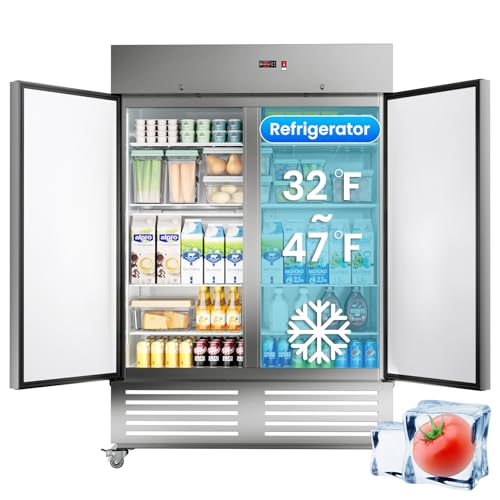
Best for high-volume kitchens needing bulk refrigerated storage. This 49 Cu. Ft upright offers eight reinforced shelves for heavy loads and mobility with front-brake casters. Its fingerprint-resistant stainless steel adds durability, while a safe-lock feature provides controlled access in busy environments.
Best use case: bakeries, cafes, or restaurants with frequent bulk item storage. Caution: ensure adequate floor space to maneuver during cleaning and access.
Ferueo 54″W Dual-Temp Freezer
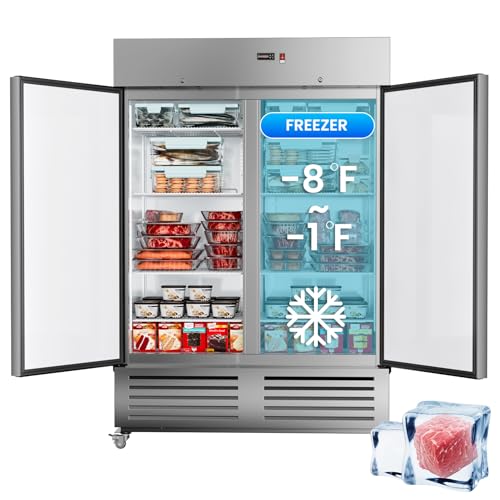
Best for dual-zone storage needs. This 36 Cu. Ft two-door unit provides separate cold zones with auto-defrost for low maintenance. The strong build and safety lock help manage busy service times, while the 180-lb per shelf capacity supports heavy bulk items.
Best use case: large kitchens or bars requiring both refrigeration and deep freezing in one footprint. Limitation: larger footprint demands more floor space and may require dedicated electrical circuitry.
VEVOR 48-Inch Freezer Worktop

Best for mid-to-large prep areas needing a reputable prep station with dual-zone control. This 12.9 Cu. Ft unit offers 0 to -8°F temperature range, a 2-door design for organized storage, and caster wheels for mobility. The 75° auto-close cabinet door enhances energy efficiency and reduces door damage risk.
Best use case: mid-size restaurants, bars, or diners seeking a robust prep station with reliable temperature control. Caution: observe door clearance when opening fully to avoid hitting neighboring equipment.
Buying Guide: How To Choose The Right Commercial Cooler Or Freezer
What capacity do you really need? Consider daily item volume and whether you store bulk items or smaller, frequently accessed ingredients. For prep areas, undercounter or worktop models save space; for back-of-house storage, reach-in or display units maximize organization and accessibility.
Which temperature range fits your products? Freezers typically keep between -8 and -22°C, while refrigerators require higher ranges. Dual-zone or multi-zone units add flexibility for mixed frozen and chilled items in the same footprint.
How important is display versus storage? If food visibility drives sales, choose a glass display or illuminated top. If you prioritize preservation and cold-chain integrity, rely on solid-door models with strong insulation and auto-defrost features.
Mobility and maintenance matter. Casters enable repositioning for cleaning or layout changes; auto-defrost reduces manual maintenance. Look for doors that seal well with foam insulation and energy-efficient compressors for long-term running costs.
Build quality and serviceability. Stainless steel construction and fingerprint resistance help with daily use in busy venues. Verify shelf load ratings match your storage needs to prevent overloading and sagging shelves.
FAQ
- What size freezer do I need for a small restaurant? — A compact undercounter or 7–15 Cu. Ft unit is often sufficient for a small menu, with potential to add a second unit as volume grows.
- Is auto-defrost worth it? — Yes, it reduces manual defrost tasks and maintains consistent temperatures, but may slightly increase energy use.
- Should I choose a dual-zone unit? — If you store both frozen and refrigerated items nearby, dual zones reduce cross-contamination and improve workflow.
- Are glass-display freezers better for sales? — Display cases attract attention and can increase impulse purchases, but may require more frequent cleaning and higher upfront cost.
- What maintenance should I expect? — Regular door seal checks, cleaning of condensers, and occasional defrost cycles (if not auto-defrost) help sustain efficiency.