Best Residential Natural Gas Meter Options for Accurate Home Measurements
Homeowners and contractors often search for reliable residential natural gas meters and related detection tools to monitor gas flow, pressure, and safety. This guide highlights five well‑reviewed products that address metering, leak detection, and pressure testing for natural gas and propane systems. Each entry includes practical details to help you compare performance, durability, and ease of use in typical American households and small installations.
Product Overview (Summary Table)
| Brand | Name | Key Feature | Link |
|---|---|---|---|
| Roastove | Gas Meter, Propane Natural Gas SUBMETER | Pulse output for precise consumption tracking | https://www.amazon.com/dp/B0D3V4XQF9?tag=infinitepower06-20 |
| GASFLEX | Gas Meter G4 Propane Natural Gas SUBMETER | Compact, low-profile design | https://www.amazon.com/dp/B01JDS0RM0?tag=infinitepower06-20 |
| EKM Metering | 1.5″ Gas Meter – Steel, Pulse Output | Dial readout in cubic feet with tenth‑inch resolution | https://www.amazon.com/dp/B0BG6JBRLX?tag=infinitepower06-20 |
| TOPTES | PT520A Natural Gas Detector | Detects leaks with 17-inch gooseneck probe | https://www.amazon.com/dp/B0BTM3G8DK?tag=infinitepower06-20 |
| TOPTES | PT199 Natural Gas Leak Detector | Audible and visual alarms for fast detection | https://www.amazon.com/dp/B0B62LBZPC?tag=infinitepower06-20 |
Roastove Gas Meter, SUBMETER With Pulse Output

The Roastove model is designed to handle natural gas and gaseous propane, with compatibility for other non-corrosive gases. Its durable die-cast aluminum housing and PF resin components emphasize long‑term reliability in residential setups. The unit includes a pulse output, enabling accurate integration with modern meters and monitoring systems. This meter is built for rugged use and provides a robust baseline for home gas measurement and submetering purposes.
Key considerations include its material construction and tested diaphragm durability. The diaphragm, crafted from high‑quality material, has passed extensive bending tests, underscoring its suitability for steady, repeated operation in home gas lines. When selecting a submeter, users should confirm compatibility with existing piping sizes and ensure proper installation to avoid leaks or measurement inaccuracies.
G4 Propane Natural Gas Submeter by GASFLEX

The GASFLEX G4 submeter offers a compact footprint suitable for tight spaces while measuring propane and natural gas flows. Its slim dimensions make it ideal for apartments, basements, or utility closets where space is at a premium. While compact, the device is built to deliver reliable submetering data that supports billing accuracy and usage awareness across multiple tenants or zones in a home.
When evaluating this model, consider its integration method and readout format, ensuring compatibility with existing monitoring systems. The compact build should not compromise durability, so check for corrosion resistance and the quality of seals. For homeowners, verify that the installation aligns with local codes and that connections are tight to prevent gas leaks or measurement drift over time.
1.5″ Gas Meter — Steel, Pulse Output

EKM Metering’s 1.5″ steel gas meter features a pulse output and a steel construction designed for durability in home installations. The readout is in cubic feet, with a resolution to tenths, enabling precise measurement suitable for submetering or utility billing in multi‑unit homes. This model supports natural gas and gaseous propane, as well as other non‑corrosive gases, making it a flexible option for varied fuel setups.
Consider the pulse output needs and the compatibility of the meter with your regulator and piping size. The steel case improves resilience against everyday household vibrations and minor impacts. As with any gas meter, ensure a proper installation with leak testing and adherence to local codes to maintain safety and accuracy in ongoing operation.
TOPTES PT520A Natural Gas Detector

The PT520A is a gas detector rather than a meter, designed to locate leaks using a 17‑inch gooseneck probe for hard‑to‑reach areas. It covers methane, propane, natural gas, LPG, and butane, with rapid detection and a 75 dB alarm. The device is suitable for home and RV use, supporting indoor and outdoor leak checks around pipelines, gas fireplaces, and storage areas.
What to assess includes probe reach, response speed, and alarm behavior. The device provides visual and audible cues to indicate gas presence and concentration levels, offering a practical safety tool in addition to metering equipment. For property managers and homeowners, this detector serves as a critical complementary device to meters, helping identify leaks before they become hazardous, especially in tight or enclosed spaces.
TOPTES PT199 Natural Gas Leak Detector
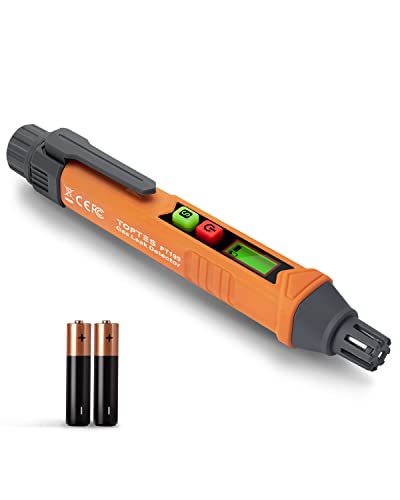
The PT199 is a portable gas leak detector designed to locate combustible sources such as methane and propane. It includes two AAA batteries and delivers a quick warm‑up with audible and visual alarms that intensify as gas concentration increases. The LCD screen displays gas levels and turns red at high concentrations, aiding quick decision‑making in potentially dangerous situations. Users should note the device’s battery dependency and the need for periodic calibration for sustained accuracy.
From a safety perspective, the PT199 offers accessible, on‑the‑spot leak detection for homeowners, technicians, and RV enthusiasts. Its compact, handheld format makes it convenient for regular checks of kitchens, basements, garages, and outdoor gas lines, complementing continuous meters and detectors in a comprehensive gas safety plan.
Buying Guide: Key Considerations For Residential Gas Metering And Detection
When evaluating residential natural gas meters, submeters, and leak detectors, consider accuracy, durability, ease of installation, and safety compliance. For meters, verify the appropriate size and connection type (thread size, NPT fittings, and measurement units) and ensure compatibility with your regulator and downstream appliances. Pulse outputs can simplify digital logging and smart monitoring, but confirm that you have compatible data collection infrastructure.
Durability matters in home installations. Look for metal housings (steel or aluminum) and high‑quality diaphragms for longevity under vibration and temperature changes. For leak detectors, assess response time, alarm modalities (audible, visual, vibration), and the probe reach. Gooseneck probes should be long enough to access common leak scenarios, such as under sinks or behind appliances, without requiring risky repositioning.
Multi‑device safety strategy is recommended. Pair meters with leak detectors to create a layered approach: continuous flow monitoring for usage and periodic leak checks for safety. If installing multiple devices, ensure calibration and testing schedules are clear, and keep batteries fresh for portable detectors. In addition, always follow local building codes and gas utility guidelines during installation, testing, and maintenance.
Finally, consider future needs: submetering for multi‑unit homes or rental properties may favor meters with robust data outputs and easy integration into home automation or utility billing systems. For homeowners focusing on safety, combine a reliable meter with a capable detector set to maintain accurate usage data while maintaining early leak detection capabilities.