Best Residential Gas Leak Detectors for Home Safety
Answering the most common buyer questions: these detectors help identify combustible gas leaks in homes, protect occupants, and alert you quickly. Ideal for homeowners with natural gas or propane appliances, renters needing portable options, and DIY enthusiasts who want early warning before a leak becomes dangerous. Below, you’ll find five top picks, each with clear guidance on who should buy it and why it stands out.
Product comparison at a glance:
| Product | Best For | Key Strength | Limitations |
|---|---|---|---|
| TOPTES PT199 Natural Gas Leak Detector | Homeowners needing quick, visual-audio alerts | Fast 0.5s response, dual batteries included | Limited to portable use |
| Klein Tools ET120 Gas Leak Detector | Versatile monitoring with adjustable sensitivity | Wide range 50–10,000 ppm, adjustable | Bulkier than pocket models |
| TOPTES PT177 Gas Leak Detector | Pocket portability for RVs and DIYers | Compact, auto-calibration, quick alarm | Smaller detection area |
| TopTes PT210S Gas Leak Detector | Hard-to-reach area scanning with probe | 4-inch probe, LEL reading | More complex features for beginners |
| Klein Tools ET190 Gas Leak Detector | Industrial-style detection at home | Wide 100–2,000 ppm range | Less portable than pen-style models |
TOPTES PT199 Natural Gas Leak Detector
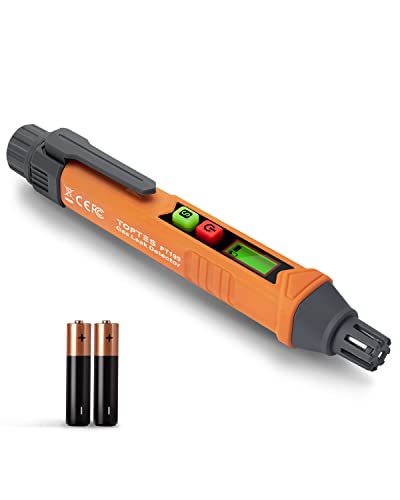
The PT199 is a portable combustible gas detector that identifies natural gas, methane, propane, butane, LPG, and similar fuels. It offers a fast visual and audible alarm, with an LCD that turns red at high gas levels. Included batteries make it ready to go after a short warm-up. This model is best for homeowners who want a compact, ready-to-use detector for routine checks around gas appliances. A caution: battery life indicators mean you should replace batteries when the low-battery alert appears to maintain reliable performance.
Klein Tools ET120 Gas Leak Detector

The ET120 is a versatile tester with a wide detection range from about 50 to 10,000 ppm and adjustable sensitivity. Five red LEDs and an 85 dB alert intensify as gas concentration rises, aiding visibility in varying environments. It suits homeowners who want a robust tool for more than casual checks, including garages or around gas-fired appliances. Limitation: larger form factor may be less convenient for pocket carry.
TOPTES PT177 Gas Leak Detector

The PT177 is a compact detector designed for quick pinpointing of leaks with a 30-second warm-up. It provides visual and audible alarms within 0.5–3 seconds and uses five red LEDs plus a 75 dB alarm that intensifies with gas concentration. It’s ideal for RV owners, DIYers, or anyone needing a pocket-sized solution. Limitation: small size may reduce battery life under heavy use.
TopTes PT210S Gas Leak Detector

The PT210S offers a four-inch probe for hard-to-reach areas and displays gas readings in Percent LEL. It highlights leaks quickly—often within 0.5 seconds—with a red display and rising bar graphs. The audible alarm reaches 75 dB. Best for users who need precise leakage data and access to deeper inspection points, such as behind appliances or inside cabinets. Caution: reading interpretation requires some familiarity with LEL concepts for accurate risk assessment.
Klein Tools ET190 Gas Leak Detector
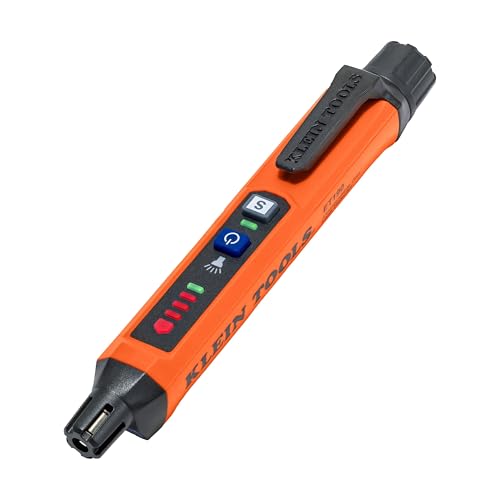
The ET190 provides a wide detection range from 100 to 2,000 ppm with a slim, pocket-ready form factor and bright visual indicators plus audible alerts. It is well-suited for homeowners who want a reliable detector that’s easy to carry and use around multiple rooms or vehicles. Limitation: not as robust for industrial-grade tasks as some larger detectors, but excellent for residential use.
Buying Guide: Key Considerations for Choosing a Residential Gas Leak Detector
- Detection range and gas types: Look for detectors that cover common fuels (natural gas, propane, butane, LPG) and provide a readable ppm or %LEL readout when possible. Higher ranges help distinguish between small leaks and larger ones.
- Response time and alarms: Fast 0.5-second detection is strong for immediate alerts. Audible levels around 75–85 dB plus visual indicators improve visibility in noisy environments.
- Portability vs. fixed use: Pocket-sized units excel for quick checks, while probe-based or wider-range models suit more thorough inspections in kitchens, garages, or utility rooms.
- Calibration and warm-up: Some models require a short warm-up (30 seconds) and auto-calibration. These steps matter for accuracy and ease of use.
- Power and maintenance: Consider battery life, whether batteries are included, and auto-off features. In homes with frequent checks, long battery life reduces maintenance needs.
- Display and alert design: A large LCD with red alarm indication helps quick interpretation, while LED bars provide a quick visual cue of gas concentration.
- Portability features: Pocket clips, storage pouches, and compact form factors increase convenience for RVs, basements, and workshops.
Frequently Asked Questions
- What is a residential gas leak detector best used for?
It is best used to detect combustible gases like natural gas or propane around appliances, gas lines, and vents to prevent explosions or leaks. - Do these detectors require regular calibration?
Some models auto-calibrate or require occasional checks; follow the manufacturer’s instructions to maintain accuracy. - Are battery-powered detectors safer than plug-in models?
Battery-powered detectors provide portability and operation during power outages, while plug-in models may offer continuous power with backup options. - What should I do if a detector alarms?
Evacuate if the odor or alarm persists, avoid flames, ventilate the area if possible, and call your gas company or emergency services as appropriate. - Can I use multiple detectors in the same home?
Yes, using more than one detector can improve coverage in kitchens, basements, garages, and near gas appliances. - Do I need professional testing for home gas leaks?
For persistent or high-risk concerns, contact a licensed gas technician to inspect pipes and appliances.