Best Residential Circuit Breaker Box Solutions for Safe Home Power Distribution
Whether you’re remodeling, upgrading, or adding new circuits, choosing the right residential circuit breaker box is essential for safety and reliability. This guide highlights five solid options that fit typical home and light commercial needs. Each product is evaluated for space, amperage, and indoor suitability. The top picks are best for homeowners, DIY enthusiasts, small offices, and installers seeking clear protection and straightforward wiring.
Buyer tip: consider panel space, main amperage, and whether you need main lug only or a main breaker setup. The following table summarizes key options to help you compare at a glance.
| Product | Max Amps | Spaces / Circuits | Enclosure | Best For |
|---|---|---|---|---|
| JINDOUZI THQL 8-Space | 125 A | 8 | NEMA 1 Steel | Small homes, light commercial |
| ABB TM3220CCU2K | 200 A | 32 | NEMA 1 Indoor | Medium homes, emergency backup |
| Siemens E0408ML1125SU | 125 A | 8 | Indoor Lug | Compact panels, simple add-ons |
| Lovnewmax 12-Space | 125 A | 12 | Steel Indoor | Home workshops, garages |
| Siemens SN Series 20-Space | 100 A | 40 (12 “main lug” bus) | Indoor Plug-On Neutral | Versatile, expanding circuits |
JINDOUZI THQL Circuit Breaker Panels
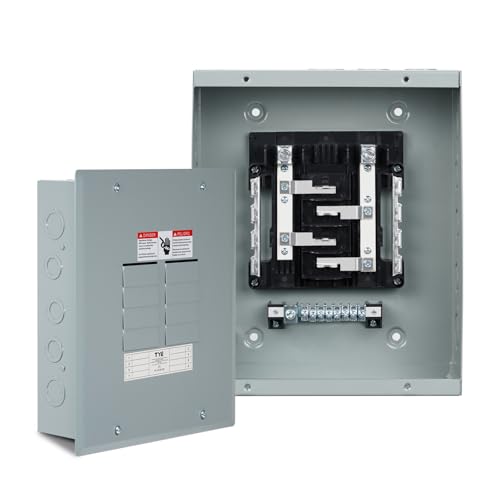
The JINDOUZI THQL panel is a compact, indoor main lug load center rated up to 125 amps. It uses eight spaces to accommodate up to eight 1-pole breakers, providing dependable distribution for residential use or light commercial setups. The steel, NEMA 1 enclosure offers dust protection and rugged indoor performance, making it suitable for homes, offices, and small shops where space is limited.
Best for: small residences or DIY projects needing a simple eight-circuit protection solution. It’s a straightforward choice when you want a robust, indoor load center without extensive expansion requirements.
Limitations: with eight spaces, expansion beyond eight circuits requires adding a subpanel or alternative configuration. Also, main-lug design means no built-in main breaker for shutoff at the panel itself.
ABB TM3220CCU2K 200A Load Center Kit

The ABB TM3220CCU2K is a 200A main-breaker load center with 32 spaces, supporting up to 40 circuits. It includes multiple breakers and is designed for indoor use, with a NEMA 1 enclosure that guards against dust. A 22 kAIC interrupt rating provides strong protection against faults, making this option suitable for larger homes, workshops, or small commercial spaces that require higher capacity and reliable safety margins.
Best for: households or small businesses needing a scalable, higher-capacity panel with ample space for future circuits and robust fault protection.
Limitations: the higher amperage and larger footprint may be more than needed for basic setups, and installation may be more complex than smaller panels.
Siemens E0408ML1125SU 4 Space 8 Circuit
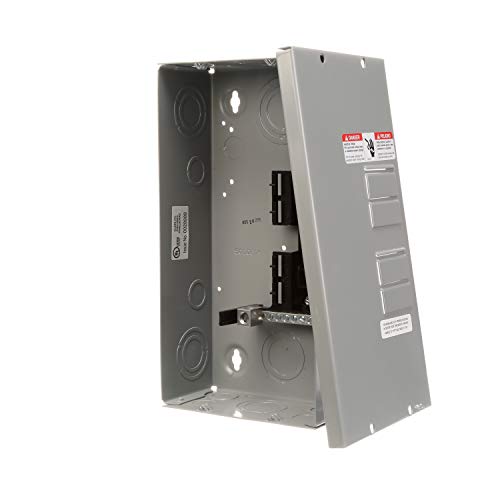
The Siemens E0408ML1125SU provides a compact 4-space, 8-circuit configuration with 125 amps and a main lug setup. This indoor load center is a practical choice when you need to add a few circuits in a space-limited area. It is built for straightforward, reliable operation and integrates well with standard Siemens breakers for upgrade compatibility.
Best for: tight spaces or adding a small number of circuits in a retrofit project. Choose this if you want a simple, reliable panel without a built-in main switch.
Limitations: the 4-space configuration may require future panel upgrades as your electrical needs grow; main lug design means no internal main disconnect.
Lovnewmax 12-Space 125A Load Center

The Lovnewmax 12-space panel offers a 125A rating with 12 spaces for single-pole breakers, making it a solid choice for households or light commercial setups that require a bit more expansion capacity than a small eight-space unit. The steel indoor enclosure provides sturdy protection for distributed circuits across workshops or garages, and it supports straightforward wiring for reliable power control.
Best for: homes or light commercial environments needing more than eight circuits but not full-scale panel upgrades. It’s a balanced option for growing electrical demand.
Limitation: 12 spaces may still require subpanels for substantial future expansion; verify that the space meets your anticipated circuit count.
Siemens SN Series 20-Space Main Lug Load Center

The Siemens SN Series offers 20 spaces with 40 circuits, designed as a plug-on neutral indoor load center. It includes a factory-installed ground bar and supports 120/240V single-phase service. This layout is well-suited for expanding residential needs while keeping installation practical and organized, particularly when a neutral bar extension or upgrades may be anticipated in the future.
Best for: homeowners planning future circuit expansion in a modular, straightforward panel system. It’s a versatile option that accommodates growth with a simple upgrade path.
Limitation: plug-on neutral systems require careful compatibility checks with existing breakers and loads; ensure you align with your electrical contractor’s recommendations.
Buying Guide
What matters most when selecting a residential circuit breaker box:
- Panel capacity and space: Match the maximum amperage and available slots to current needs plus future expansion. Avoid oversizing without a plan, but allow room for growth.
- Enclosure type and location: Indoor NEMA 1 enclosures are common for homes and offices. For outdoor or damp locations, consider weather-rated options and appropriate protective enclosures.
- Main breaker vs main lug: A main breaker makes shutoff easier at the panel; main lug panels require a separate main disconnect or a subpanel for full disconnection.
- Compatibility with breakers: Ensure the panel accepts standard breakers from trusted brands (Siemens, ABB, etc.) to simplify future replacements and upgrades.
- Fault interrupt rating: Higher kAIC ratings offer stronger protection against fault currents in larger spaces or high-demand setups.
- Wiring and space considerations: Evaluate wire bending space, terminal accessibility, and labeling clarity for safer, faster installation.
- Future-proofing: If you anticipate adding electrical loads (EV charging, workshop machinery, added rooms), choose a panel with ample spaces and room for subpanels if needed.
Frequently Asked Questions
- What is the difference between a main lug panel and a main breaker panel?
- How many circuits do I need in a typical home panel?
- Can I install a higher amperage panel in a smaller home?
- Is NEMA 1 enclosure sufficient for indoor use?
- Should I choose a panel with plug-on neutral?
- What safety considerations matter when upgrading panels?
A main lug panel provides lugs for line connections but no built-in main disconnect. A main breaker panel includes a main breaker that shuts off all circuits at the panel.
Most homes start with 20 to 40 circuits, with spaces for future expansion. Choose a panel with enough spaces for current needs and planned additions.
Yes, if the wiring and service size permit, but it may require a service upgrade and professional assessment to ensure compatibility and safety.
NEMA 1 provides basic protection against dust and incidental contact for indoor dry locations. For humid or outdoor areas, select a more protective enclosure.
Plug-on neutral panels simplify wiring and improve installation speed but require correct neutral-bar integration with your breakers and loads. Verify compatibility in advance.
Turn off power at the main breaker or disconnect, use proper PPE, verify wire gauge and breaker compatibility, and hire a licensed electrician if you’re unsure about any step.