Best Residential Carbon Monoxide Alarms for Home Safety
Protecting families from carbon monoxide exposure starts with reliable, easy-to-use alarms placed throughout living spaces. This guide highlights top residential carbon monoxide alarms, with a focus on battery-powered and interlinked options for continuous monitoring, even during power outages. Explore devices with electrochemical sensors, explicit test and silence controls, and 10-year battery life where available. Each pick below aligns with typical American homes and common installation scenarios.
| Product | Brand | Key Feature |
|---|---|---|
| CO400 Carbon Monoxide Detector (1-Pack) | First Alert | Battery-operated with electrochemical sensor |
| Carbon Monoxide Detector (Battery Powered) | Kidde | 2-AA battery operation; LED indicators |
| Combination Smoke & CO Alarm SMCO100 | First Alert | 2-in-1 protection; battery-operated |
| Carbon Monoxide Detector AA Battery Powered | Kidde | Tabletop or wall-mount; portable |
| 10-Year Battery Combination Alarm | X-Sense | 10-year sealed battery; standalone model |
First Alert CO400 Carbon Monoxide Detector, Battery Operated

The First Alert CO400 provides continuous CO monitoring powered by replaceable batteries, ensuring operation during power outages. Its electrochemical sensor delivers accurate detection, and the device is designed for easy placement anywhere in a room. The unit emits a loud 85-decibel alarm when dangerous CO levels are detected, prompting quick action. Routine battery replacement and test procedures ensure reliable performance over time. This model prioritizes straightforward installation and maintenance for households seeking dependable, battery-operated coverage.
Kidde Carbon Monoxide Detector, Battery Powered
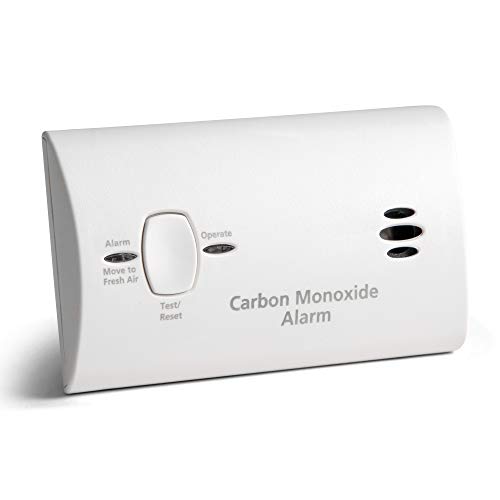
Electrochemical sensor technology underpins the Kidde CO detector, delivering reliable CO detection even during power failures. The unit runs on two AA batteries (included), allowing flexible placement on walls or tabletops. A green LED confirms power, while an 85-decibel alarm and a red LED indicate CO presence. Its portable design makes it suitable for apartments, bedrooms, or any room lacking electrical wiring but needing dependable CO monitoring.
First Alert Combination Smoke & Carbon Monoxide Alarm SMCO100

This 2-in-1 alarm provides both smoke and CO detection, addressing common home safety scenarios. It uses precision detection to reduce nuisance alarms from cooking while delivering early warning during fire or CO events. Battery operation simplifies installation in spaces without wiring, and the device’s dual-sensor approach supports broader protection for bedrooms, living rooms, and hallways.
Kidde Carbon Monoxide Detector, AA Battery Powered
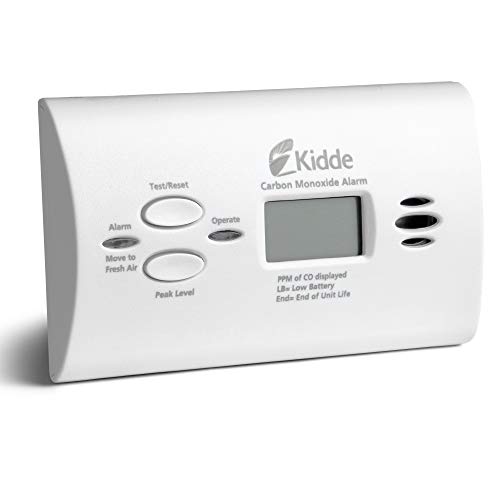
Designed for portability and easy installation, this AA battery-powered Kidde CO detector offers reliable carbon monoxide monitoring without wiring. It’s suited for homes needing flexible placement on walls or tabletops and provides clear indicators for power status and CO presence. The device’s lightweight form factor makes it practical for renters, apartments, or spaces where a permanent installation is impractical.
X-Sense 10-Year Battery CO Alarm with Large LCD
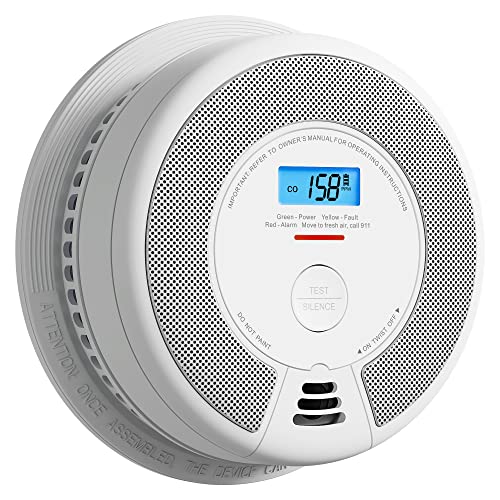
The X-Sense SC07-based model provides a 10-year sealed battery life, reducing maintenance needs. It combines a photoelectric smoke sensor with an electrochemical CO sensor, enabling faster, more accurate detection of both hazards. The unit serves as a standalone detector, avoiding the complexity of interconnect systems, and its large LCD helps users monitor current CO levels and peak readings. This option suits homes seeking long-term reliability with minimal battery changes.
Buying Guide: Key Considerations For Choosing Residential CO Alarms
When selecting a carbon monoxide alarm for a home, consider sensor technology, power source, placement, and interconnection. Different households have different needs, from renters requiring portable units to large homes needing interconnected protection.
- Sensor technology: Electrochemical sensors are standard for CO detection and generally offer accurate readings. Look for alarms with proven sensor reliability and clear alarm patterns to ensure quick comprehension during emergencies.
- Power and maintenance: Battery-powered units provide installation flexibility and operation during outages, but require periodic battery replacement. Models with sealed 10-year batteries reduce maintenance, though you may still need to replace units eventually.
- Interconnection: Some alarms interconnect so when one detects CO (or smoke), all units sound. This feature is valuable for larger homes or multi-room layouts but may require a compatible system.
- Display and indicators: A digital display showing current CO levels or peaks helps households monitor changes over time. LED indicators for power and CO status aid quick verification.
- Placement: Install CO alarms on every level of the home, especially near sleeping areas. Do not place directly above or beside fuel-burning appliances, and avoid corners where airflow is restricted.
- Maintenance plan: Regular testing (monthly) and battery checks are essential. For sealed-battery models, follow the manufacturer’s guidance on replacement cycles and end-of-life replacements.
- Special considerations: For renters or apartments, portable models can be relocated easily, while hardwired interconnect models suit larger homes with built-in wiring.
Overall, choose models with clear audible alerts, reliable sensors, and user-friendly testing features. For households with multiple rooms, a combination of standalone and interconnected alarms can provide comprehensive protection without excessive complexity.