Best Remote Thermostats for Baseboard Heaters: Smart, High-Voltage Options
Baseboard heaters benefit from smart, remote-controlled thermostats that support high voltage. This guide reviews top 5 models designed for 120–240V baseboard systems, covering installation, compatibility, and energy-saving features. Each option prioritizes reliability, app control, and voice integration to help you manage comfort and costs from anywhere.
| Product | Brand | Key Features |
|---|---|---|
| Mysa Smart Thermostat LITE | Mysa | Line voltage 120V/240V, single-pole, Wi‑Fi, HomeKit/Alexa/Google, free app, remote control |
| Mysa Smart Thermostat for 240V Baseboards | Mysa | 240V, four-wire requirement, adaptive display, remote control, voice assistants |
| Meross Matter Smart Thermostat (High Voltage) | meross | 120–240V, works with Matter ecosystem, voice assistants, scheduling, energy savings |
| Meross Smart Thermostat for 4-Wire 120–240V | meross | 4 wires required, 1920W at 120V / 3840W at 240V, HomeKit/Alexa/Google, energy saving |
| KALOR TECH Wi‑Fi Smart Thermostat | KALOR TECH | 120–240V, LCD display, app remote control, works with major ecosystems |
Below, five carefully selected models are explored in detail to help you choose the best remote thermostat for your baseboard heater setup.
Mysa Smart Thermostat LITE for Line Voltage Heaters
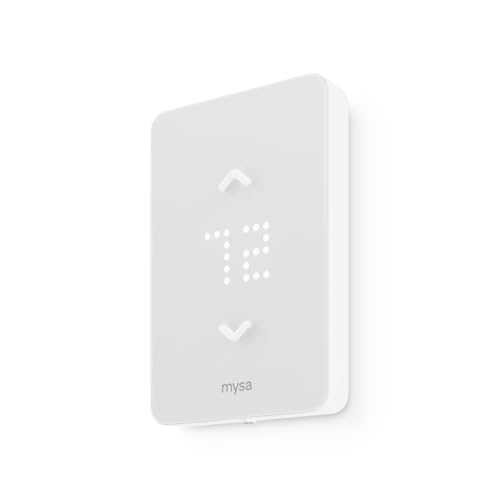
The Mysa LITE is designed for high-voltage electric baseboard heaters, fan-forced heaters, walls, and convectors across 120V to 240V systems. It operates as a single-pole thermostat and supports major ecosystems via Wi‑Fi. The product emphasizes a 100% free app with remote control, scheduling, and runtime reports, aiming to simplify climate management without subscription fees. This model suits homes prioritizing a straightforward, app-first experience while maintaining strong compatibility with HomeKit, Alexa, and Google Assistant.
Compatibility and setup are straightforward for standard line‑voltage configurations. The device works with 120V, 208V, and 240V systems and can be installed in single-pole configurations. Users should verify that their baseboard circuit supports the chosen configuration and ensure the heater’s voltage matches the thermostat’s supported range. The LITE focuses on reliable connectivity and convenient scheduling to help reduce energy usage during away periods.
Mysa 240V Smart Thermostat for Electric Baseboards

This model targets higher-voltage applications at 240V, with a four-wire requirement for proper operation. It supports up to 3800W at 240V and 1900W at 120V, making it suitable for modern long-cable baseboard setups. A notable feature is the adaptive display technology and brightness that adjusts to room conditions, reducing glare and energy drain when ambient light is low. The thermostat integrates with HomeKit, Alexa, and Google Home, offering remote control and scheduling via the free app, without ongoing fees.
Before purchasing, confirm that your baseboard system is wired for high‑voltage, four-wire setups that include a neutral or second live wire. This model is best for households upgrading older two-wire configurations or who want a more compact unit with advanced display features while maintaining robust app-based control and voice integration.
Meross Matter Smart Thermostat for Electric Baseboard Heaters
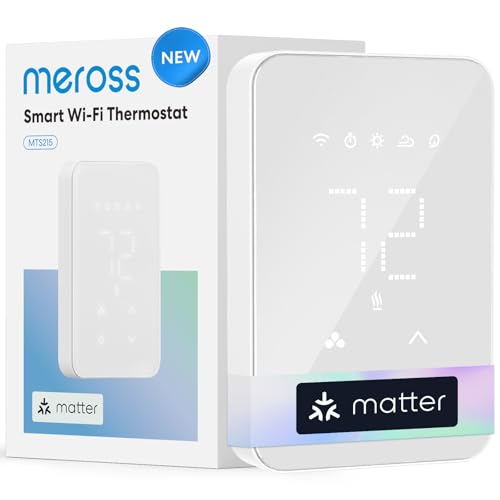
The Meross Matter Thermostat supports high-line voltage (120–240 VAC) baseboards, convectors, and fan-forced heaters, with broad compatibility across ecosystems. It embraces Matter compatibility, enabling control through Alexa, Apple Home, Google Home, and SmartThings simultaneously—fewer ecosystem lock-ins. Its scheduling features help automate comfort and energy savings, while Wi-Fi connectivity enables remote management and real-time monitoring. Energy-conscious homeowners can program routines to match occupancy patterns or daily routines to minimize unnecessary heating.
Notably, the Matter standard can improve interoperability across devices, but users should verify their existing hub setups and ensure the thermostat is wired for a proper four-wire connection. This model is well-suited for mixed-smart homes seeking broad compatibility with minimal compromises on control and scheduling options.
Meross 4-Wire 120–240V Smart Thermostat

This Meross model emphasizes four-wire installation for high‑voltage systems, with a maximum load capacity of 1920W at 120V and 3840W at 240V. It offers HomeKit, Alexa, Google, and SmartThings compatibility, along with voice control and app-based scheduling. The installation note highlights that at least four wires and a neutral or second live wire are required for proper functionality, making it ideal for users upgrading from older two-wire configurations who want robust smart features and reliable energy management.
For households with existing four-wire basements or basements with older wiring, this thermostat can deliver precise control and integration across major platforms. Ensure compatibility with your heater model, and plan for a straightforward installation path to avoid electrical confusion during setup.
KALOR TECH Wi‑Fi Smart Thermostat for Electric Baseboard Heaters

The Kalor Tech thermostat targets 120–240V systems and features a Fahrenheit LCD for clear temperature readings, time, and target settings. It supports app remote control and compatibility with major ecosystems via Wi-Fi. This model is positioned as an accessible option for renters or homeowners who want a simple, user-friendly interface with reliable remote control and routine scheduling, without needing a separate hub.
Key considerations include ensuring your baseboard heater is within the supported voltage range and that your home’s network setup can support a stable Wi‑Fi connection for remote management. The unit is suitable for those who prefer a straightforward installation workflow and broad ecosystem support (Alexa, Google, HomeKit, and Tuya-compatible apps).
Buying Guide: Key Purchase Considerations
- Voltage and wiring: Confirm your baseboard heater uses 120V or 240V and whether a four-wire configuration is required for proper operation. Some models require a neutral or second live wire, especially at 240V.
- Compatibility: Check platform support (HomeKit, Alexa, Google, SmartThings, Matter) and whether you want a Matter-enabled device for broader ecosystem interoperability.
- App and scheduling: Look for a free, subscription-free app with remote control, scheduling, and runtime reporting to maximize energy savings.
- Display and usability: Consider adaptive or adjustable displays for visibility in varying lighting conditions and a user-friendly interface for quick temperature changes.
- Installation complexity: Some units require professional wiring or specific mounting options; read the installation notes for four-wire requirements and wiring diagrams.
- Energy savings features: Programmable schedules, adaptive brightness, and occupancy-based features can help reduce heating costs, especially in spaces with irregular occupancy.
- Security: Ensure the device supports secure cloud communication and regular firmware updates to minimize exposure to vulnerabilities.
- Longevity and support: Favor models from brands with clear return policies and solid customer support in the U.S. market.
When selecting a remote thermostat for baseboard heating, weigh voltage compatibility, ecosystem preferences, installation feasibility, and whether you value advanced display features or broader smart-home integration. The options listed here cover a range of needs—from simple, app-centric control to flexible, ecosystem‑friendly devices that support high‑voltage heating systems.