Best R-23 Insulation Thickness Options for Home Projects
If you’re comparing insulation thickness for R-23 performance, you want panels and rolls that deliver real radiant-barrier efficiency, moisture control, and fire safety. This guide highlights five top options that help you meet or exceed R-23 in typical installations, with notes on who each product suits best and practical trade-offs. Ideal buyers include renovation contractors, DIY homeowners upgrading attic or duct insulation, and builders seeking reliable, code-friendly materials.
The following table provides a quick comparison of the selected products to assist in decision-making. It lists the product, thickness, R-value range, and primary use case.
| Product | Thickness | R-Value (approx.) | Best For |
|---|---|---|---|
| SmartSHIELD -20mm 48″ X25ft | 0.8 inch (20 mm) | R-23 (one layer), up to R-29 (two layers) | Radiant-barrier needs in attic or wall retrofit |
| SmartSHIELD -5mm 24”X50ft | 0.2 inch (5 mm) | R-17 (one layer), up to R-21 (two layers) | Lightweight radiant barrier for ducts or compact spaces |
| SmartSHIELD -20mm 48″ X10ft | 0.8 inch (20 mm) | R-23 (one layer), up to R-29 (two layers) | Longer duct or wall panels with high radiant reflectivity |
| SmartSHIELD -5mm 24”X25ft | 0.2 inch (5 mm) | R-8 to R-15 (depending on layers) | Compact insulation and radiant barrier for HVAC or small enclosures |
| Owens Corning R-19 Fiberglass | 6.5 inches | R-19 | Standard fiberglass retrofit or new build with unfaced design |
SmartSHIELD -20mm 48″ X25ft Reflective Insulation Roll

Best for high radiant barriers in attic or wall spaces where maximum reflectivity is needed. This product claims an R-value up to 23 with a single layer and up to 29 with two layers, making it a strong choice where thickness is limited but performance matters. It also acts as a vapor barrier and meets or exceeds ASTM C1313 standards with a Class A fire rating. The thin 0.8 inch profile makes it suitable for retrofit projects where space is tight. Caution: ensure two-layer installation if aiming for the highest R-29 performance requires careful layering and sealing.
SmartSHIELD -5mm 24”X50ft R17 Reflective Insulation

Better for spaces where you need a compact yet effective radiant barrier. With a very thin profile, it’s suitable for duct wraps or narrow cavities while still delivering reflective performance. The product offers vapor and moisture control alongside a corrosion-resistant foil surface. Best for: duct work or tight retrofit areas where more thickness isn’t possible. Limitation: R-values are lower than the 20 mm options, so rely on multiple layers if higher resistance is required.
SmartSHIELD -20mm 48″ X10ft Reflective Insulation Roll
Chosen for projects needing substantial R-23 performance in a compact roll length. The 0.8 inch thickness supports effective radiant barrier capabilities, with a vapor barrier and ASTM-aligned standards. It’s well suited for both attic and wall installations where a larger single sheet is advantageous. Caution: shorter roll length means more joints in longer runs, which may require careful sealing to maintain performance.
SmartSHIELD -5mm 24″ x50ft Duct Wrap

Choose this when you need a multi-functional solution that combines insulation, radiant barrier, vapor barrier, and sound dampening in one product. The thin profile facilitates easier handling in ducts and narrow HVAC enclosures. Best for: HVAC duct insulation and small spaces requiring a clean white appearance. Limitation: R-values are lower per inch compared with thicker options, so plan for layering if higher resistance is required.
SmartSHIELD -10mm 48″ x 25ft R20 Roll
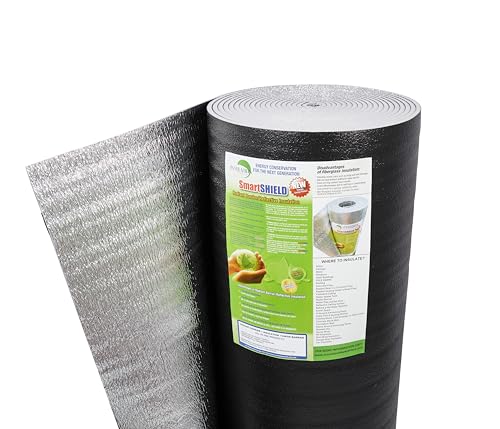
Selected for projects requiring a robust radiant barrier with a notched increase in thickness to boost R-value. The 0.4 inch thickness helps maintain space efficiency while delivering strong reflective performance. Best for: larger attic or wall sections where extra thickness translates to meaningful energy savings. Caution: higher thickness may require more careful installation around fixtures and penetrations.
SmartSHIELD -5mm 24″ x50ft White

Best for projects that benefit from a clean white appearance and combined barrier properties. This product blends insulation, radiant barrier, vapor barrier, and sound barrier into a single white sheet. Best for: installations where aesthetics matter or where you need a ready-to-use all-in-one solution. Limitation: fewer inches of thickness mean relying on layering to reach higher R-values.
R-30 Unfaced Fiberglass Insulation Batt
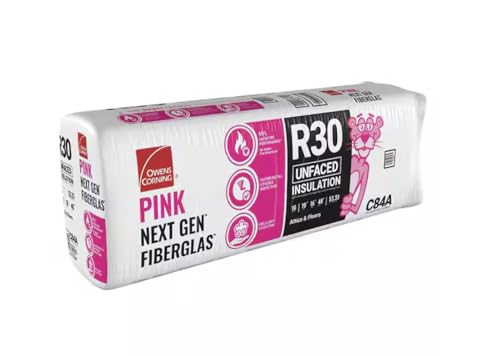
Best for traditional fiberglass installations with unfaced design. The product offers a higher thickness, enabling substantial insulation in walls and ceilings. Best for: retrofit or new build where standard fiberglass is preferred and unworried by an additional radiant barrier layer. Limitation: unfaced means no inherent vapor barrier, so manage moisture with appropriate vapor controls in the assembly.
Buying Guide
How thick should insulation be for R-23 performance? The thickness required depends on the material’s R-value per inch and the installation. Foam core reflective products achieve high R-values with relatively thin profiles due to radiant barrier effects. For fiberglass or unfaced batts, thicker sections are needed to reach R-23, but those materials do not rely on radiant reflectivity alone.
What installation context matters most? Attics, walls, and ducts differ in moisture exposure, space constraints, and fire-safety requirements. Choose products with vapor barriers where moisture is a risk, and consider Class A fire-rated options for interior spaces. If space is limited, higher reflectivity plus layering can achieve the target R-23 with thinner products.
Which combination approach is practical? For some homes, a single 0.8 inch reflective panel can meet R-23 in a retrofit if installed in multiple layers. In other cases, pairing a reflective roll with traditional insulation (e.g., unfaced fiberglass) may provide balanced thermal and moisture control while simplifying installation.
What safety and standards should buyers verify? Look for products that meet ASTM C1313 standards, have vapor-barrier capabilities, and provide corrosion resistance for the foil surface. Fire ratings (Class A, E84) are important for interior or attic applications. Always confirm compatibility with existing building systems and local code requirements.
FAQ
- What does R-23 mean for insulation? R-23 represents the insulation’s resistance to heat flow; higher numbers indicate better insulating performance. The overall R-value depends on material type and thickness.
- Can radiant barrier insulation replace traditional insulation? Radiant barrier can complement traditional insulation by reducing radiant heat transfer, but many installations still require conventional insulation for conductive resistance.
- Is foil insulation moisture-proof? Many reflective products include a vapor barrier or coating to resist moisture; verify specific product features and installation guidelines.
- Which thickness should I choose for a tight attic? If space is tight, consider 0.8 inch reflective panels with layered installations to achieve the desired R-value, while evaluating moisture and fire-safety requirements.
- Are there safety concerns with foil-backed insulation? Ensure proper mounting and edge sealing to prevent fire hazards and condensation accumulation; always follow manufacturer instructions and local building codes.