Best PVC Cement for Electrical Conduit: Top Ratings for 2026
Choosing the right PVC cement for electrical conduit is essential for safe, durable connections. This guide highlights five widely used products, detailing their applications, setting times, and advantages. Each option is suitable for PVC conduit work in electrical installations, with focus on low-VOC formulations, gap filling, and color-matching options. The selections below reflect common professional recommendations and compatibility with PVC types I and II and standard conduit sizes.
| Product | Brand | Conduit Type | Notes |
|---|---|---|---|
| Rectorseal 55985 Quart Clear PVC Conduit 633L | Rectorseal | PVC Type I & II, up to 6″ | Medium body, clear/gray options, low-VOC, good gap filling |
| Rectorseal 55901 1/4 Pint 404L | Rectorseal | PVC and ABS transitions | Regular body, faster makeup time on small diameters, NSF potable water option |
| Rectorseal 55996 Quart Gray PVC Conduit 633L | Rectorseal | PVC Type I & II, up to 6″ | Medium body, low-VOC, color-matching option |
| Weld-On 10098 705 Industrial Grade | WELD-ON | Electrical conduit & more | Industrial-grade, medium-bodied, fast-setting, low-VOC |
| Weld-On 10101 705 Industrial Grade | IPS | Electrical conduit & more | Medium-bodied, high-strength, fast-setting, low-VOC |
Rectorseal 55985 Quart Clear PVC Conduit 633L

Application: This 633L medium-bodied solvent cement is designed for PVC types I and II, up to 6″ for schedule 40 and 80 conduit. It offers clear or gray options to match conduit color and is LEED compliant. The under-lid daubers enhance ease of application, while its thick formula reduces solvent runoff. Its medium-fast setting allows for minor adjustments before curing, and it provides strong gap-filling properties.
Rectorseal 55901 1/4 Pint 404L Regular Body

Application: The 404L Low VOC PVC solvent cement is used for joining PVC pipe and socket-type fittings and for ABS-to-PVC transitions. It features under-lid dobbers for easy application, a faster setting profile ideal for small diameter piping, and NSF approval for potable water. LEED compliant and suitable for a variety of conduit and plumbing installations, with good makeup time in premium applications.
Rectorseal 55996 Quart Gray PVC Conduit 633L

Application: This is a medium-body, low-VOC solvent cement for PVC types I and II, suitable up to 6″ conduit. It offers color options to match conduit aesthetics and features durable under-lid daubers for precise application. The formula reduces solvent runoff while setting quickly, and it provides strong gap filling characteristics plus LEED compliance.
Weld-On 10098 705 Industrial Grade

Application: Industrial-grade, medium-bodied PVC solvent cement suitable for irrigation, DWV systems, PVC foam core, and electrical conduit. It applies smoothly, sets quickly, and features a low-VOC formula for a better working environment. This cement is commonly chosen for projects requiring robust strength and faster handling times in conduit installations.
Weld-On 10101 705 Industrial Grade
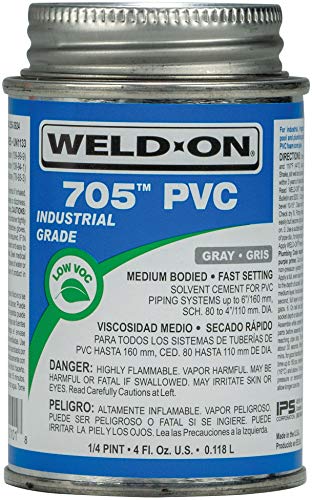
Application: This is a medium-bodied, high-strength solvent cement suitable for electrical conduit and other PVC applications. It offers a fast-setting, low-VOC profile and is gray in color, providing strong adhesion with reliable performance in conduit installations. It is a go-to option for projects prioritizing quick handling and durable joints.
Buying Guide: Key Purchase Considerations
- Conduit compatibility: Verify the cement is rated for PVC Types I and II and appropriate conduit sizes (typically up to 6″ for many electrical conduit projects).
- VOC and environmental impact: Low-VOC formulas reduce solvent emissions and improve the working environment; select accordingly for indoor or ventilation-limited spaces.
- Setting time and makeup: Consider whether you need a fast-setting formula for tight schedules or a longer makeup time for larger diameter joints or complex fittings.
- Color and match: Clear or gray cements help match conduit color; color matching can aid inspection and aesthetics in visible installations.
- Application features: Under-lid daubers or easy-application packaging help ensure consistent coverage and reduce waste.
- Code and standards: NSF potable water approval and LEED compliance may be important for projects with code verification and green-building requirements.
- Strength and gap filling: Medium-bodied formulations typically offer a balance of strength, flow, and gap filling for reliable joints in conduit work.
- Transition compatibility: If your system includes ABS-to-PVC transitions, ensure the cement supports such joints as specified by product notes.
These considerations help ensure you select a cement that provides reliable joints, meets code requirements, and maintains a safe work environment during electrical conduit installations.