Best Solar Battery Storage Solutions for Home PV Systems
If you’re building a home PV system with battery storage, selecting reliable, long-lasting batteries is essential. This guide highlights five high-value options, ranging from lithium iron phosphate (LiFePO4) to sealed lead-acid (SLA/AGM) varieties. Each product is evaluated for compatibility with solar inverters, cold-weather performance, cycle life, and overall maintenance requirements. Use the summary table below to compare key specs at a glance.
| Product | Brand | Type | Capacity | |
|---|---|---|---|---|
| GRNOE 2-Pack 12V 100Ah LiFePO4 | GRNOE | LiFePO4, 12V, 100Ah | 100Ah x2 (200Ah total) | 22.48 lb per battery |
| GRNOE 3-Pack 12V 100Ah LiFePO4 | GRNOE | LiFePO4, 12V, 100Ah | 100Ah x3 (300Ah total) | 22.48 lb per battery |
| Mighty Max Battery 12V 100Ah (SLA) | Mighty Max Battery | SLA/Lead-Acid, 12V, 100Ah | 100Ah | ≈ 65 lb |
| Go Power! CMH-AGM-100 12V 100Ah | Carmanah / Go Power! | AGM, 12V, 100Ah | 100Ah | ≈ 26 lb |
| UPG UB121100 D5751 12V 110Ah | UPG | SLA/AGM, 12V, 110Ah | 110Ah | ≈ 66 lb |
Table notes: weights are approximate per unit. LiFePO4 options offer longer cycle life and lighter weight per amp-hour, while SLA/AGM variants remain popular for cost and compatibility in existing systems. Consider your inverter compatibility, climate, charging strategy, and space constraints when choosing a configuration.
GRNOE 2-Pack 12V 100Ah LiFePO4 Battery

The GRNOE 12V 100Ah LiFePO4 battery features built-in 100A BMS and low-temperature protection, enabling safe operation in cold environments. It is designed to replace SLA/AGM with higher energy density, longer lifecycle, and fewer maintenance needs. A recommended charging voltage is 14.6V ± 0.2V, and the BMS safeguards against overheating, overcurrent, and short circuits. The unit is compact for easy rack mounting and suitable for RVs, cabins, and off-grid setups where space and weight matter.
GRNOE 3-Pack 12V 100Ah LiFePO4 Battery Bundle

This 3-pack harnesses LiFePO4 chemistry for efficient solar storage with a built-in 100A BMS and strong cold-weather performance. Lightweight relative to lead-acid equivalents, it provides extended cycle life (often surpassing a decade) and minimal maintenance. As with any LiFePO4 battery, ensure charging sources and charge controllers are matched to 14.6V ±0.2V to maximize full-charge behavior and longevity.
Mighty Max Battery 12V 100Ah (SLA)
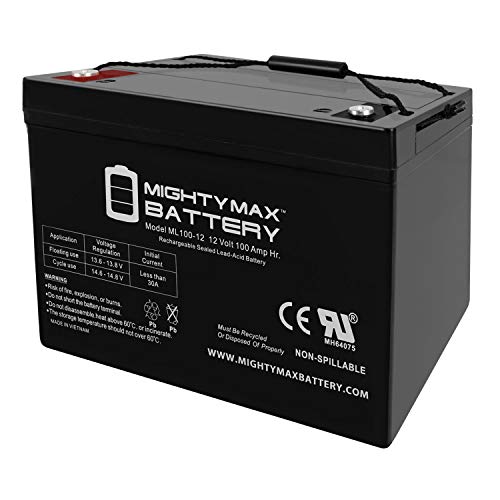
The Mighty Max 12V 100Ah SLA provides maintenance-free operation with a broad operating temperature range and deep-discharge recovery. Its UL certification supports reliability in solar storage applications. This option is well-suited for existing solar systems using lead-acid charging profiles, but it is heavier and has a shorter cycle life than LiFePO4 alternatives. It remains a practical entry point for budget-conscious installations.
Go Power! CMH-AGM-100 12V 100Ah

Go Power! CMH-AGM-100 is a robust deep-cycle AGM battery designed for marine, RV, and off-grid uses. It is spill-proof and maintenance-free, with a known 100Ah capacity at a 100-hour rate. Its AGM chemistry makes it a drop-in option for many older solar systems that already rely on lead-acid charging profiles, though it will be heavier and may require replacement sooner than LiFePO4 options in demanding cycles.
UPG UB121100 D5751 12V 110Ah

The UPG UB121100 is a 12V 110Ah AGM deep-cycle battery, designed for solar PV systems and backup power. It offers maintenance-free performance with a spill-proof design and substantial shelf life. This option is a reliable choice for existing inverters and charge controllers tailored to AGM chemistry, but requires careful attention to weight and charge performance when used in mobile or compact setups.
VMAX SLR155 12V 155Ah (2-Pack)
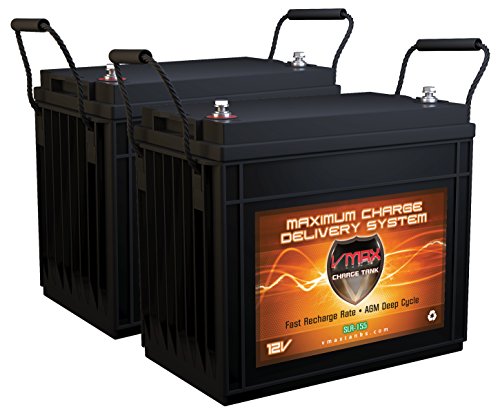
VMAX SLR155 is a pair of 12V 155Ah AGM deep-cycle batteries designed for large solar installations and inverters. These batteries offer extensive cycle life and high energy density for an AGM solution. They are well-suited for stationary home storage where long runtime and steady discharge are valued, though weight and charging efficiency should be considered in mobile or compact systems.
VMAX SLR125 12V 125Ah (Single)

The VMAX SLR125 offers 125Ah of deep-cycle AGM power with a reputable service life. It is compatible with a variety of solar charging arrays and inverters, particularly in residential off-grid configurations. As with other AGM products, expect higher weight and more limited cycle life compared to LiFePO4 options, but strong performance within traditional lead-acid systems.
Buying Guide
- Chemistry matters: LiFePO4 batteries deliver longer cycle life, lighter weight, and better depth-of-discharge, but require compatible chargers and BMS integration. AGM/SLA options are typically cheaper upfront but heavier and have shorter lifespans.
- System compatibility: Verify inverter input voltage, charger voltage settings, and BMS protections. LiFePO4 units need a charging voltage around 14.6V; ensure your solar charge controller supports this range.
- Cold-weather performance: Low-temperature cut-off features protect batteries in freezing conditions. LiFePO4 generally handles cold better when properly managed, while SLA/AGM may require insulation or heating in extreme climates.
- Depth of discharge and cycle life: LiFePO4 can commonly reach 80-90% DoD with many cycles well over 2,000, while SLA/AGM often target shorter cycle life and lower usable DoD.
- Physical footprint: Consider space constraints. LiFePO4 packs tend to be more compact per amp-hour, aiding rooftop or cabinet installs.
- Maintenance and safety: AGM/SLA are maintenance-free but heavier; LiFePO4 demands proper handling of high-current charging and BMS monitoring for safety and longevity.
- Cost of ownership: While LiFePO4 batteries may have higher upfront costs, their longer life and lighter weight can reduce total cost of ownership over time.
- System sizing: For a PV system, plan total storage capacity (Ah at 12V or 24V) and inverter load. A mix of LiFePO4 modules can scale easily as demand grows.
- Warranty and support: Check manufacturer warranty terms and availability of compatible replacement cells or packs in your region.