Best Pure Sine Wave Generators for Sensitive Electronics and Backup Power
If you need reliable portable power that won’t harm sensitive electronics, you want a pure sine wave generator. This article highlights five top models, each selected for clean output, portability, and practical runtime. Ideal buyers include RV enthusiasts, remote workers, campers, and emergency homeowners who require dependable backup power without voltage spikes. Below, compare features, runtimes, and best-use scenarios to help you choose the right unit for your needs.
| Product | Best For | Key Benefit |
|---|---|---|
| PowerSmart 4300W Portable Inverter Generator | Home backup and RV use | High surge power with pure sine wave output for sensitive devices |
| Oxseryn Power Equipment 4400W Inverter Generator | Long runtimes & RV camping | Multiple outputs and ECO mode for efficiency |
| Genkins 4500W Open Frame Inverter | Compact power on the go | Lightweight with multiple outlets and clean sine wave |
| WEN DF480iX 4800W Inverter | Quiet operation with dual-fuel flexibility | Low THD and quiet performance for electronics |
| Westinghouse 12500W Dual Fuel | Home backup with heavy loads | High power with remote start and transfer switch readiness |
PowerSmart 4300W Portable Inverter Generator
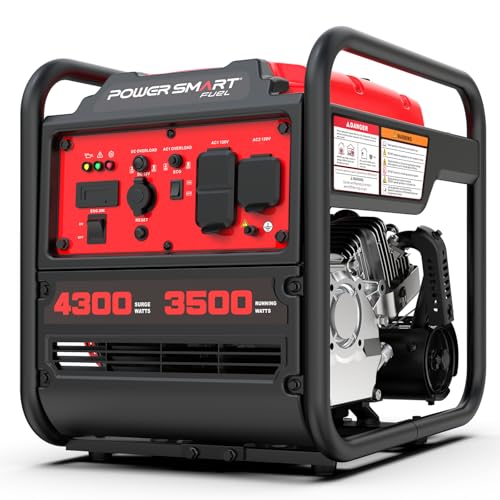
Best for: Home backup and RV use. This model delivers 4300 starting watts and 3500 running watts of clean power with less than 3% THD, making it suitable for sensitive electronics such as laptops and CPAP machines. Its 6.5-hour runtime at 50% load supports overnight outages, while the 30A RV outlet adds convenience for recreational use. The unit runs quietly at 58 dBA from 23 feet at 25% load, though noise increases at higher loads. Choose this if you need robust startup power and weekend camping reliability.
What to watch: The 58 dBA operating level is noticeable in quiet camping scenarios; plan for a sheltered location if noise is a concern. This generator is best for users who require a strong surge and a clean sine wave for electronics and appliances with higher startup demands.
Key specs:
– Peak 4300W, 3500W running
– Pure sine wave, THD <3%
– 6.5 hours @ 50% load
– 30A RV outlet
Oxseryn Power Equipment 4400 Watt Inverter

Best for: Long camping trips and home backup with flexible outlets. This generator delivers 4400 peak watts and 3400 running watts, ideal for RV setups and emergency power. It features multiple outlets (two 120V AC ports, one 12V DC port, one RV port) and ECO mode for longer runtimes—up to 14 hours at 25% load with a 2-gallon tank. The built-in fuel gauge helps you monitor fuel levels at a glance. Consider this model if you want extended run times and versatile output options.
Limitations: Despite long runtimes, fuel tank capacity is modest, so refueling planning is important for prolonged outages. The unit is best used with efficient loads to maximize ECO mode benefits.
Key specs:
– 4400 peak / 3400 running watts
– ECO mode for efficiency
– 2x120V AC, 12V DC, RV outlet
– 14 hours @ 25% load
Genkins 4500 Watt Open Frame Inverter

Best for: Portable power with strong pure sine wave output. The Genkins 4500W model provides 4500 peak watts and 3700 running watts from a compact 212cc OHV engine. It includes a 120V NEMA L5-30R outlet and a 120V NEMA 5-20R outlet, both delivering clean electricity safe for laptops, phones, and tablets. This unit is a solid pick for users who need reliable power on the go without carrying excessive weight.
Limitations: While portable, the frame design means it still requires careful handling during transport. The balance of power and weight favors users who prioritize mobility over maximum continuous runtime.
Key specs:
– 4500 peak / 3700 running watts
– Pure sine wave <3% THD
– 212 cc engine
– Two 120V outlets plus lockable RV-style outlet
PowerSmart 3600-Watt Portable Inverter Generator

Best for: Lightweight setup with essential power needs. This unit offers 3600 starting watts and 3200 running watts from a 149cc engine. It delivers clean inverter power with less than 3% THD, suitable for laptops and other sensitive devices. The 1.3-gallon fuel tank supports up to 8 hours at 25% load, making it a practical choice for short trips or overnight camping where minimal refueling is desired.
Limitations: Not ideal for heavy-appliance loads or prolonged high-demand use; plan for shorter outages or supplementary power for heavier equipment.
Key specs:
– 3600 starting / 3200 running watts
– Pure sine wave, THD <3%
– 8 hours @ 25% load
– 1.3-gallon tank
PowerSmart 4300-Watt Inverter with 30 Amp

Best for: High-demand startup scenarios during emergencies. This 4300-watt inverter provides a surge for heavy-duty starts while preserving clean power for electronics. It features a 223cc engine, 50% load runtime of about 6.5 hours, and integrated Eco-Mode to optimize fuel efficiency. It is well-suited for remote work setups or home backup where continuous, stable output is essential.
Limitation: Fuel efficiency improvements depend on load; high loads will reduce runtime. Use Eco-Mode for best results with variable power needs.
Buying Guide: Key Purchase Considerations
- Power needs: Estimate starting watts vs running watts. Choose a unit with at least 20-30% more surge capacity than your heaviest load.
- Output quality: Look for pure sine wave output with THD under 3% for sensitive electronics.
- Runtime and fuel capacity: Consider typical outage duration and refueling logistics. Larger tanks and ECO modes extend runtime.
- Portability: Weighs and frame design matter for trips, RVs, or camping. Open-frame models offer portability but require safe handling.
- Outlets and compatibility: Ensure the generator has the needed outlets (RV, 120V/240V, USB, etc.) for your devices.
- Noise: dBA ratings influence where you can operate; consider location and neighbors during camping or camping/outdoor use.
- Fuel type and availability: Gasoline and propane have different storage considerations and availability depending on region.
Frequently Asked Questions
- What is a pure sine wave generator?
– It produces smooth, steady AC power with low total harmonic distortion, making it safe for sensitive electronics. - How much power do I need for a typical setup?
– Calculate the total wattage of essential devices and choose a unit with a higher surge watt rating than your maximum load. - Is quiet operation important for camping?
– Yes. Look for models with low dBA ratings and ECO modes to minimize noise during overnight use. - Can I run a home backup with a portable inverter?
– Yes, for many loads. For whole-home backup or high-demand appliances, consider larger dual-fuel or higher-wattage inverters.