Best Pull-Out Fuse Disconnects for Outdoor HVAC and More
Answering buyers who need a safe, reliable outdoor AC disconnect with a pull-out fuse feature. These units are ideal for residential HVAC, mini-split systems, and light commercial setups where easy maintenance and clear isolation are important. The top options below are best for different use cases: rugged outdoor weatherproof duty, fused versus non-fused configurations, and ease of installation. The following table highlights five suitable models and their core strengths at a glance.
| Product | ||
|---|---|---|
| ABB TF30RCP | Outdoor HVAC with quick install and rugged protection | |
| SURAIELEC 60A | Higher-current outdoor disconnects for larger mini-splits | |
| ControlGear 30A Non-Fused | Residential/Commercial with convenient pull-out fuse housing | |
| CHGAOY 30A Outdoor | Budget-friendly outdoor shutdown for HVAC or AC units | |
| Suplevel 30A Fused | Durable outdoor enclosure with versatile wiring options |
Note: Each option serves different needs, so consider current draw, whether you need fused or non-fused protection, and the installation environment when choosing.
ABB TF30RCP Weatherproof Fused AC Disconnect

Best for: Outdoor HVAC installations needing quick install and dependable disconnection in residential settings. This 30 Amp, 240 V unit is designed for single-phase service with a 10 kAIC interrupt rating, enabling reliable isolation during maintenance. The pull-out design helps ensure safe operation, and the NEMA 3R, G90 galvanized steel construction resists weather, rain, and tampering.
Why it’s selected: It emphasizes fast installation and safe operation in environments where outdoor exposure is a factor. The 10 kAIC rating supports robust fault handling for typical residential systems. A caveat: fuses are not included, so you must select the correct fuse class and rating for your application.
SURAIELEC Fused 60 Amp Outdoor Disconnect

Best for: Outdoor high-current HVAC needs where a fused, pull-out disconnect is preferred for visibility and maintenance. This 60 Amp, 240V unit is UL listed and built with a weatherproof, rust-resistant NEMA 3R enclosure, making it suitable for rain and sun exposure in homes and small commercial setups.
Why it’s selected: The fuse-included design provides immediate protection and an easy pull-out switch operation for clear ON/OFF status. A caution: verify that the fuse type matches your system’s requirements, as fuses are included but must be appropriate for your installation.
ControlGear 30 Amp Pullout Fused Disconnect

Best for: Residential or light commercial HVAC systems needing a compliant, safety-focused disconnect with a pullout fuse holder. The unit is rated for 240V, 30A, with a NEMA 3R enclosure and UL/cUL certifications, providing a reliable outdoor isolation point for service work.
Why it’s selected: The design includes integrated storage for the puller, improving safety and convenience. A limitation: fuses are not included, so you must provide compatible Class H/K fuses for your system.
CHGAOY 30 Amp Outdoor AC Disconnect

Best for: Budget-conscious buyers needing a robust non-fused 30A disconnect for 120/240V single-phase loads. UL certified and designed for outdoor weather, this unit uses a pull-out switch with an exposed handle designed for easy on/off control, backed by a corrosion-resistant metal enclosure.
Why it’s selected: It provides reliable operation at a lower price point while maintaining outdoor durability. A caution: non-fused means you must ensure your system’s protection is provided elsewhere if required by code or local standards.
Suplevel 30 Amp Fused Outdoor Disconnect
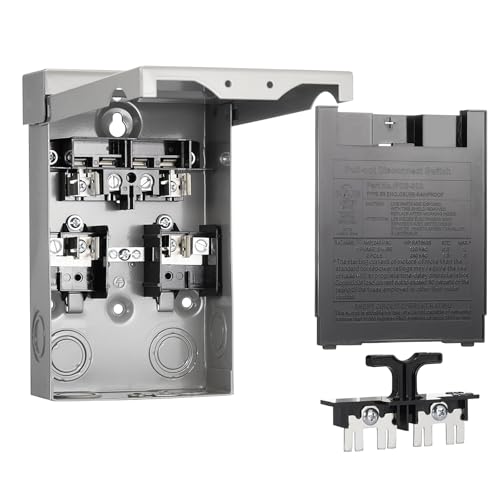
Best for: Outdoor HVAC installations requiring a fused, NEMA 3R enclosure with flexible wiring options. This unit supports 30A, 120/240V, and is UL listed, with a pull-out switch for clear disconnection and a protective shield for safety when the handle is removed.
Why it’s selected: It offers versatile mounting and wiring options, along with a durable enclosure. A limitation: fuses are not included, so you must supply compatible fuses for the system.
Buying Guide
What to consider when choosing a pull-out fuse disconnect:
- Current and voltage: Match the disconnect rating (amps and voltage) to your HVAC or outdoor electrical load.
- Fused vs non-fused: Fused units add circuit protection and visible fuse status but require fuse selection; non-fused units rely on external protection or upstream devices.
- Enclosure rating: For outdoor use, a NEMA 3R enclosure protects against rain, dust, and corrosion. Check material and finish for your climate.
- Pull-out design and safety features: A clear ON/OFF status and a securely stored puller reduce accidental contact with live parts and misoperation.
- Fuses included vs not included: Some models ship with fuses; others require you to source the correct fuse type (verify class and amp rating).
- Ease of installation: Look for pre-drilled mounting, knockouts, and straightforward wiring options to simplify installation.
- Code compliance: Ensure the unit meets local electrical codes and NEC requirements for outdoor disconnects in your area.
Frequently Asked Questions
- What is a pull-out fuse disconnect used for?
It provides a safe, visible method to disconnect a circuit for service or maintenance, especially for outdoor HVAC equipment.
- Should I choose a fused or non-fused disconnect?
A fused disconnect offers built-in overcurrent protection; a non-fused unit relies on separate protection and can be simpler for basic setups.
- Is a weatherproof enclosure necessary for outdoor units?
Yes. Outdoor disconnects should use a weatherproof enclosure (NEMA 3R or equivalent) to resist rain, dust, and corrosion.
- Do these units need maintenance after installation?
Regular inspections of the pull-out mechanism, enclosure seals, and fuse integrity (when applicable) help ensure reliable operation.
- Can I install a disconnect by myself?
Installation should follow local electrical codes and may require a licensed electrician, especially for higher voltages or complex wiring.
- What determines the rating (amps) of the disconnect I need?
Choose according to the maximum current draw of the connected HVAC equipment and any applicable fault current considerations.