Best Propane and Natural Gas Detectors for Home Safety
When you need a reliable propane and natural gas detector, you want devices that quickly identify leaks, provide clear alerts, and keep you protected during power outages. This guide highlights five top options that are well-suited for different buyers—from homeowners prioritizing plug-in reliability to travelers and RV enthusiasts needing portable detectors. The table below summarizes each pick and who it’s best for.
| Product | Best For | Key Strength |
|---|---|---|
| Kidde COPDLG (5th Edition) | Households seeking combined CO, gas, and propane detection | Low-level CO and explicit “GAS” indication |
| TOPTES PT520A | Users needing reach into tight spaces | 17-inch gooseneck probe for hard-to-reach leaks |
| First Alert GCO1CN | Budget-conscious buyers | Backlit display, versatile detection |
| TopTes PT199 | Portable, battery-powered use | Includes batteries, fast response |
| Klein Tools ET120 | Professional or DIY users needing adjustable sensitivity | Wide detection range and adjustable sensitivity |
Kidde Carbon Monoxide + Explosive Gas, Natural Gas & Propane Alarm (5th Edition)
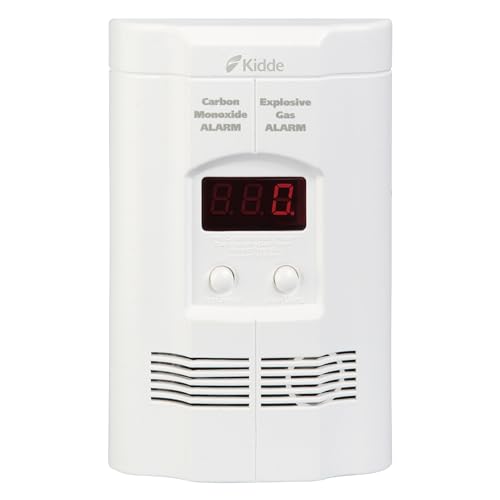
The Kidde COPDLG 5th Edition combines carbon monoxide detection with explosive gas and propane sensing in a single plug-in device. It includes a digital backlit display that shows CO levels or displays “GAS” when explosive gas is present, and it provides 85 dB of audible alert. This model is best for homes that want a compact, all-in-one detector with backup battery power during outages. It’s suitable for families who prioritize continuous monitoring without frequent battery changes.
Best for: Homeowners seeking a single, wall-level detector for CO and gas leaks. Why selected: It integrates low-level CO detection with clear gas indicators and a reliable 120V plug-in plus 9V backup for outages. Caution: Relying solely on a single unit for entire home coverage may miss leaks in distant rooms.
TOPTES PT520A Natural Gas Detector

The TOPTES PT520A is designed to locate leaks like methane, propane, natural gas, LPG, and butane using a 17-inch gooseneck probe. It’s ideal for locating leaks in tight spaces, such as near pipelines, gas fireplaces, or basements. The device responds quickly, with a 0.5-second reaction and a 75 dB alarm escalating with gas concentration. It’s particularly useful for professionals and serious DIYers who need precise probing capability.
Best for: Find-leaks in hard-to-reach areas. Why selected: The long flexible probe makes it superior for pinpointing leak sources. Caution: The device targets multiple gases; operators should confirm which gas is detected to avoid misinterpretation in mixed environments.
First Alert Combination Explosive Gas and CO Alarm (GCO1CN)

The First Alert GCO1CN combines explosive gas detection with carbon monoxide monitoring and features a backlit digital display for CO levels. It includes remotely accessible muting options and a single, versatile unit that can suit many living arrangements. This model is a solid choice for households that want visibility of current and peak gas/CO levels at a glance and easy integration with common remotes.
Best for: Budget-minded buyers seeking straightforward, visible CO and gas monitoring. Why selected: Clear display and remote muting add convenience and usability. Caution: It may not include the latest low-level CO thresholds found in newer models, so verify regulatory needs before installation.
TopTes PT199 Natural Gas Leak Detector
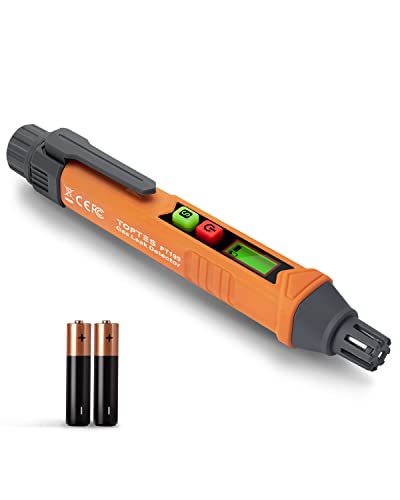
The TopTes PT199 is a portable, battery-powered gas detector with audible and visual alarms. It includes two AAA batteries and provides a rapid 0.5-second response, with a red LCD indicator when gas levels are high. This detector is a practical choice for those who need on-the-go leak detection in homes, RVs, or vehicles. It’s compact and ready to use after a brief warm-up.
Best for: Portable leak detection where mobility matters. Why selected: Easy to carry and quick to respond, making it useful for quick spot checks. Caution: Battery life may affect long-term use in situations where frequent testing is required; carry spare batteries for extended use.
Klein Tools ET120 Gas Leak Detector

The Klein Tools ET120 offers a wide detection range from 50 to 10,000 ppm and features adjustable sensitivity with High and Low modes. It provides strong visual and audible alerts—five red LEDs and an 85 dB alarm—that intensify as gas levels rise. This detector is well-suited for professionals and serious DIYers who need adaptable performance for various environments.
Best for: Users needing precise, adjustable gas detection across a broad range. Why selected: Flexible sensitivity settings improve accuracy in different spaces. Caution: It may require more user setup to optimize readings in busy or noisy environments.
TopTes PT210S Gas Leak Detector

The TopTes PT210S is a portable detector with a four-inch probe designed to pinpoint combustible gases like natural gas, propane, and methane. It displays the current leak in Percent LEL and provides a red display with rising bar graphs as the gas concentration grows. A 75 dB alarm provides clear audible alerts for potential leaks. This model suits users who need precise, on-site leak verification in small spaces.
Best for: Quick, on-site leak isolation with a single-hand operation. Why selected: The probe and Percent LEL readout support accurate leak severity assessment. Caution: Readings in extremely confined or dirty environments may require calibration or a different sensor type for certain gases.
Buying Guide: Key Considerations For Choosing Gas Detectors
What should you consider when choosing a propane and natural gas detector? Start with the environment. For indoor homes, a plug-in unit with a battery backup and clear display is convenient, whereas portable detectors excel for RVs, garages, or outdoor use. Consider gas types: propane, natural gas (methane), and CO presence. Look for fast response times, audible and visual alarms, and a clear, readable display. Probes or extended reach features help in tight spaces, while adjustable sensitivity benefits professional users. Battery backup increases reliability during power outages, and a rotating plug can fit various outlet orientations.
What about accuracy and maintenance? Choose devices with simple maintenance and obvious low-battery indicators. Some units provide separate “gas” and “CO” alerts, while others show a combined status. Regular testing and replacement of batteries protect against false negatives when sensors age. For households with children or pets, early alerts at lower levels matter, so models with low-level CO detection and distinct alarm patterns are preferred.
How should you position detectors? Place at least one detector on each level, near sleeping areas, and near potential gas sources like furnaces or water heaters. Avoid installing detectors in kitchens or garages where cooking fumes or vehicle exhaust may create false alarms. Follow manufacturer placement guidelines for optimal sensor performance and to maintain compliance with local codes.
FAQ
- Do I need both CO and gas detectors? If you have gas appliances and potential CO sources, a combined detector reduces the number of devices and helps you monitor multiple hazards from a single unit.
- What triggers a gas detector alarm? Alarms usually trigger based on sensing thresholds, typically increasing alerts as gas concentration rises. Many units provide audible alarms and a visual indicator on the display.
- Can I use these detectors in an RV? Yes, several portable models are designed for RV use, with battery operation and compact form factors for mobility.
- How often should sensors be tested? Test monthly where possible, and replace units according to manufacturer recommendations, typically every 5–7 years for CO sensors.
- Is a detector with a long probe better? A longer probe helps reach hard-to-access areas, making leak localization faster and more accurate in cramped spaces.
- Do detectors require professional installation? Plug-in or portable detectors are generally DIY-friendly, but follow local codes for placement and ensure wiring complies with electrical standards where applicable.