Best Propane Gas Detector Alarm Guide for Safer Homes
Answering the most common buyer question: which propane and gas detector alarm best protects homes and RVs? This guide presents five reliable options suited for residences, RVs, and travel trailers. Each product is evaluated for best-fit scenarios, including usage type, power source, and alert features. Use this overview to compare what matters most—detection coverage, power reliability, and ease of installation.
Buyer quick-reference table
| Product | Best For | Power | Key Feature | Notes |
|---|---|---|---|---|
| Kidde Carbon Monoxide + Explosive Gas Alarm | Homes needing combined CO and gas detection | Plug-in with 9V backup | Digital display and gas indication | 9V backup protects during outages |
| First Alert GCO1CN | Residential spaces needing clear readings | AC power with backlit display | CO, propane, and natural gas sensing | Remote muting via household remotes |
| Safe T Alert Dual LP/CO Alarm | RVs and campers needing 12V reliability | 12V DC | Dual propane and CO detection | Flush mount, maintenance-free |
| Safe T Alert 20 Series Mini LP Alarm | RV enthusiasts with compact space | 12V DC | Propane detection with mute and quick recovery | Low power, long-term use |
| MTI Industry 85 Series CO/Propane | Rugged RV environments needing durable unit | 12V | Double-duty alarm with trim included | Designed for harsh conditions |
Kidde Carbon Monoxide + Explosive Gas Alarm
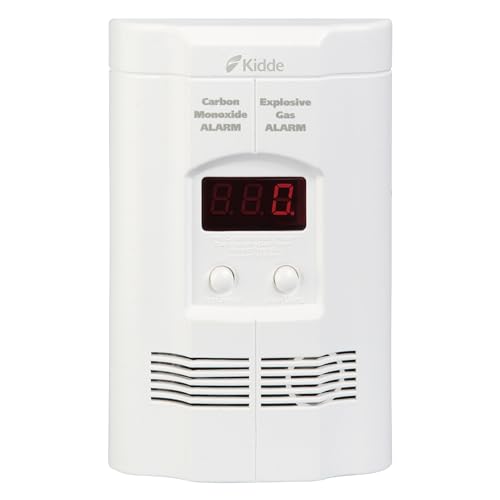
Best for homes needing a single-unit solution for both carbon monoxide and explosive gas detection. This plug-in model includes a 9V battery backup to stay active during power outages. It features a digital LED display to show CO levels or indicate “GAS” when explosive gas is detected. The unit is straightforward to install in any standard 120V outlet and provides 85 dB audible alerts.
Who it’s best for: homeowners seeking a convenient, wall-plug solution with backup power and clear readouts. Why chosen: combines CO and gas monitoring in one device with an easy-to-read display, enhancing situational awareness during emergencies.
Limitation: relies on AC power for primary operation; in some layouts, placing near living spaces may require careful mounting for optimal sensing range.
First Alert GCO1CN Combination Alarm

This model provides versatile sensing for carbon monoxide and combustible gas, including propane and natural gas. The backlit digital display lets users view current and peak gas levels, and it can be remotely muted using common household remotes. It is suitable for homes and small apartments where quick visual confirmation is valuable.
Who it’s best for: buyers who want a clear, ongoing readout of gas and CO concentrations. Why chosen: strong emphasis on visibility and remote-control compatibility makes it easier to manage during false alarms or routine checks.
Caution: some users may prefer units with plug-in convenience if mains power is a constraint; check mounting options for optimal sensor placement.
TOPTES PT199 Natural Gas Leak Detector
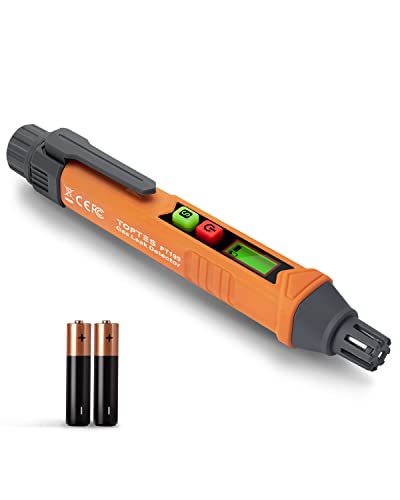
Designed as a portable combustible gas detector that detects natural gas, methane, propane, and related fuels. It provides visual and audible alarms within 0.5 seconds of detection and includes two AAA batteries. The LCD display turns red at high gas levels, aiding quick assessment in RVs, homes with gas appliances, or during DIY projects.
Who it’s best for: users needing a pocket-sized detector for quick spot checks or temporary monitoring. Why chosen: fast response and portable design support safety during appliance work or travel in gas-rich environments.
Caution: not a fixed-monitoring solution; its effectiveness depends on placement and proximity to the potential leak source.
Safe T Alert 20 Series Mini LP Alarm

Compact, surface-mount propane alarm designed for RVs and campers. It offers advanced propane detection with a mute function for safe ventilation and a rapid recovery sensor that reactivates after exposure reduces. It runs on 12V DC and emphasizes low-battery concerns with efficient power management.
Who it’s best for: RV owners seeking a dedicated, space-saving propane alarm with simple power management. Why chosen: its 12V operation and RV-focused design simplify installation in motorhomes and trailers.
Caution: best suited for low-profile mounting; verify compatibility with your specific RV model’s electrical setup.
MTI Industry Safe-T-Alert 85 Series

Rugged, 12V-dc powered alarm designed for challenging RV environments. The 85 Series emphasizes durability with a double-duty alarm setup and a trim ring included for easy installation in varied interiors. It combines carbon monoxide and propane gas detection in a single, robust unit.
Who it’s best for: users requiring a durable option for harsh RV conditions and long-term durability. Why chosen: a rugged design and included trim ring support reliable integration into varied RV configurations.
Caution: limited consumer-facing documentation may necessitate verifying compatibility with your vehicle’s power system before purchase.
Buying Guide
Key purchase considerations for propane and gas detector alarms:
- Power source and backup: Choose between plug-in with battery backup for homes or 12V DC units for RVs where continuous power is essential.
- Detection scope: Decide if you need CO alone or a dual gas (propane/natural gas) plus CO detector in one unit.
- Display and alerts: Backlit or digital displays help monitor levels. Audible alerts and mute features aid in nighttime and safety procedures.
- Installation: Fixed wall-mount versus portable detectors; consider mounting location for optimal gas and CO sensing.
- Maintenance: Look for units with simple battery backups and clear status indicators to minimize maintenance gaps.
- Environment: RVs may benefit from 12V units and flush mounts; homes may favor plug-in models with backup power.
Frequently Asked Questions
- What detector should I use for propane in an RV? A dual LP/CO detector with 12V DC power and easy mounting benefits RV setups.
- Can I use home CO detectors for gas leaks? Some units are designed for both CO and gas; verify sensor coverage for propane and methane specifically.
- Is a battery backup necessary? Yes, to maintain protection during power outages, especially in homes with AC-powered detectors.
- Do detectors require calibration? Some models include auto-calibration or clear readouts; follow manufacturer guidance for maintenance.
- Where should detectors be installed? Place detectors in sleeping areas and near fuel-burning appliances, ensuring unobstructed air access.
- Are portable detectors sufficient for RV use? Portable detectors are useful for spot checks, but fixed detectors provide continuous coverage.