Best Power Supply With Multiple Outputs for Flexible Electronics Setups
Looking for a reliable power supply that can run multiple devices from a single source? This guide highlights top multi-output power supplies that cover common voltages from 3V to 24V, with clear uses for hobbyists, DIY builders, CCTV setups, and lab experiments. Each option is selected for versatility, safety features, and practical output ranges. Best for: hobbyists needing adjustable voltage, CCTV installers requiring a centralized supply, and DIY electronics projects needing stable CV/CC operation.
| Product | Voltage Range | Best For | Key Benefit |
|---|---|---|---|
| Wefomey Universal Power Supply | 3–24V, up to 3A | General electronics projects | 14 tips and LCD display for precise voltage |
| Arcity 5V/12V/24V Output Power Supply | 5V, 12V, 24V | Video/DIY projects | High stability with multiple protections |
| Jesverty SPS-3010 | 0–30V, 0–10A | Bench testing and labs | 4-digit readout with CV/CC auto-switch |
| LM2596 Multi Channel Module | 3.3V/5V/12V/ADJ | Compact projects | Multiple fixed/adjustable rails in one board |
| ANLINK 12V 2A with 4-Way Splitter | 12V, 2A | CCTV and LED setups | UL/FCC/CE certified with four-way splitter |
Wefomey Universal Power Supply 3V–24V 72W

This adjustable DC power supply covers a wide range from 3V to 24V and up to 3A, making it suitable for many small devices, sensors, and hobby electronics. The LCD display aids precise output monitoring, which helps prevent damage from incorrect voltages. The included 14 tips support compatibility with diverse devices, including micro-USB and Type-C connections. Best for: beginners and tinkerers who value a single, versatile adapter for many gadgets. Limitation: maximum current is 3A, so higher-demand devices may require a separate supply.
Arcity 5V/12V/24V Output Switching Power Supply

Arcity’s compact switching power supply delivers clean DC outputs at 5V/8A, 12V/8A, and 24V/3A from an AC input of 100–240V. It emphasizes stability and low ripple with protective features such as overvoltage, overcurrent, short-circuit, and thermal protections. Best for: video game consoles, DIY electronics projects, and CCTV systems that need reliable multi-rail performance. Caution: ensure each device’s current draw stays within the combined limit to avoid overheating.
Jesverty SPS-3010 0–30V 10A Variable PSU

The Jesverty SPS-3010 offers precise constant voltage/current operations with a 4-digit LED display that shows V, A, and W in real time. Auto CV/CC switching helps users maintain safe outputs as load changes, making it ideal for bench testing and experimental setups. Best for: engineers and students who need accurate readouts and dynamic regulation. Limitation: some users may require careful calibration for ultra-tight tolerances.
LM2596 Multi Channel Module

This module provides four rails with fixed or adjustable outputs: 3.3V, 5V, 12V, and an adjustable option. It’s compact and easy to integrate into small projects where space is a constraint. Best for: compact electronics builds and hobbyist projects needing multiple rails without bulky power supplies. Caution: ensure proper heat dissipation if pushing the maximum current on multiple rails.
ANLINK AC 100–240V to DC 12V 2A with 4-Way Splitter
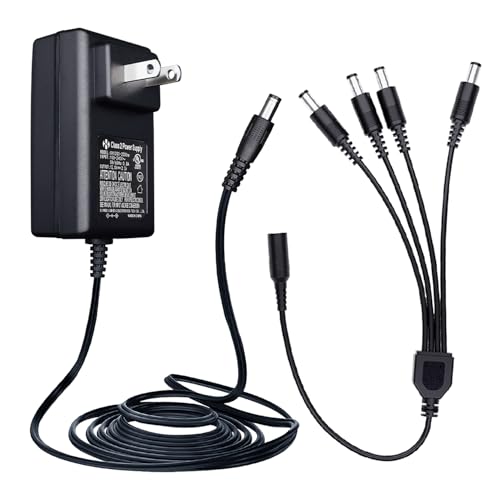
ANLINK’s power adapter outputs 12V at up to 2A and includes a 4-way DC splitter, making it a practical choice for CCTV cameras, LED strips, routers, and small network devices. Best for: surveillance setups or multi-device LED arrangements where a single plug is preferred. Limitation: fixed 12V output may not suit devices requiring other voltages without an additional regulator.
NICE-POWER DC Power Supply With USB Port

The NICE-POWER adjustable bench supply offers 0–30V and up to 10A, plus a 5V/2A USB port. It features a 4-digit display with real-time V/A/W readings and a dedicated output switch for safer operation. Best for: lab work and electronics prototyping where precise control and a USB output are beneficial. Caution: safety notes emphasize 110V input only in some variants; verify the model’s input range before use.
NICE-POWER Dual DC Power Supply

This dual supply provides flexible operation with series and parallel options, enabling configurations like 60V 10A or 30V 20A. It includes protection features such as overload, short-circuit, and over-temperature. Best for: more demanding lab tasks, battery charging experiments, and projects needing higher voltage or current in a compact form. Consideration: configuration controls can require time to master for new users.
SHNITPWR 3V–24V Adjustable Power Supply

SHNITPWR matches the broad voltage span (3–24V) with a similar 3A peak and a wide tip assortment for compatibility. It emphasizes an upgraded knob and a built-in polarity converter cable for broader device support. Best for: DIY projects requiring diverse tip compatibility and an adjustable current. Limitation: careful monitoring is needed when using the higher voltages to prevent device damage.
Buying Guide
- Voltage range and current: Start with your typical device voltage needs and total current draw. Choose a supply with a comfortable buffer above the combined load.
- Output stability: Look for CV/CC capability and protections (OVP/OCP/SCP/OTP) to protect both supply and devices.
- Connector and tips: Verify tip sizes and polarity, especially when using multi-tip kits. A polarity converter is a plus for mixed devices.
- Safety and compliance: UL/FCC/CE certifications indicate adherence to safety standards; energy efficiency matters for long-term use.
- Size and heat: Higher current rails generate more heat. Consider heat sinks and enclosure requirements for continuous operation.
- Additional ports: USB output or daisy-chaining options can simplify testing and multi-device operation.
FAQ
- What is a CV/CC power supply and when should I use it?
A CV (constant voltage) supply maintains a steady voltage, while a CC (constant current) supply limits current. Use CV when powering devices with stable voltage requirements; switch to CC for charging or for loads that draw current beyond a safe limit.
- Do I need multiple voltages from one adapter?
Yes, multi-rail or adjustable supplies simplify setups where different components require different voltages, reducing cable clutter and outlet usage.
- Is it safe to use a power supply with higher current capacity than my device needs?
Yes. Supplying more current than a device needs is safe as long as the voltage matches. The device draws only what it requires.
- What should I check before buying for CCTV projects?
Look for a stable 12V output, adequate current (sum of cameras), and a 4-way splitter or multiple outputs to power cameras from a single source.
- Are these supplies suitable for lab use?
Several options offer precise display and CV/CC control, which are beneficial for bench experiments. Ensure the supply meets your lab safety standards.
- What about safety certifications?
Certified models (UL/FCC/CE) indicate conformance to safety and electromagnetic compatibility standards, which is important for long-term reliability.