Best Power Panel Surge Protectors for Home and Small Business
Looking for a reliable surge protector for your main electrical panel? This guide highlights top power panel surge protectors that fit residential and small commercial setups. It helps buyers choose between Type 1 and Type 2 protections, panel-mount options, and universal compatibility. Best for new installations, service entrances, or sub-panels, these choices balance protection, ease of installation, and compatibility with common load centers. The following table summarizes the selected products for quick comparison.
| Product | Type | Best For | Key Benefit |
|---|---|---|---|
| Eaton BRNSURGE | Type BR Whole-Panel | Residential service entrance panels | 18 kA surge current, two branch spaces |
| Leviton R2120-B SPD | Type 1 SPD | Residential split-phase panels | 36 kA per phase protection, NEC-compliant |
| Drizzlen Type BR | Whole-Panel SPD | New installs or service panels | 18 kA surge current, two branch spaces |
| Eaton CHSPT2SURGE | Type 2 SPD | Existing panels and sub-panels | Universally connects to any load center, easy mounting |
| ABB THOMESURGEP | Type 1 SPD | Residential service entrances and retrofits | 36 kA per phase, 200 kA SCCR, quick install |
Eaton BRNSURGE Type BR Whole-Panel SPD
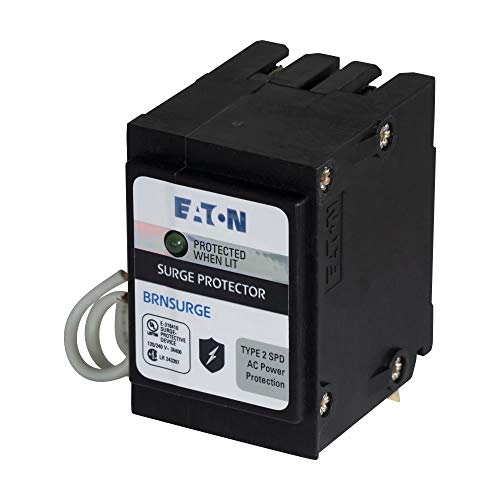
The Eaton BRNSURGE is a Type BR whole-panel surge protector designed for main service panels. It uses two branch circuit spaces and supports an 18 kA surge current. This model is best for homeowners upgrading older panels or installing a protective layer at the service entrance. The product is chosen for buyers who want a robust surge barrier integrated into the main panel to shield sensitive electronics and appliances from voltage spikes. A potential limitation is that it requires compatible panel spaces and proper wiring during installation.
Leviton R2120-B Type 1 SPD

The Leviton R2120-B Type 1 SPD is designed for residential applications and is intended to be mounted at the service entrance. It redirects damaging transients away from electronics and is noted for its compact size and straightforward installation. This option is best for buyers seeking NEC-compliant protection integrated into a single main panel, with attention to NEC 230.67 requirements for dwellings. A constraint is that it is Type 1 protection, which may require coordination with downstream Type 2 devices if added protection is desired.
Drizzlen Type BR Whole-Panel SPD
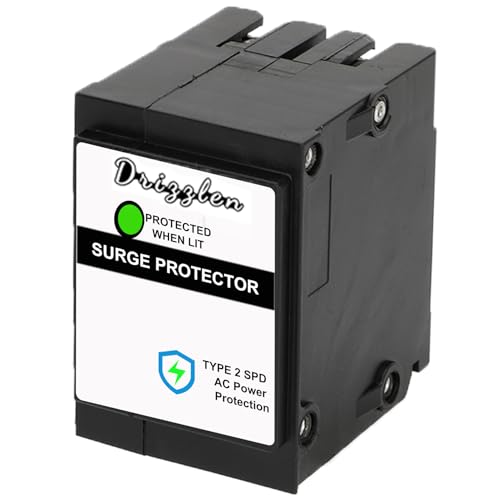
Drizzlen’s Type BR Whole-Panel surge protector is a practical option for full-panel protection with two branch circuit spaces and an 18 kA surge rating. It is selected for buyers who want a straightforward, space-efficient solution that fits standard panels. A notable limitation is that installation requires access to the main service panel interior, which may demand professional electrical work in some homes.
Eaton CHSPT2SURGE Type 2 SPD
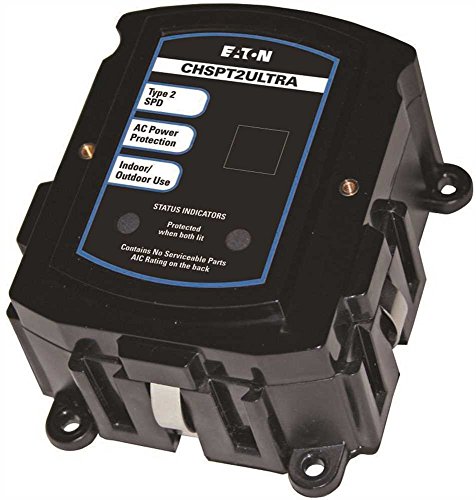
The Eaton CHSPT2SURGE is a Type 2 surge protector designed to mount within or alongside existing load centers. It connects to any manufacturer’s panel and emphasizes ease of installation with a quick-connect design. This option is best for upgrading existing protections without replacing the entire panel. A potential limitation is that Type 2 protection does not replace the need for service entrance protection in some setups, depending on local electrical codes and panel configurations.
ABB THOMESURGEP Surge Protective Device

ABB THOMESURGEP is a Type 1 SPD designed for externally mounted residential protection. It offers 36 kA per phase protection with a 200 kA SCCR, compliant with NEC 2023 Art. 230.67 for new homes. This model is chosen for buyers prioritizing high surge withstand ratings and rapid contractor-friendly installation that minimizes panel space usage. A limitation is that external mounting may require weatherproofing considerations in certain installations.
Buying Guide
What should you consider when choosing a power panel surge protector?
- Type of SPD: Type 1 devices protect at the service entrance, while Type 2 devices protect downstream circuits. Choose based on whether you want to protect at the main panel or add protection to sub-panels.
- Panel compatibility: Ensure the device fits your panel’s space, mounting style, and electrical code requirements for your region.
- Surge rating and SCCR: Higher surge current ratings (kA) and SCCR values offer greater protection for sensitive electronics and critical loads.
- Installation considerations: Some units are easier to install inside the panel, while others offer external mounting. Consider whether professional electrical work is needed.
- NEC compliance: Check local codes for requirements such as NEC 230.67 for dwellings when selecting protective devices.
- Future-proofing: If you plan to expand or add loads, consider a unit with ample capacity and easy integration with existing panels.
FAQ
- What is a Type 1 SPD and where should it be installed? A Type 1 SPD is installed at the service entrance to protect all downstream circuits from surges.
- What is a Type 2 SPD and when is it appropriate? A Type 2 SPD is installed inside a main or sub-panel to protect branch circuits downstream of the service disconnect.
- Do you need professional installation for these devices? Many installations require electrical expertise and may be subject to local codes; consult a licensed electrician when in doubt.
- Can surge protectors prevent all electrical damage? Surge protectors reduce damage from transient events but cannot prevent all types of power-related faults or outages.
- Is NEC compliance important for residential surge protection? Yes, following NEC guidelines helps ensure proper protection for dwelling units and safety standards.
- Will a Type 1 SPD suffice for all panels? In some cases, Type 2 protection downstream is recommended in addition to service-entrance protection depending on the installation.